
shrubby daphne
Also known as: Information to be completed
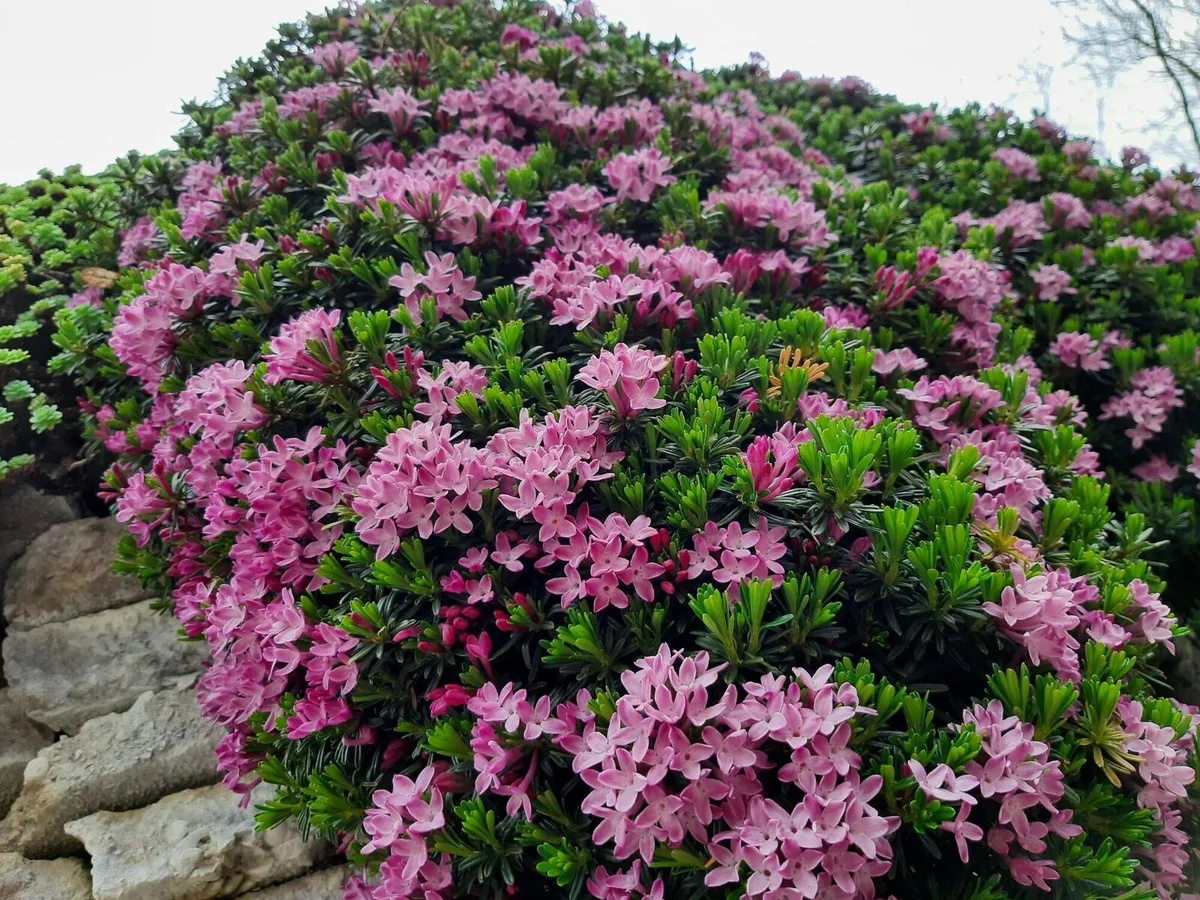
A rounded dwarf evergreen shrub to 15cm tall, with narrowly oblong, dark glossy green leaves to 18mm long. Flowers deep pink, very fragrant, in dense clusters at the ends of the shoots in late spring and early summer
Scientific classification
- Species
- shrubby daphne (Daphne arbuscula)
- Genus
- Daphne
- Family
- Thymelaeaceae
- TOXIC if eaten, skin irritant. Wear gloves and other protective equipment when handling]
- Toxicity
- Shrubs
- Plant type
- 0.1-0.5 metres
- Height
- 0.1-0.5 metres
- Spread
- Evergreen
- Foliage
- Matforming
- Habit
- Spring · Summer · Autumn · Winter
- Season of interest
- Full sun
- Sunlight
- Information to be completed
- Ideal temperature









shrubby daphne pictures
Distribution of shrubby daphne
Distribution map
Czech Rep. Hungary Slovakia
Information to be completed
Culture
Information to be completed
Toxicity
TOXIC if eaten, skin irritant. Wear gloves and other protective equipment when handling]
Quick identification of shrubby daphne
Information to be completed
shrubby daphne care guide
- Light regular watering, dry soil slightly between each irrigation
- Watering
- Full sun
- Sunlight
- Information to be completed
- Ideal temperature

Watering
Light regular watering, dry soil slightly between each irrigation
Fertilizing
 Fertilizing
Diluted shrub feed once monthly only during warm spring months
Pruning
 Pruning
Keep pruning to a minimum: remove dead, damaged or unwanted growth; if shaping is needed, trim lightly after flowering.
Propagation
 Propagation
Propagate by seed in containers in a cold frame as soon as ripe. Insert softwood cuttings in early to mid-summer, and semi-ripe and evergreen cuttings in mid or late summer. Graft in winter or layer in spring
Growing
 Growing
Grow in moderately fertile, humus-rich well-drained but not dry soil. Mulch to keep roots cool. Prefers slightly acid to slightly alkaline soil in full sun. Resents transplanting
People also ask
Information to be completed
Common pests and diseases
Diseases
May be susceptible to honey fungus (rarely), phytophthora root rot, fungal leaf spot and virus diseases
Pests
May be susceptible to aphids
Explore the plant health library →




