
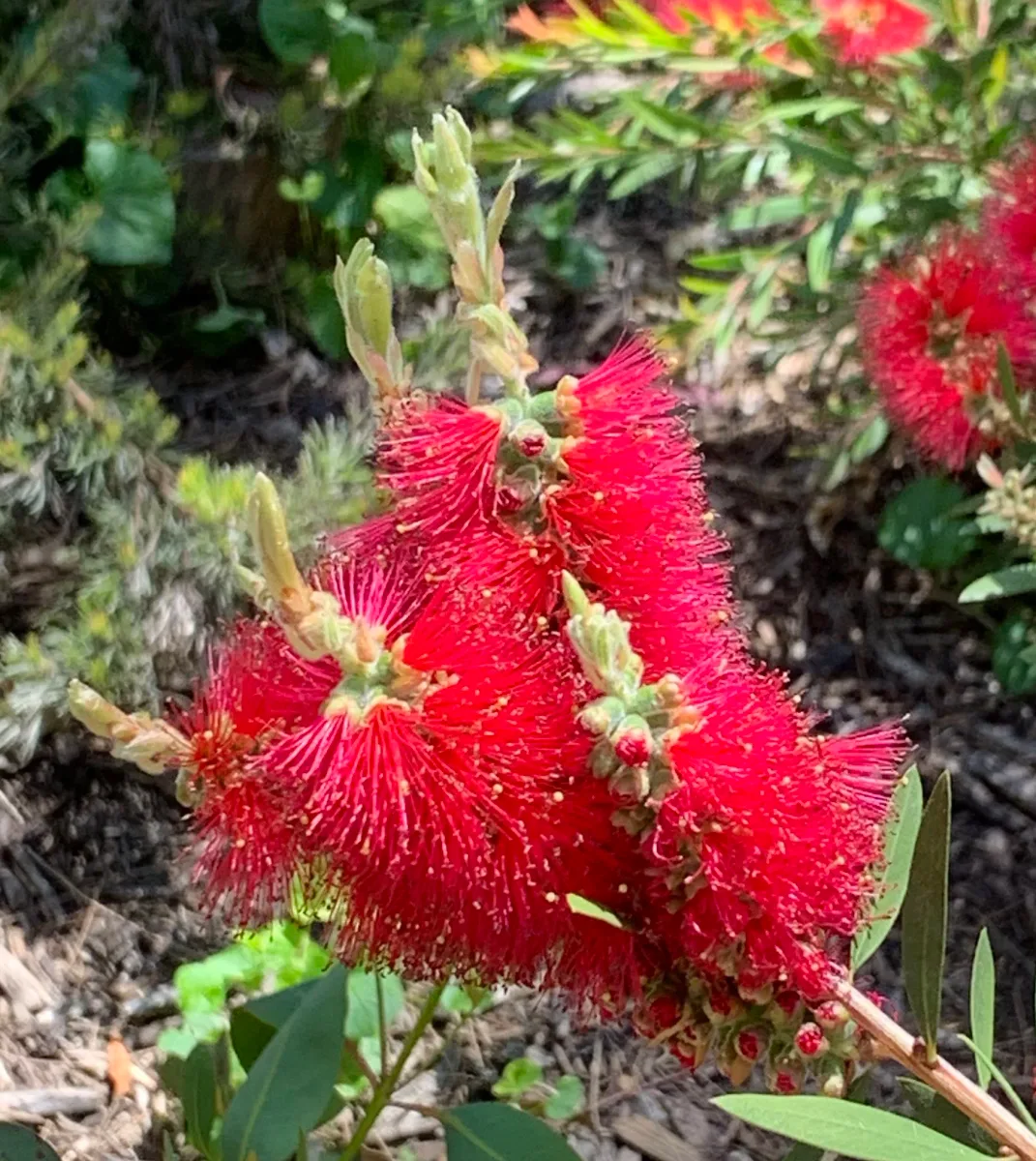
Callistemon 'Red Clusters'
Also known as: Information to be completed
A vigorous, rounded, evergreen shrub to 3m, with silvery pink new leaves, to 10cm long, ageing to mid-green. From spring to autumn it produces bottlebrush-like spikes of bright crimson flowers to 15cm long. Suitable for hedging in mild climates
Scientific classification
- Species
- Callistemon 'Red Clusters' (Callistemon 'Red Clusters')
- Genus
- Callistemon
- Family
- Myrtaceae
- Information to be completed
- Toxicity
- Shrubs
- Plant type
- 2.5-4 metres
- Height
- 1-1.5 metres
- Spread
- Evergreen
- Foliage
- Bushy
- Habit
- Spring · Summer · Autumn · Winter
- Season of interest
- Full sun
- Sunlight
- Information to be completed
- Ideal temperature









Callistemon 'Red Clusters' pictures
Distribution of Callistemon 'Red Clusters'
Distribution map
Information to be completed
Information to be completed
Culture
Information to be completed
Toxicity
Information to be completed
Quick identification of Callistemon 'Red Clusters'
Information to be completed
Callistemon 'Red Clusters' care guide
- Moderate regular irrigation, deep soak during hot dry summer spells
- Watering
- Full sun
- Sunlight
- Information to be completed
- Ideal temperature

Watering
Moderate regular irrigation, deep soak during hot dry summer spells
Fertilizing
 Fertilizing
Balanced slow-release feed applied once each early spring yearly
Pruning
 Pruning
Usually little pruning is needed. Lightly shape if necessary, removing dead, damaged or diseased shoots. Prune after flowering.
Propagation
 Propagation
Propagate by seed sown in spring, or root semi-ripe cuttings in summer
Growing
 Growing
Grow in moist but well-drained, neutral to acid soil in full sun; established plants are drought resistant. In colder areas grow under glass in loam-based compost (JI No.2) in full light with good ventilation. Pot on or top dress in early spring
People also ask
Information to be completed
Common pests and diseases
Diseases
May be susceptible to honey fungus
Pests
May be susceptible to scale insect, mealy bug and glasshouse red spider mite
Explore the plant health library →




