
barberry 'Stapehill'
Also known as: Information to be completed
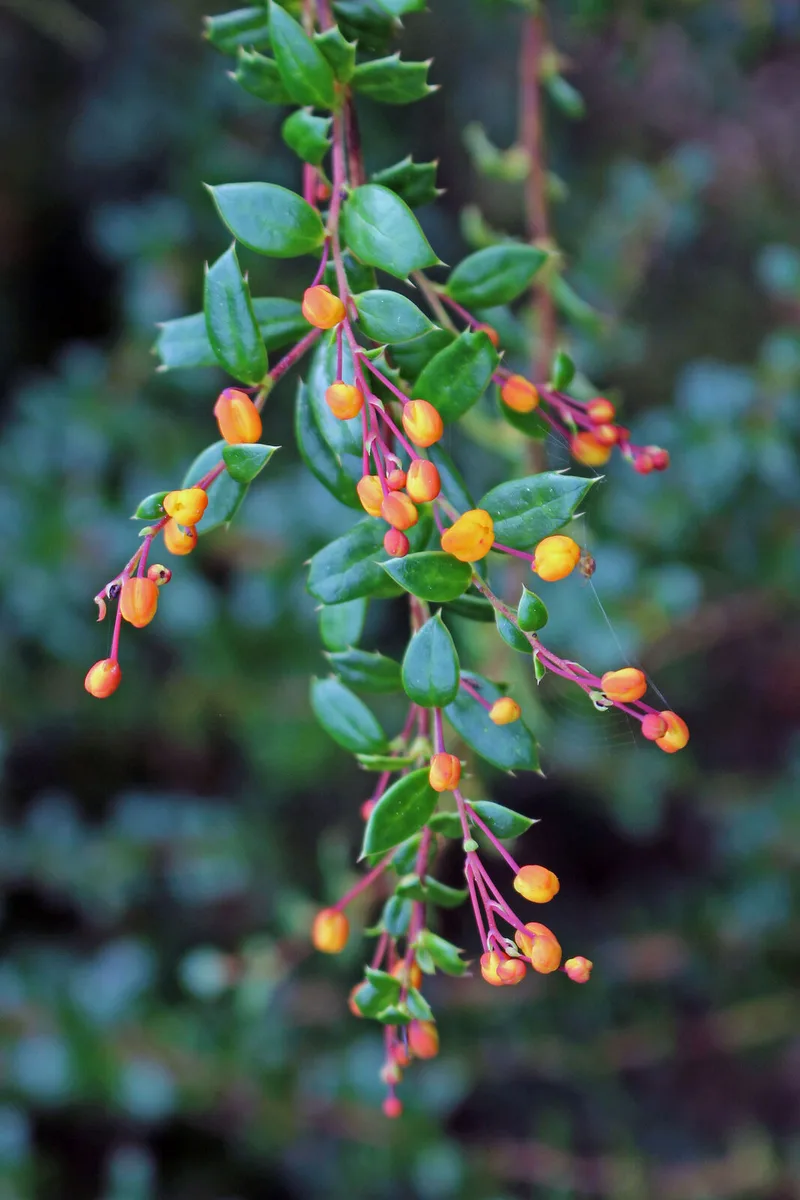
Stapehill' is a spreading evergreen shrub, up to 3-4m high, with arching stems, glossy, oblong, dark green spine-tipped leaves. Abundant clusters of bright red flower buds open to rich orange, scented flowers in spring, followed by round blue-black fruits
Scientific classification
- Species
- barberry 'Stapehill' (Berberis × bidentata 'Stapehill')
- Genus
- Berberis
- Family
- Berberidaceae
- Order
- Ranunculales
- Class
- Magnoliopsida
- Phylum
- Magnoliophyta
- Fruit are ornamental - not to be eaten. Wear gloves and other protective equipment when handling
- Toxicity
- Shrubs
- Plant type
- 2.5-4 metres
- Height
- 2.5-4 metres
- Spread
- Evergreen
- Foliage
- Bushy
- Habit
- Spring · Summer · Autumn · Winter
- Season of interest
- Full sun · Partial shade
- Sunlight
- Information to be completed
- Ideal temperature









barberry 'Stapehill' pictures
Distribution of barberry 'Stapehill'
Distribution map
- Native
- Introduced
- Cultivated
Source:WCVP v16 · Royal Botanic Gardens, Kew · CC BY 3.0 · Boundaries:WGSRPD / TDWG
Toxicity
Fruit are ornamental - not to be eaten. Wear gloves and other protective equipment when handling
barberry 'Stapehill' care guide
- Deep watering during dry spells, allowing slight surface drying between soakings
- Watering
- Full sun · Partial shade
- Sunlight

Watering
Deep watering during dry spells, allowing slight surface drying between soakings
Fertilizing
 Fertilizing
Balanced shrub or tree feed once each early spring
Pruning
 Pruning
Keep pruning to a minimum: remove dead, damaged or unwanted growth; if shaping is needed, trim lightly after flowering.
Propagation
 Propagation
Propagate by mallet or basal semi-hardwood cuttings, in summer under mist, or by stooling
Growing
 Growing
Grow in any well-drained soil in full sun or partial shade; a sunny site will encourage fruiting. The flowers are good for pollinators
Common pests and diseases
Diseases
May be susceptible to powdery mildews and sometimes by honey fungus
Pests
May be susceptible to aphids and berberis sawfly
Explore the plant health library →




