
Iris ensata 'Alba'
Also known as: Information to be completed
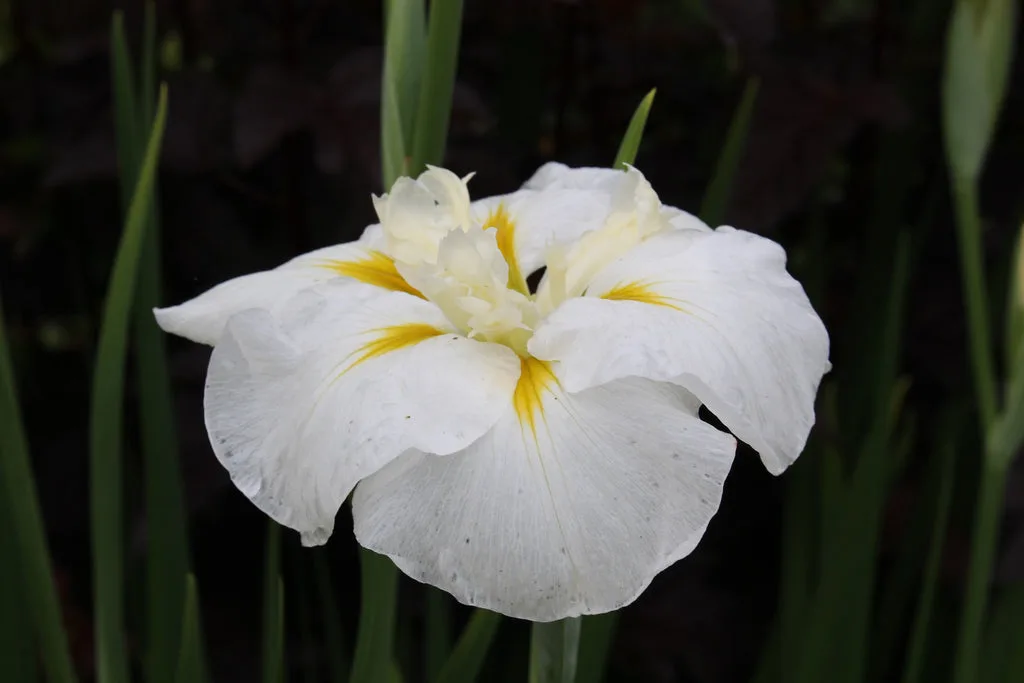
A clump-forming, upright perennial, to around 90cm high in flower, with narrowly sword-shaped, slightly grey-green leaves. Flowers have short, ruffled, creamy white standards, and broad white falls with a streak of gold at the base
Scientific classification
- Species
- Iris ensata 'Alba' (Iris ensata 'Alba')
- Genus
- Iris
- Family
- Iridaceae
- Harmful if eaten. Wear gloves and other protective equipment when handling
- Toxicity
- Herbaceous Perennial
- Plant type
- Information to be completed
- Height
- Information to be completed
- Spread
- Deciduous
- Foliage
- Clump forming
- Habit
- Spring · Summer
- Season of interest
- Full sun · Partial shade
- Sunlight
- Information to be completed
- Ideal temperature









Iris ensata 'Alba' pictures
Distribution of Iris ensata 'Alba'
Distribution map
Information to be completed
Information to be completed
Culture
Information to be completed
Toxicity
Harmful if eaten. Wear gloves and other protective equipment when handling
Quick identification of Iris ensata 'Alba'
Information to be completed
Iris ensata 'Alba' care guide
- Keep soil continuously moist or wet during the growing season; thrives in boggy conditions.
- Watering
- Full sun · Partial shade
- Sunlight
- Information to be completed
- Ideal temperature

Watering
Keep soil continuously moist or wet during the growing season; thrives in boggy conditions.
Fertilizing
 Fertilizing
Apply a low-nitrogen fertilizer for acid-loving plants before and after bloom.
Pruning
 Pruning
Remove spent flower stems after flowering, and any dying foliage in autumn
Propagation
 Propagation
Propagate by division, see dividing irises for more detailed advice
Growing
 Growing
Thrives in moist, humus rich, ideally neutral to slightly acid soil. Will tolerate part shade but flowering is best in full sun. Suitable for planting at the edges of ponds and streams, or in a border where the soil does not dry out
People also ask
Information to be completed
Common pests and diseases
Diseases
May be susceptible to aphid-borne virus diseases and grey moulds; see Iris diseases
Pests
May be susceptible to aphids, slugs, snails, thrips and iris sawfly
Explore the plant health library →




