
towering Jacob's ladder
Also known as: Information to be completed
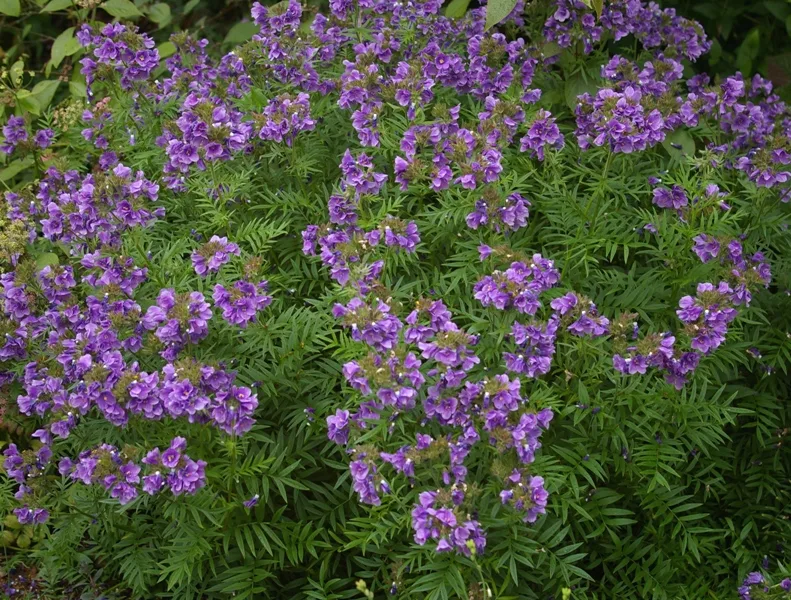
A bushy, clump-forming perennial to around 1m high, with long, pinnate leaves, divided into up to 30 lance-shaped leaflets held in offset pairs. Bell-shaped flowers, usually violet-blue but sometimes white, are produced in loose clusters on upright stems, from late spring through to late summer or early autumn. White-flowered varieties are often scented
Scientific classification
- Species
- towering Jacob's ladder (Polemonium archibaldiae)
- Genus
- Polemonium
- Family
- Polemoniaceae
- Information to be completed
- Toxicity
- Herbaceous Perennial
- Plant type
- 0.5-1 metres
- Height
- 0.1-0.5 metres
- Spread
- Deciduous
- Foliage
- Bushy
- Habit
- Spring · Summer · Autumn
- Season of interest
- Full sun · Partial shade
- Sunlight
- Information to be completed
- Ideal temperature









towering Jacob's ladder pictures
Distribution of towering Jacob's ladder
Distribution map
Information to be completed
Information to be completed
Culture
Information to be completed
Toxicity
Information to be completed
Quick identification of towering Jacob's ladder
Information to be completed
towering Jacob's ladder care guide
- Humus soil evenly moist, drain excess water to prevent rot roots
- Watering
- Full sun · Partial shade
- Sunlight
- Information to be completed
- Ideal temperature

Watering
Humus soil evenly moist, drain excess water to prevent rot roots
Fertilizing
 Fertilizing
All-purpose diluted flower feed once monthly growing season
Pruning
 Pruning
Deadhead regularly to encourage new flowers
Propagation
 Propagation
Propagate by seed, sown in containers in a cold frame in autumn or spring, or by division in spring
Growing
 Growing
Grow in fertile, moist but well-drained soil, will benefit from some shade where summers are hot
People also ask
Information to be completed
Common pests and diseases
Diseases
May be susceptible to powdery mildews
Pests
Generally pest-free
Explore the plant health library →




