
ivy 'Midas Touch'
Also known as: Information to be completed
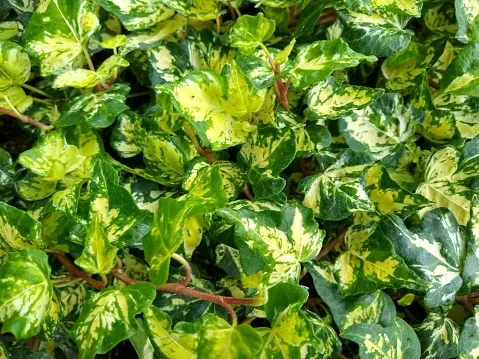
Small evergreen climber about 1m tall, with reddish stems, with triangular to heart-shaped leaves boldly splashed with golden-yellow on a bright green background; makes a good houseplant
Scientific classification
- Species
- ivy 'Midas Touch' (Hedera helix 'Midas Touch')
- Genus
- Hedera
- Family
- Araliaceae
- Harmful if eaten, skin irritant. Wear gloves and other protective equipment when handling]
- Toxicity
- Climber Wall Shrub
- Plant type
- 0.5-1 metres
- Height
- 0.1-0.5 metres
- Spread
- Evergreen
- Foliage
- Climbing
- Habit
- Spring · Summer · Autumn · Winter
- Season of interest
- Full shade · Full sun · Partial shade
- Sunlight
- Information to be completed
- Ideal temperature









ivy 'Midas Touch' pictures
Distribution of ivy 'Midas Touch'
Distribution map
Information to be completed
Information to be completed
Culture
Information to be completed
Toxicity
Harmful if eaten, skin irritant. Wear gloves and other protective equipment when handling]
Quick identification of ivy 'Midas Touch'
Information to be completed
ivy 'Midas Touch' care guide
- Water moderately, allow slight drying between waterings
- Watering
- Full shade · Full sun · Partial shade
- Sunlight
- Information to be completed
- Ideal temperature

Watering
Water moderately, allow slight drying between waterings
Fertilizing
 Fertilizing
Light balanced feed in spring and summer
Pruning
 Pruning
Routine pruning is unnecessary; shorten overlong shoots to fit the available space. Trim as needed at any time.
Propagation
 Propagation
Propagate by semi-hardwood cuttings in summer
Growing
 Growing
Tolerant of a range of soils and conditions but grows best in fertile, humus-rich well-drained alkaline soil in a sheltered spot. Ideal houseplant, in patio containers, or over a low wall. See hedera (ivy) cultivation
People also ask
Information to be completed
Common pests and diseases
Diseases
May be susceptible to honey fungus (rarely) and a leaf spot
Pests
May be susceptible to glasshouse red spider mite, scale insects, vine weevil and aphids
Explore the plant health library →




