
Japanese apricot 'Beni-chidori'
Also known as: Information to be completed
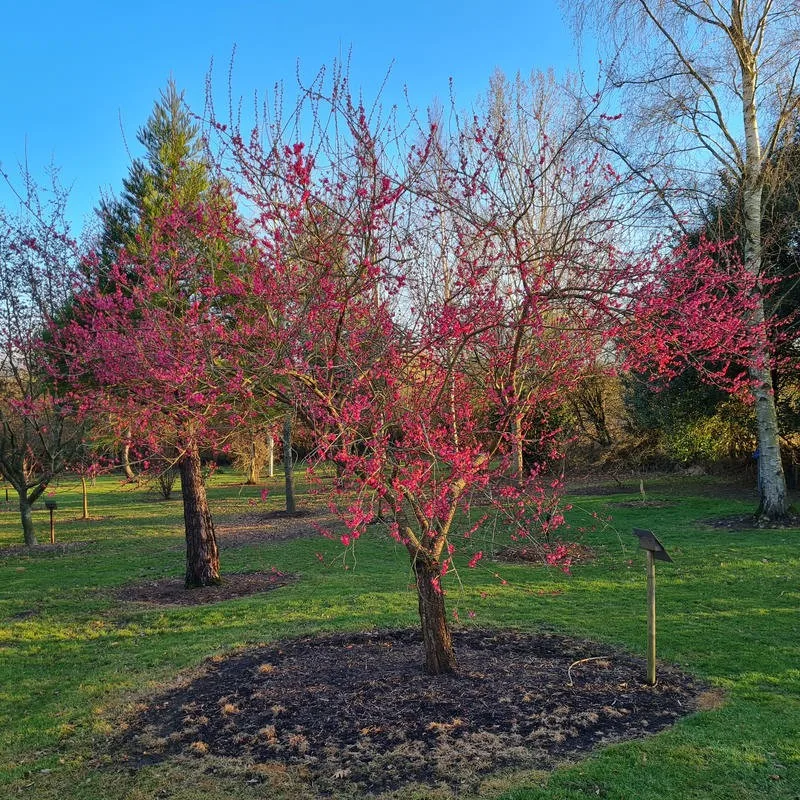
A small deciduous tree producing notable deep pink, highly-scented flowers in late winter/early spring that fade to paler pink with age. They are occasionally followed by edible but bitter, yellow fruits
Scientific classification
- Species
- Japanese apricot 'Beni-chidori' (Prunus mume 'Beni-chidori')
- Genus
- Prunus
- Family
- Rosaceae
- Order
- Rosales
- Class
- Magnoliopsida
- Phylum
- Magnoliophyta
- Information to be completed
- Toxicity
- Trees
- Plant type
- 1.5-2.5 metres
- Height
- 1.5-2.5 metres
- Spread
- Deciduous
- Foliage
- Bushy
- Habit
- Autumn · Spring · Summer
- Season of interest
- Full sun
- Sunlight
- Information to be completed
- Ideal temperature









Japanese apricot 'Beni-chidori' pictures
Distribution of Japanese apricot 'Beni-chidori'
Distribution map
- Native
- Introduced
- Cultivated
Source:WCVP v16 · Royal Botanic Gardens, Kew · CC BY 3.0 · Boundaries:WGSRPD / TDWG
Japanese apricot 'Beni-chidori' care guide
- Deep watering during dry spells, allowing slight surface drying between soakings
- Watering
- Full sun
- Sunlight

Watering
Deep watering during dry spells, allowing slight surface drying between soakings
Fertilizing
 Fertilizing
Balanced shrub or tree feed once each early spring
Pruning
 Pruning
Minimal pruning needed. Remove any dieback promptly
Propagation
 Propagation
Cultivars are propagated by grafting
Growing
 Growing
Grow in any moist but well-drained, moderately fertile soil preferably in full sun or light shade
Common pests and diseases
Diseases
May be susceptible to peach leaf curl, silver leaf, bacterial canker, blossom wilt and honey fungus
Pests
Can suffer from aphids and caterpillar damage
Explore the plant health library →




