
houseleek 'Raspberry Ice'
Also known as: Information to be completed
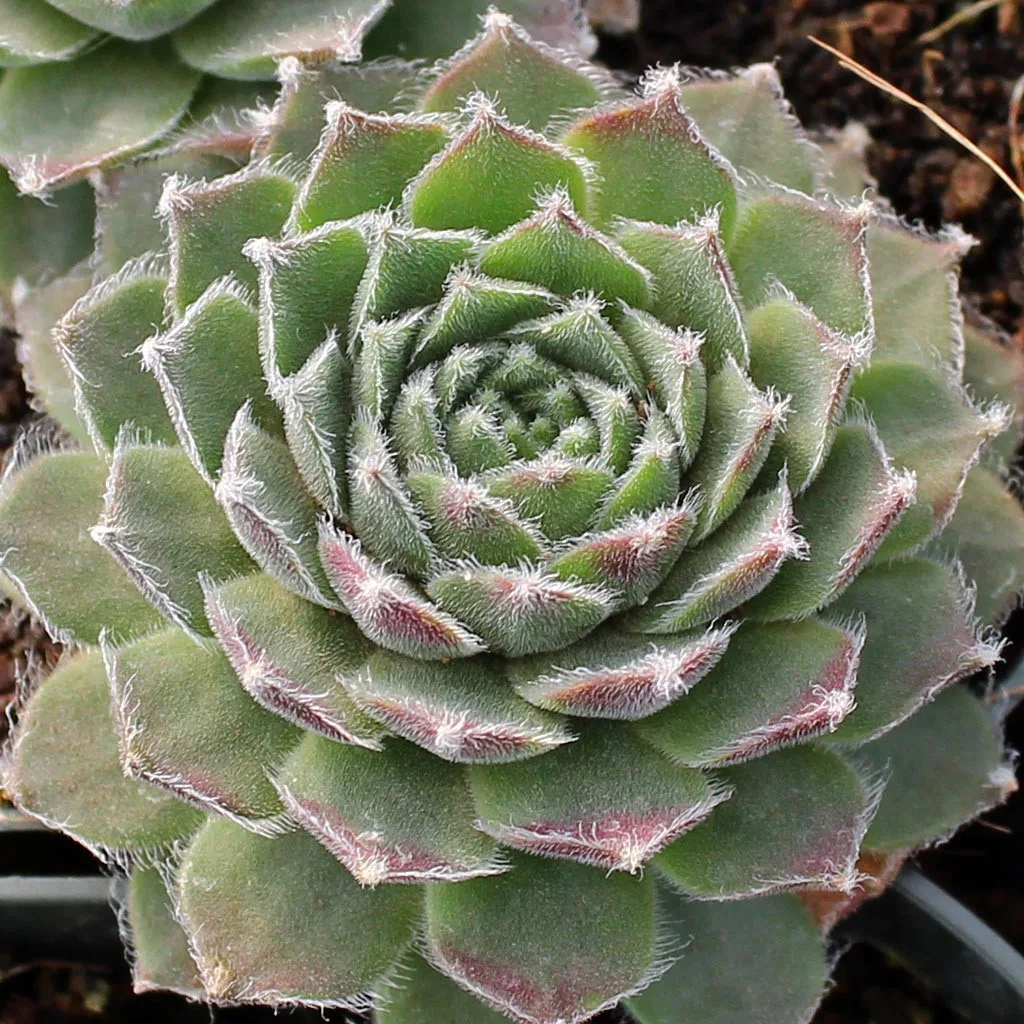
A mat-forming, evergreen compact perennial alpine with dense rosettes of raspberry-red leaves covered in silvery cobweb-like hairs. These mature to a darker purple-red. Star-shaped pink flowers appear in mid-summer
Scientific classification
- Species
- houseleek 'Raspberry Ice' (Sempervivum 'Raspberry Ice')
- Genus
- Sempervivum
- Family
- Crassulaceae
- Information to be completed
- Toxicity
- Alpine Rockery · Herbaceous Perennial · Cactus Succulent
- Plant type
- 0.1-0.5 metres
- Height
- 0.1-0.5 metres
- Spread
- Evergreen
- Foliage
- Matforming
- Habit
- Spring · Summer · Autumn · Winter
- Season of interest
- Full sun · Partial shade
- Sunlight
- Information to be completed
- Ideal temperature









houseleek 'Raspberry Ice' pictures
Distribution of houseleek 'Raspberry Ice'
Distribution map
Information to be completed
Information to be completed
Culture
Information to be completed
Toxicity
Information to be completed
Quick identification of houseleek 'Raspberry Ice'
Information to be completed
houseleek 'Raspberry Ice' care guide
- Let gritty soil dry fully before each thorough watering cycle
- Watering
- Full sun · Partial shade
- Sunlight
- Information to be completed
- Ideal temperature

Watering
Let gritty soil dry fully before each thorough watering cycle
Fertilizing
 Fertilizing
Very dilute low-nitrogen succulent feed monthly in warm growth
Pruning
 Pruning
No pruning required
Propagation
 Propagation
Propagate by offsets in the spring
Growing
 Growing
Grow in moderately fertile, well-drained soil in full sun. Protect from excessive winter wet. Suitable for rock gardens, scree beds, wall crevices, troughs or alpine houses
People also ask
Information to be completed
Common pests and diseases
Diseases
May be susceptible to a rust
Pests
May be susceptible to sempervivum leaf miner, slugs, snails, and vine weevil
Explore the plant health library →




