
Cape honeysuckle
Also known as: West Indian honeysuckle
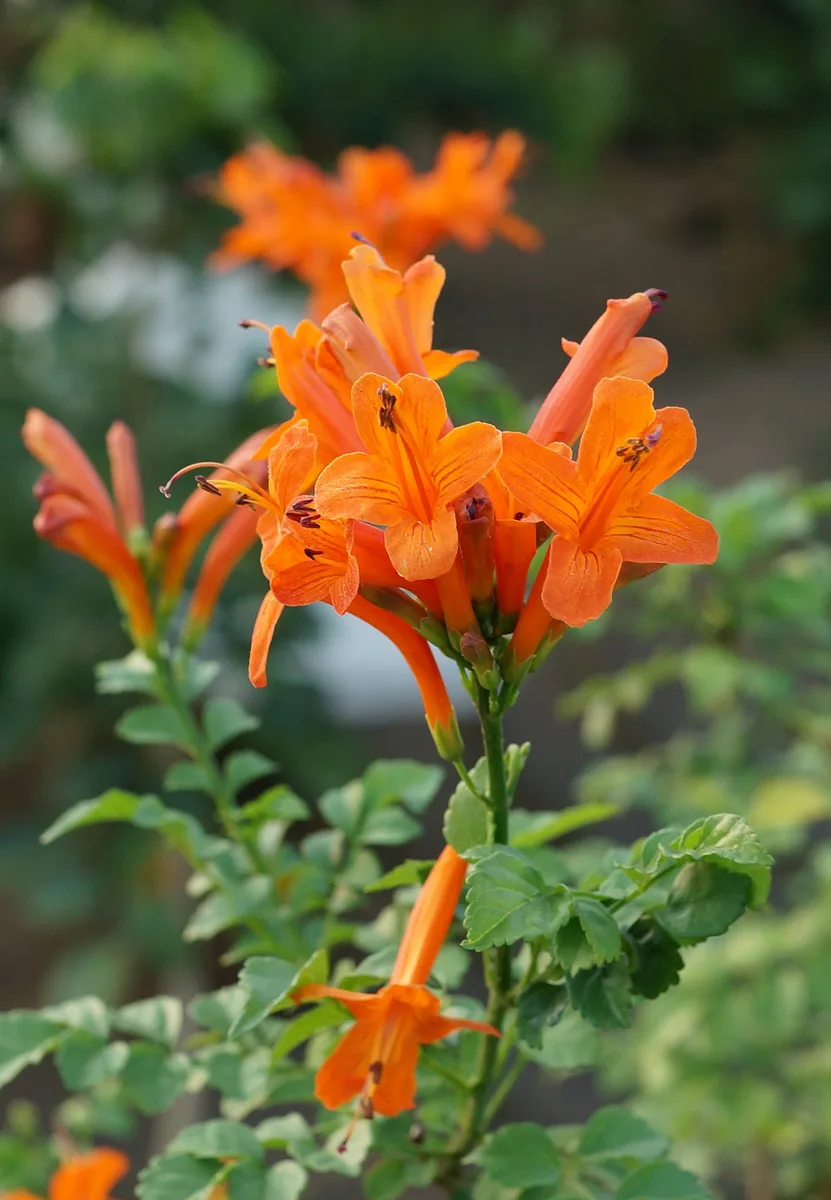
T. capensis is an evergreen shrub with self-clinging scrambling stems to 3m or more, with dark green, pinnate leaflets and clusters of bright orange-red flowers with slender curved tubes to 5cm in length, in late summer
Scientific classification
- Species
- Cape honeysuckle (Tecoma capensis)
- Genus
- Tecoma
- Family
- Bignoniaceae
- Information to be completed
- Toxicity
- Shrubs · Climber Wall Shrub · Conservatory Greenhouse
- Plant type
- 2.5-4 metres
- Height
- 1.5-2.5 metres
- Spread
- Evergreen
- Foliage
- Climbing
- Habit
- Spring · Summer · Autumn · Winter
- Season of interest
- Full sun
- Sunlight
- Information to be completed
- Ideal temperature









Cape honeysuckle pictures
Distribution of Cape honeysuckle
Distribution map
Southern Africa, Swaziland
Information to be completed
Culture
Information to be completed
Toxicity
Information to be completed
Quick identification of Cape honeysuckle
Information to be completed
Cape honeysuckle care guide
- Moderate regular watering, avoid prolonged drought or waterlogging
- Watering
- Full sun
- Sunlight
- Information to be completed
- Ideal temperature

Watering
Moderate regular watering, avoid prolonged drought or waterlogging
Fertilizing
 Fertilizing
Balanced feed in spring and light repeat in growth season
Pruning
 Pruning
Usually little pruning is needed. Lightly shape if necessary, removing dead, damaged or diseased shoots. Prune after flowering.
Propagation
 Propagation
Propagate by seed, layering or semi-hardwood cuttings
Growing
 Growing
Worth trying in mild gardens if you have a sunny, sheltered wall and a fertile, well-drained soil. Otherwise, grow in a container and overwinter indoors
People also ask
Information to be completed
Common pests and diseases
Diseases
May be susceptible to honey fungus in gardens where it is present but insufficient data to determine degree of susceptibility
Pests
Susceptible to glasshouse red spider mite and glasshouse whitefly
Explore the plant health library →




