
medlar 'Large Russian'
Also known as: Information to be completed
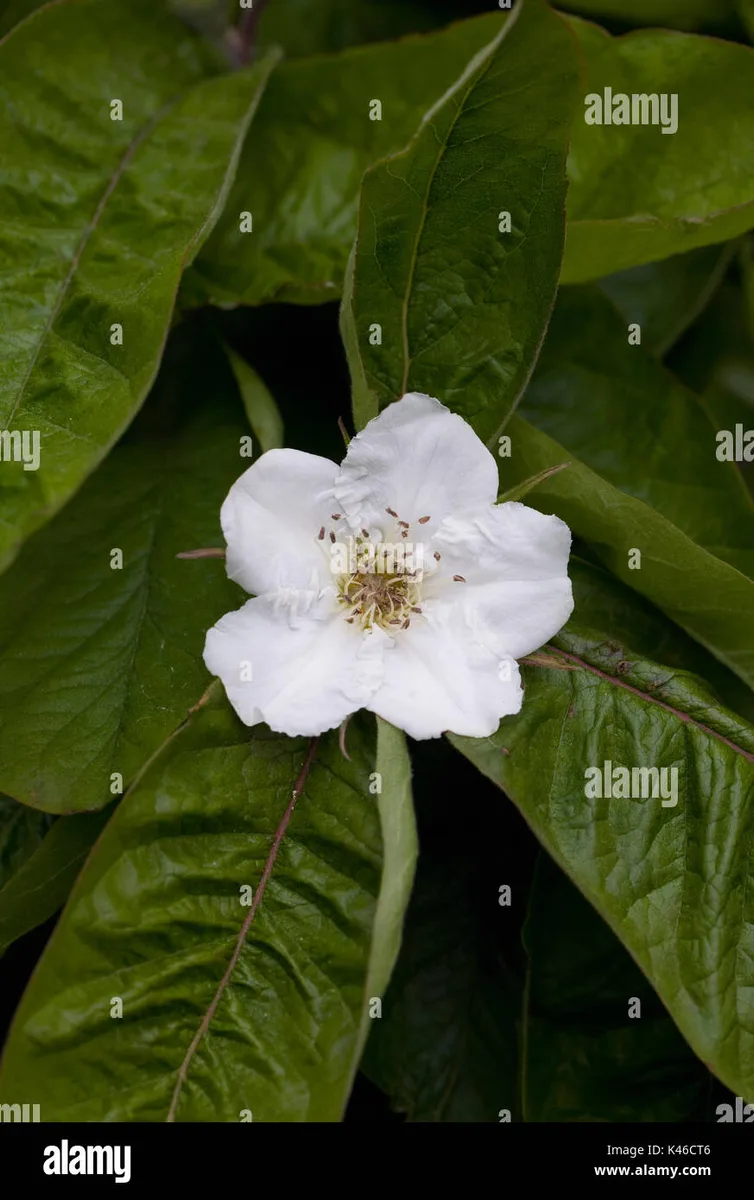
Large Russian' is a small, spreading tree or large shrub withpendulous branches and large,oblong leaves turning yellow-brown in autumn.White flowers, 5cm in width, in late spring, are followed by russet-brown fruit 7cm across
Scientific classification
- Species
- medlar 'Large Russian' (Mespilus germanica 'Large Russian')
- Genus
- Mespilus
- Family
- Rosaceae
- Order
- Rosales
- Class
- Magnoliopsida
- Phylum
- Tracheophyta
- Information to be completed
- Toxicity
- Fruit Edible · Trees
- Plant type
- 4-8 metres
- Height
- 4-8 metres
- Spread
- Deciduous
- Foliage
- Bushy
- Habit
- Autumn · Spring · Summer
- Season of interest
- Full sun
- Sunlight
- Information to be completed
- Ideal temperature









medlar 'Large Russian' pictures
Distribution of medlar 'Large Russian'
Distribution map
- Native
- Introduced
- Cultivated
Source:WCVP v16 · Royal Botanic Gardens, Kew · CC BY 3.0 · Boundaries:WGSRPD / TDWG
medlar 'Large Russian' care guide
- Moderate deep watering during dry periods, free drainage preferred
- Watering
- Full sun
- Sunlight

Watering
Moderate deep watering during dry periods, free drainage preferred
Fertilizing
 Fertilizing
Balanced shrub feed once in spring
Pruning
 Pruning
Little pruning is needed. Remove diseased, damaged, crowded or crossing shoots and unwanted growth. Timing depends on the plant: generally late winter or early spring; plants prone to bleeding and deciduous magnolias need different timing, and deciduous azaleas and lilacs are pruned after flowering.
Propagation
 Propagation
Propagate by budding in late summer
Growing
 Growing
Grow in moderately fertile soil in full sun. Wait to collect fruit until after frost has softened it
Common pests and diseases
Diseases
May be susceptible to honey fungus in gardens where it is present but insufficient data to determine degree of susceptibility. May also be susceptible to quince leaf blight, brown rot and powdery mildews
Pests
May be susceptible to aphids and caterpillars
Explore the plant health library →




