
creeping phlox 'Blue Ridge'
Also known as: Information to be completed
A prostrate, mat-forming evergreen perennial with green oval-shaped leaves and loose clusters of pale lilac-blue flowers and a small eye with orange stamens in spring and summer
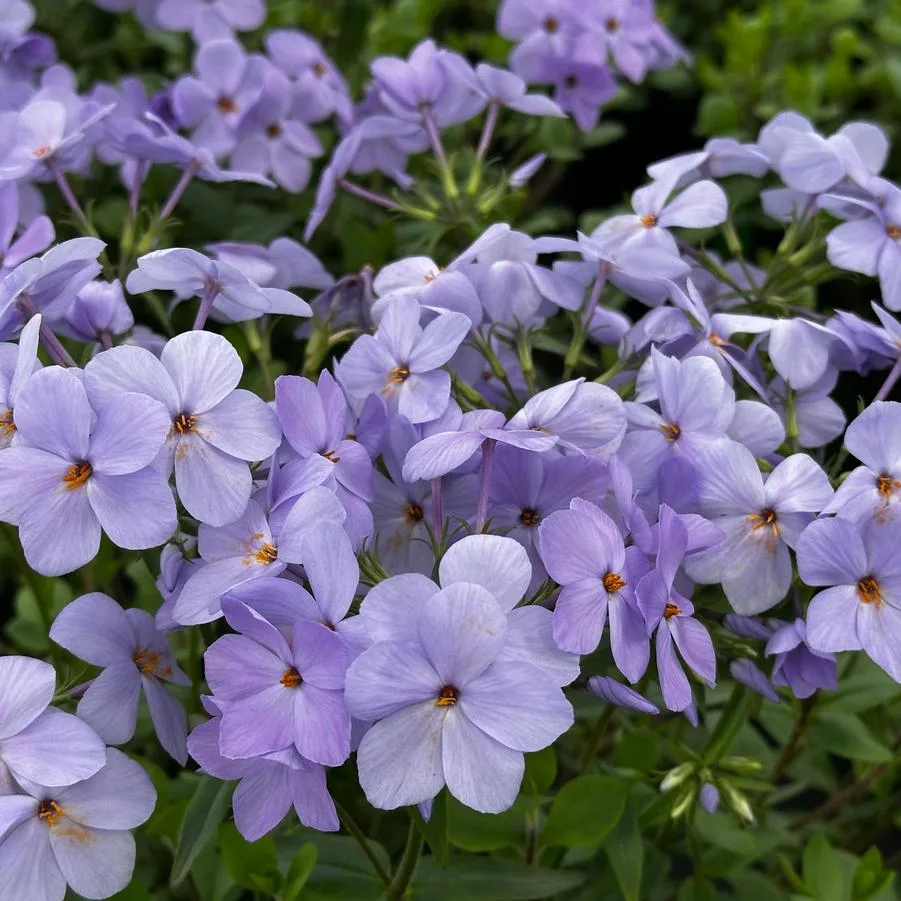
Scientific classification
- Species
- creeping phlox 'Blue Ridge' (Phlox stolonifera 'Blue Ridge')
- Genus
- Phlox
- Family
- Polemoniaceae
- Order
- Ericales
- Class
- Magnoliopsida
- Phylum
- Magnoliophyta
- Information to be completed
- Toxicity
- Herbaceous Perennial
- Plant type
- 0.1-0.5 metres
- Height
- 0.1-0.5 metres
- Spread
- Evergreen
- Foliage
- Matforming
- Habit
- Spring · Summer · Autumn · Winter
- Season of interest
- Partial shade
- Sunlight
- Information to be completed
- Ideal temperature









creeping phlox 'Blue Ridge' pictures
Distribution of creeping phlox 'Blue Ridge'
Distribution map
- Native
- Introduced
- Cultivated
Source:WCVP v16 · Royal Botanic Gardens, Kew · CC BY 3.0 · Boundaries:WGSRPD / TDWG
creeping phlox 'Blue Ridge' care guide
- Consistently lightly damp soil, avoid total substrate dryness
- Watering
- Partial shade
- Sunlight

Watering
Consistently lightly damp soil, avoid total substrate dryness
Fertilizing
 Fertilizing
Weak perennial flower feed every four weeks spring growth
Pruning
 Pruning
No pruning required
Propagation
 Propagation
Propagate by division in autumn or spring, by basal cuttings in spring, or by a root cutting in early autumn or winter
Growing
 Growing
Will grow well in fertile moist but well-drained soil in partial shade. Pinch back growing tips to promote bushiness.
Common pests and diseases
Diseases
May be susceptible to powdery mildews, grey moulds and leafy gall
Pests
May be susceptible to stem and bulb eelworm
Explore the plant health library →




