
blue field daisy
Also known as: lisianthius; lisianthus; prairie gentian; Texas bluebell
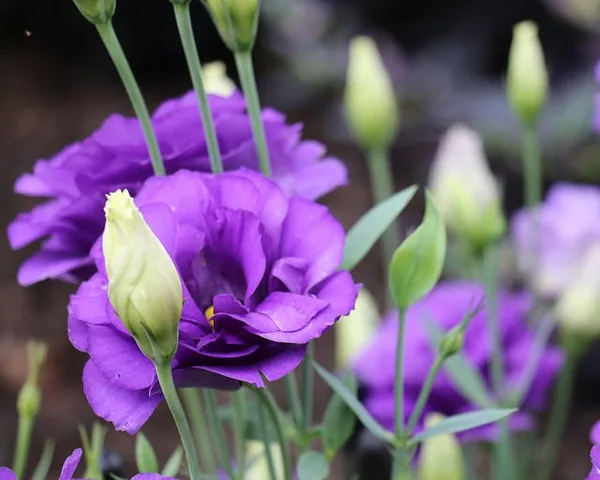
A single-stemmed or branching annual or biennial to 70cm tall, with slightly fleshy, glaucous, grey-green leaves. In summer, broadly bell-shaped, satin-textured, pale purple flowers, to 5cm across, are produced on long stalks, either singly or in clusters, from the upper leaf axils. In frost-prone areas grow as flowering container plant in a temperate greenhouse. An excellent cut flower
Scientific classification
- Species
- blue field daisy (Eustoma grandiflorum)
- Genus
- Eustoma
- Family
- Gentianaceae
- Information to be completed
- Toxicity
- Annual Biennial
- Plant type
- 0.5-1 metres
- Height
- 0.1-0.5 metres
- Spread
- Evergreen
- Foliage
- Columnar upright
- Habit
- Spring · Summer · Autumn · Winter
- Season of interest
- Full sun
- Sunlight
- 15 – 25 °C
- Ideal temperature









blue field daisy pictures
Distribution of blue field daisy
Distribution map
USA (Nebraska, Colorado, Kansas, Texas)
Information to be completed
Culture
Information to be completed
Toxicity
Information to be completed
Quick identification of blue field daisy
Information to be completed
blue field daisy care guide
- Moderate regular watering, avoid prolonged drought or waterlogging
- Watering
- Full sun
- Sunlight
- 15 – 25 °C
- Ideal temperature

Watering
Moderate regular watering, avoid prolonged drought or waterlogging
Fertilizing
 Fertilizing
Balanced feed in spring and light repeat in growth season
Pruning
 Pruning
No pruning required
Propagation
 Propagation
Propagate by sowing seed at 13-16°C in autumn or late winter
Growing
 Growing
Under glass, grow in loam-based potting compost in full light, with bright filtered light when in bloom. Ventilate well. When in growth, water freely and apply a balanced liquid fertiliser every 2-3 weeks; water sparingly in winter. Support stems
People also ask
Information to be completed
Common pests and diseases
Diseases
May be susceptible to grey moulds
Pests
Generally pest-free
Explore the plant health library →




