
butterfly amaryllis
Also known as: Information to be completed
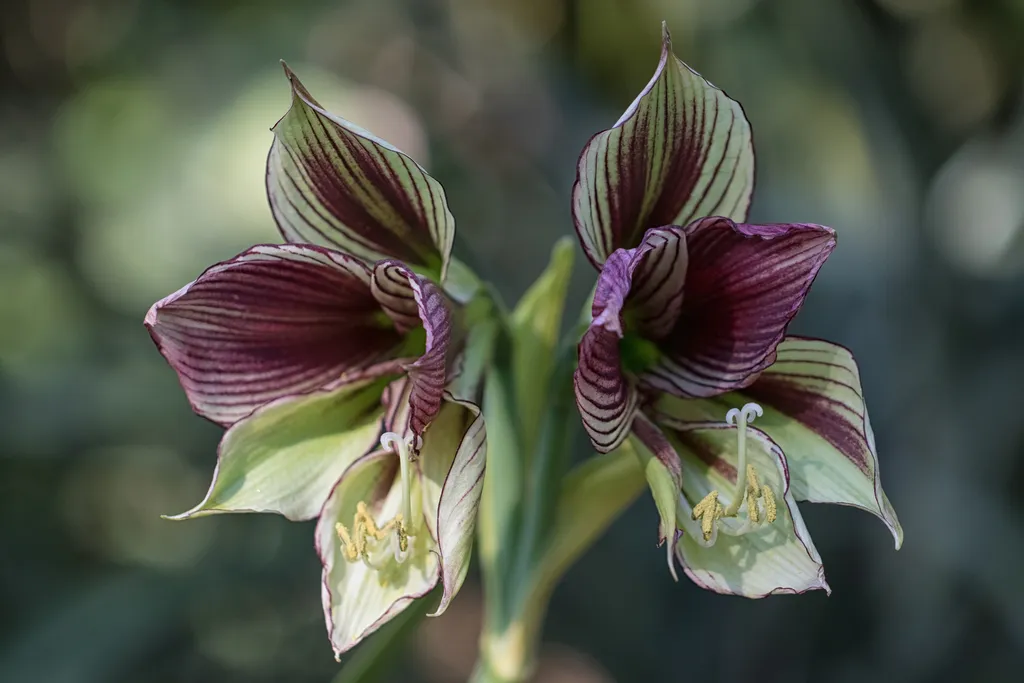
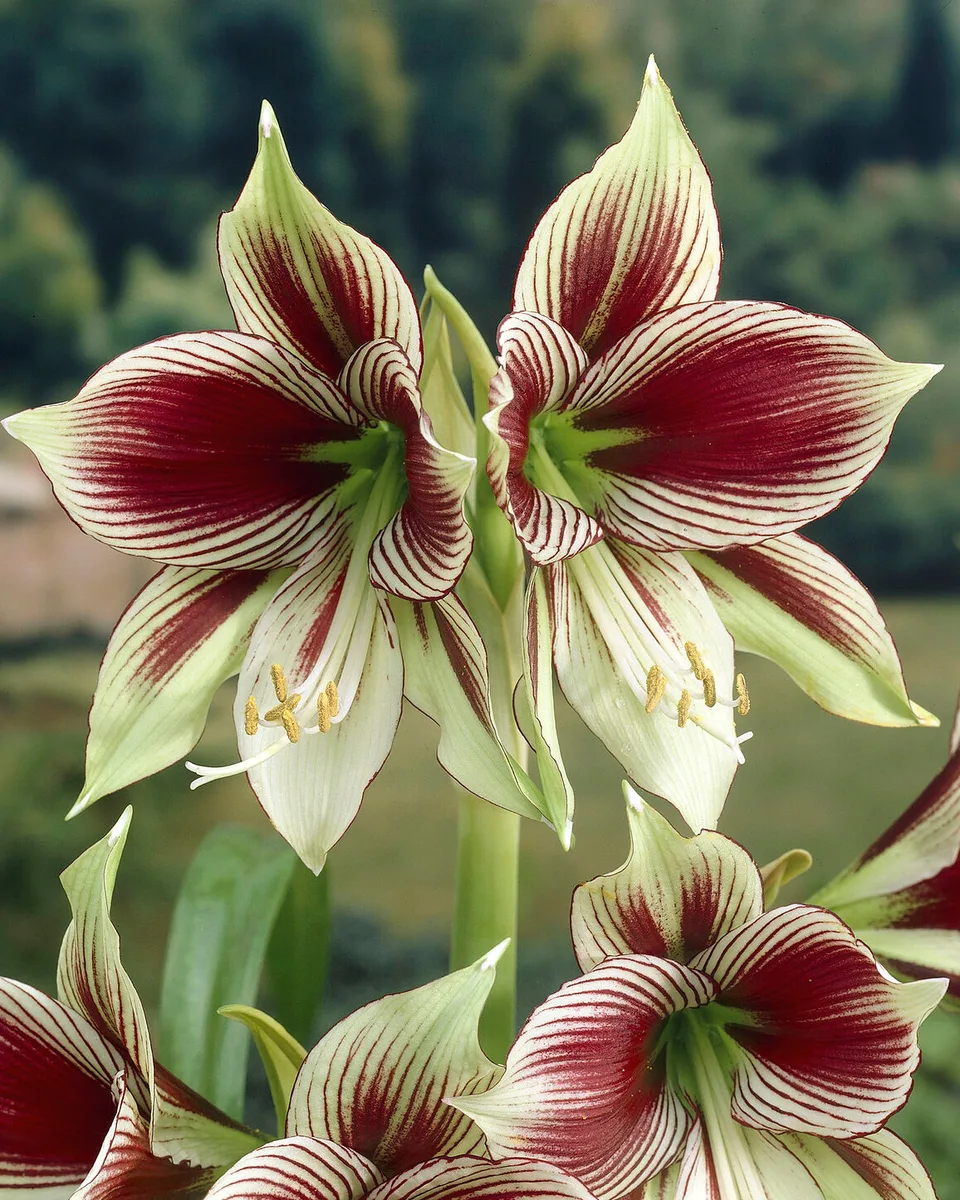
A robust species producing abundant leafy growth. Flowers are borne 2 or 3 to a stem, to 50cm tall, and have distinctive colouring, the greenish-white tepals strongly streaked and edged with dark red. The lower pair of tepals, widely spread and pointed, suggesting the "butterfly" specific name. This is potentially an evergreen species, unless grown with managed dormancy, and may flower twice a year, in spring and autumn
Scientific classification
- Species
- butterfly amaryllis (Hippeastrum papilio)
- Genus
- Hippeastrum
- Family
- Amaryllidaceae
- Order
- Asparagales
- Class
- Liliopsida
- Phylum
- Magnoliophyta
- Harmful if eaten. Wear gloves and other protective equipment when handling
- Toxicity
- Conservatory Greenhouse · Bulbs · Houseplants
- Plant type
- 0.1-0.5 metres
- Height
- 0.1-0.5 metres
- Spread
- Deciduous
- Foliage
- Tufted
- Habit
- Spring · Winter · Autumn
- Season of interest
- Full sun · Partial shade
- Sunlight
- Information to be completed
- Ideal temperature









butterfly amaryllis pictures
Distribution of butterfly amaryllis
Distribution map
- Native
- Introduced
- Cultivated
Source:WCVP v16 · Royal Botanic Gardens, Kew · CC BY 3.0 · Boundaries:WGSRPD / TDWG
Toxicity
Harmful if eaten. Wear gloves and other protective equipment when handling
butterfly amaryllis care guide
- Moderate regular watering, avoid prolonged drought and stagnant waterlogging
- Watering
- Full sun · Partial shade
- Sunlight

Watering
Moderate regular watering, avoid prolonged drought and stagnant waterlogging
Fertilizing
 Fertilizing
Balanced perennial feed every four weeks spring through summer growth
Pruning
 Pruning
No pruning required
Propagation
 Propagation
Propagate by seed sown as fresh as possible in a temperature of 16-18°C. Seeds can be started in John Innes seed compost and seedlings potted on using John Innes No 2 with the addition of extra sharp sand or grit. Grow in individual small pots, potting on periodically during the spring-summer season of vigorous growth into slightly larger pots as the young plants develop or each time the pot becomes well filled with roots. Keep plants growing actively, in moderate warmth, allowing no periods of dormancy. Cultivars will not come true from seed; an alternative method of propagation is to remove offsets in autumn
Growing
 Growing
Pot newly purchased bulbs from October to January, large bulbs in a 15cm container, smaller ones in a 10cm container, planting so that two-thirds of the bulb remains above the surface and watering in well. The appearance of leaves will signify that root activity has started and regular watering can begin. A good supply of water is required as soon as growth becomes vigorous. A warm buoyant atmosphere with a temperature ideally in the region of 15-18°C and a sunny position are desirable for good growth. Exposure to the sun should be avoided only in the hottest part of summer
Common pests and diseases
Diseases
Generally disease-free
Pests
May be susceptible to bulb scale mite, large narcissus bulb fly and slugs and snails throughout the summer months
Explore the plant health library →




