
Kurile cherry 'Ruby'
Also known as: Information to be completed
A deciduous tree to 4m, bearing drooping clusters of soft pink flowers in early spring. The new foliage is bronze-flushed as it unfurls, green in summer, and turns yellow and orange before falling in autumn. This cultivar is sometimes available as a half-standard, making it suitable for growing in a large planter
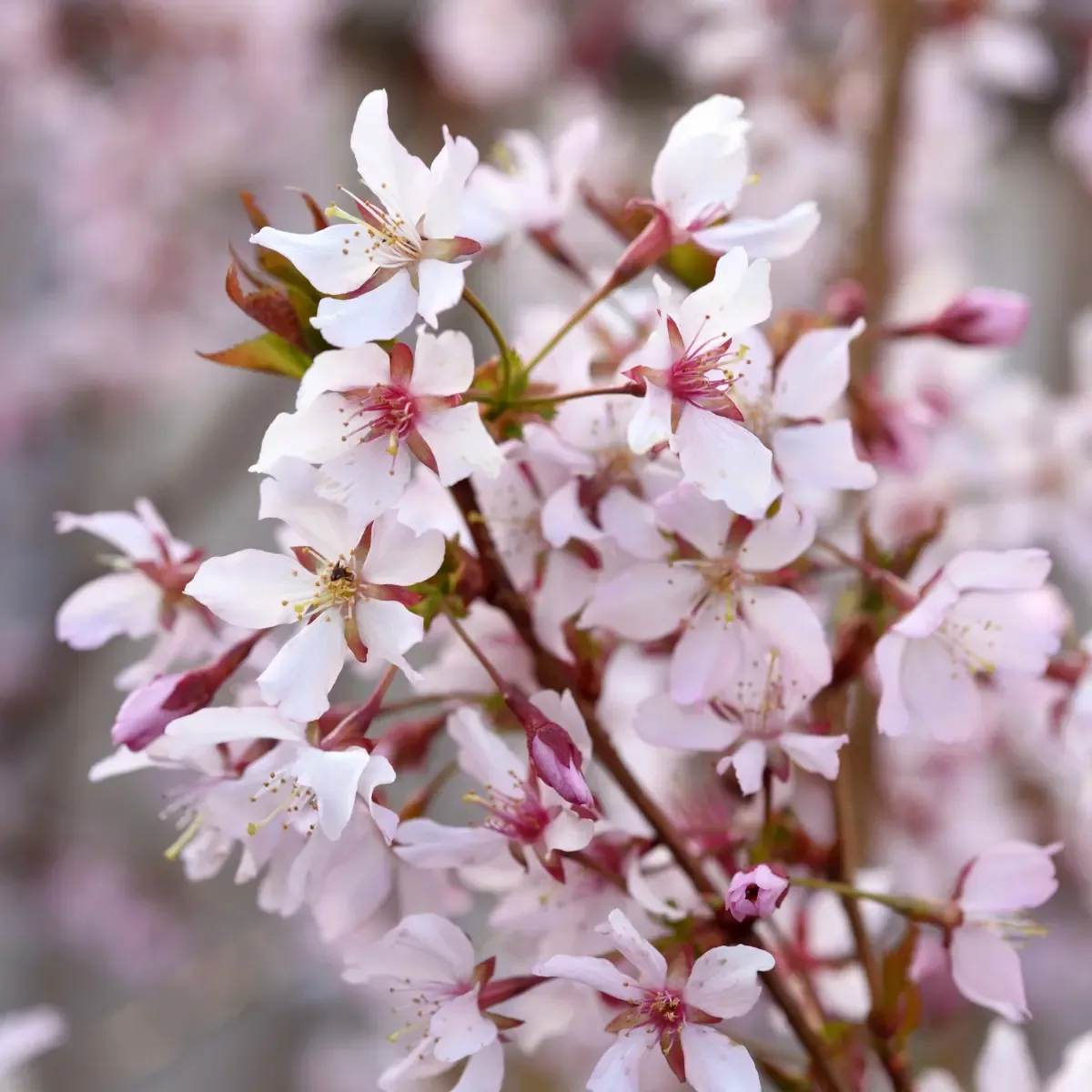
Scientific classification
- Species
- Kurile cherry 'Ruby' (Prunus nipponica var. kurilensis 'Ruby')
- Genus
- Prunus
- Family
- Rosaceae
- Information to be completed
- Toxicity
- Trees
- Plant type
- 2.5-4 metres
- Height
- 1.5-2.5 metres
- Spread
- Deciduous
- Foliage
- Information to be completed
- Habit
- Autumn · Spring · Summer
- Season of interest
- Full sun
- Sunlight
- Information to be completed
- Ideal temperature









Kurile cherry 'Ruby' pictures
Distribution of Kurile cherry 'Ruby'
Distribution map
Information to be completed
Information to be completed
Culture
Information to be completed
Toxicity
Information to be completed
Quick identification of Kurile cherry 'Ruby'
Information to be completed
Kurile cherry 'Ruby' care guide
- Deep watering during dry spells, let surface soil partly dry between sessions
- Watering
- Full sun
- Sunlight
- Information to be completed
- Ideal temperature

Watering
Deep watering during dry spells, let surface soil partly dry between sessions
Fertilizing
 Fertilizing
Balanced tree feed applied once every early spring growth cycle
Pruning
 Pruning
Little pruning is needed. Remove diseased, damaged, crowded or crossing shoots and unwanted growth. Timing depends on the plant: generally late winter or early spring; plants prone to bleeding and deciduous magnolias need different timing, and deciduous azaleas and lilacs are pruned after flowering.
Propagation
 Propagation
Propagate by budding or grafting
Growing
 Growing
Grow in any moist but well-drained, moderately fertile soil in full sun. For pot cultivation use a loam-based potting compost
People also ask
Information to be completed
Common pests and diseases
Diseases
May be susceptible to peach leaf curl, silver leaf, bacterial canker, blossom wilt and honey fungus
Pests
May be susceptible to aphids
Explore the plant health library →




