
apple 'Cambusnethan Pippin'
Also known as: Information to be completed
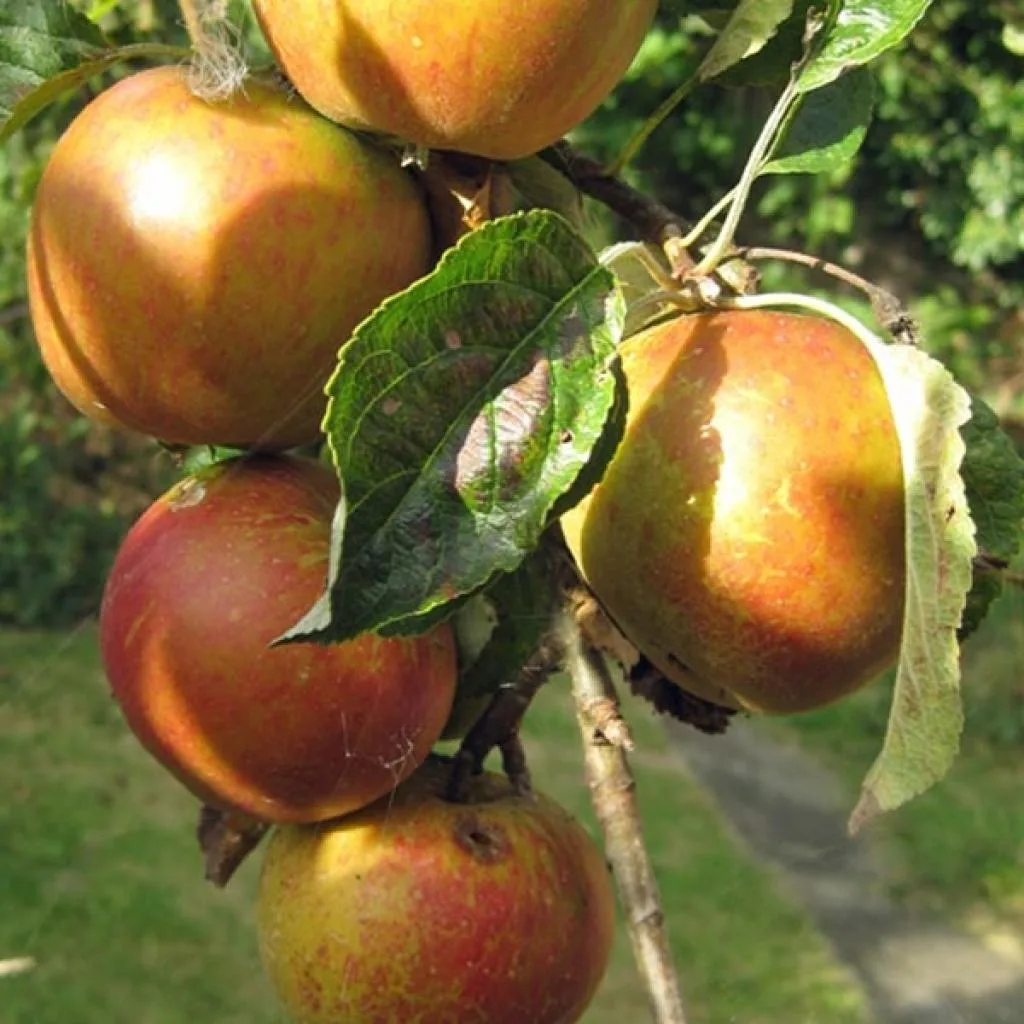
A small, mid-season, dual-purpose apple with pale, yellow-green skin flushed with red and orange, and firm, chewy flesh with a sweet, light flavour. A spreading, rather weak-growing tree which is partly tip-bearing and crops in early autumn, fruit storing to late autumn. Requires a group 3, 4 or 5 pollinator
Scientific classification
- Species
- apple 'Cambusnethan Pippin' (Malus domestica 'Cambusnethan Pippin')
- Genus
- Malus
- Family
- Rosaceae
- Order
- Rosales
- Class
- Magnoliopsida
- Phylum
- Magnoliophyta
- Information to be completed
- Toxicity
- Fruit Edible · Trees
- Plant type
- 2.5-4 metres
- Height
- 4-8 metres
- Spread
- Deciduous
- Foliage
- Information to be completed
- Habit
- Spring · Summer · Autumn
- Season of interest
- Full sun
- Sunlight
- Information to be completed
- Ideal temperature









apple 'Cambusnethan Pippin' pictures
Distribution of apple 'Cambusnethan Pippin'
Distribution map
- Native
- Introduced
- Cultivated
Source:WCVP v16 · Royal Botanic Gardens, Kew · CC BY 3.0 · Boundaries:WGSRPD / TDWG
apple 'Cambusnethan Pippin' care guide
- Deep regular watering for young trees; established trees withstand dry periods
- Watering
- Full sun
- Sunlight

Watering
Deep regular watering for young trees; established trees withstand dry periods
Fertilizing
 Fertilizing
Fruit tree granular fertilizer applied once annually at early spring time
Pruning
 Pruning
Prune according to chosen training method. See apple pruning
Propagation
 Propagation
Propagate by chip budding in late summer, or grafting in mid-winter. Plants grown from pips are unlikely to resemble the parent
Growing
 Growing
Prefers deep, fertile, moist but well-drained, neutral soil in a sunny sheltered position. Will not thrive on very acid soils, shallow chalk soils or with shade for more than half the day. May require fruit thinning to improve fruit size and quality. See apple cultivation
Common pests and diseases
Diseases
May be susceptible to apple canker, apple scab, blossom wilt, brown rot, fireblight, honey fungus and powdery mildews
Pests
May be susceptible to aphids, including rosy apple aphid and woolly aphid, fruit tree red spider mite, codling moth and other caterpillars
Explore the plant health library →




