
Pratt's catmint
Also known as: Information to be completed
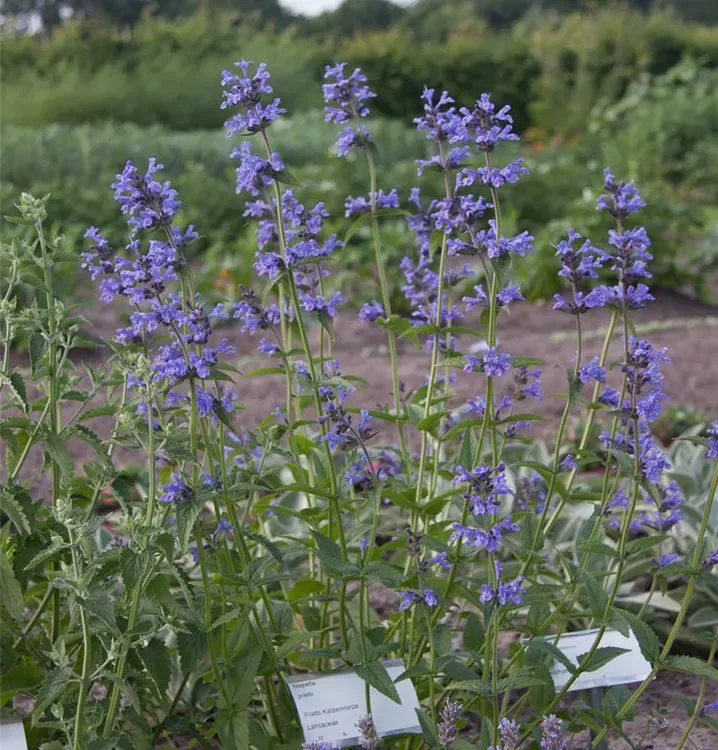
N. prattii is a bushy perennial up to 90cm tall with lance-shaped, scallop-edged leaves to 8cm long and purple-blue flowers to 3.5cm borne in relatively distant whorls towards the stem tips
Scientific classification
- Species
- Pratt's catmint (Nepeta prattii)
- Genus
- Nepeta
- Family
- Lamiaceae
- Order
- Lamiales
- Class
- Magnoliopsida
- Phylum
- Magnoliophyta
- Information to be completed
- Toxicity
- Herbaceous Perennial
- Plant type
- 0.5-1 metres
- Height
- 0.1-0.5 metres
- Spread
- Deciduous
- Foliage
- Bushy
- Habit
- Spring · Summer · Autumn
- Season of interest
- Full sun · Partial shade
- Sunlight
- Information to be completed
- Ideal temperature









Pratt's catmint pictures
Distribution of Pratt's catmint
Distribution map
- Native
- Introduced
- Cultivated
Source:WCVP v16 · Royal Botanic Gardens, Kew · CC BY 3.0 · Boundaries:WGSRPD / TDWG
Pratt's catmint care guide
- Regular moderate watering, allow slight drying of top soil layer
- Watering
- Full sun · Partial shade
- Sunlight

Watering
Regular moderate watering, allow slight drying of top soil layer
Fertilizing
 Fertilizing
Catmint flowering diluted feed monthly spring through summer
Pruning
 Pruning
Deadheading plants regularly will prolong flowering
Propagation
 Propagation
Propagate by seed sown in autumn, divide in spring or autumn, or take softwood cuttings in early summer or semi-ripe cuttings in early autumn
Growing
 Growing
Grow in any moist but well-drained soil in full sun or partial shade
Common pests and diseases
Diseases
Powdery mildews may be a problem in dry summers
Pests
Slugs and snails may damage young growth
Explore the plant health library →




