
cherry (sweet) 'Bigarreau Napoléon'
Also known as: Information to be completed
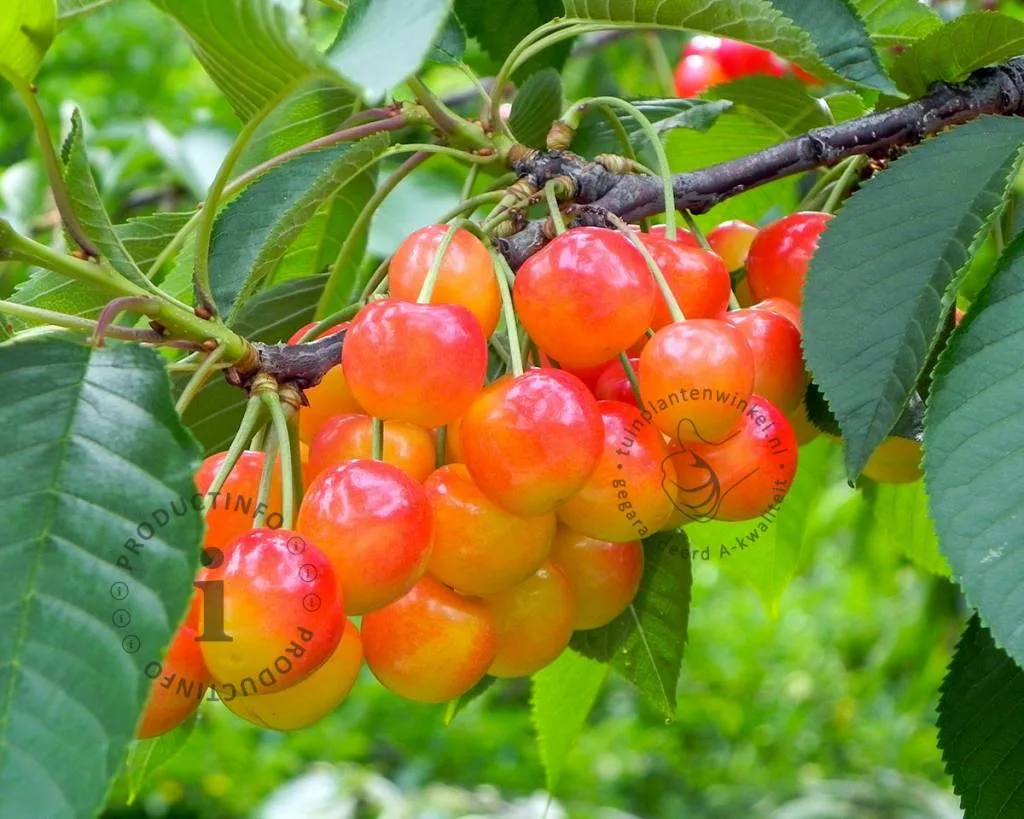
A sweet cherry producing abundant white blossom in spring that is followed by pale yellow fruit heavily red flushed with a well flavoured pale yellow flesh. So called ‘white’ cherry which is referring to the pale colour of the flesh, not the fruit skin. Cropping season: late July – Early August. Pollination group 4
Scientific classification
- Species
- cherry (sweet) 'Bigarreau Napoléon' (Prunus avium 'Bigarreau Napoléon')
- Genus
- Prunus
- Family
- Rosaceae
- Order
- Rosales
- Class
- Magnoliopsida
- Phylum
- Magnoliophyta
- Information to be completed
- Toxicity
- Fruit Edible
- Plant type
- 2.5-4 metres
- Height
- 2.5-4 metres
- Spread
- Deciduous
- Foliage
- Bushy
- Habit
- Spring · Summer
- Season of interest
- Full sun
- Sunlight
- Information to be completed
- Ideal temperature









cherry (sweet) 'Bigarreau Napoléon' pictures
Distribution of cherry (sweet) 'Bigarreau Napoléon'
Distribution map
- Native
- Introduced
- Cultivated
Source:WCVP v16 · Royal Botanic Gardens, Kew · CC BY 3.0 · Boundaries:WGSRPD / TDWG
cherry (sweet) 'Bigarreau Napoléon' care guide
- Deep watering during dry spells, allowing slight surface drying between soakings
- Watering
- Full sun
- Sunlight

Watering
Deep watering during dry spells, allowing slight surface drying between soakings
Fertilizing
 Fertilizing
Balanced shrub or tree feed once each early spring
Pruning
 Pruning
Train fan-trained trees in spring. Prune established fans and carry out routine pruning on established cherry trees when harvesting the fruits in summer
Propagation
 Propagation
Propagate by chip budding or grafting on clonal rootstock for fruit
Growing
 Growing
Grow in moderately fertile soil in full sun. Cherries are best suited to fan-training so they can be netted against bird damage and protected from frosts. Further sweet cherry cultivation advice
Common pests and diseases
Diseases
May be susceptible to peach leaf curl, silver leaf, bacterial canker, blossom wilt and honey fungus
Pests
May be susceptible to cherry blackfly, pear and cherry slugworm and winter moth caterpillar. The fruit can be damaged by spotted wing drosophila and birds
Explore the plant health library →




