
Dalmatian iris 'Argentea Variegata'
Also known as: Information to be completed
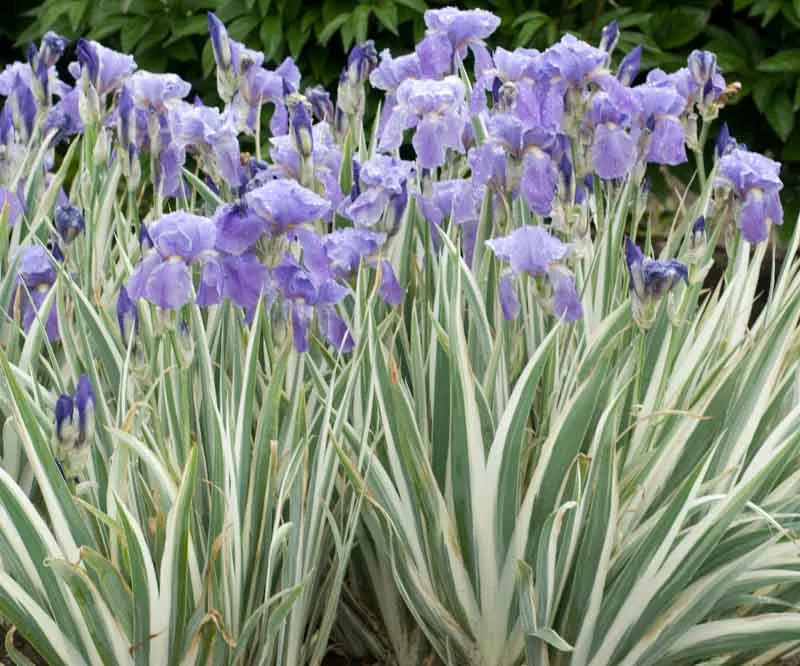
A semi-evergreen plant with sword-shaped grey-green leaves edged with white, and fragrant light blue-purple flowers 10cm wide in early summer, the falls with purple veins on white near the base
Scientific classification
- Species
- Dalmatian iris 'Argentea Variegata' (Iris pallida 'Argentea Variegata')
- Genus
- Iris
- Family
- Iridaceae
- Harmful if eaten. Wear gloves and other protective equipment when handling
- Toxicity
- Herbaceous Perennial
- Plant type
- 0.5-1 metres
- Height
- 0.1-0.5 metres
- Spread
- Semi evergreen
- Foliage
- Bushy
- Habit
- Spring · Summer · Autumn · Winter
- Season of interest
- Full sun
- Sunlight
- Information to be completed
- Ideal temperature









Dalmatian iris 'Argentea Variegata' pictures
Distribution of Dalmatian iris 'Argentea Variegata'
Distribution map
Information to be completed
Information to be completed
Culture
Information to be completed
Toxicity
Harmful if eaten. Wear gloves and other protective equipment when handling
Quick identification of Dalmatian iris 'Argentea Variegata'
Information to be completed
Dalmatian iris 'Argentea Variegata' care guide
- Water moderately, let surface dry slightly between irrigations
- Watering
- Full sun
- Sunlight
- Information to be completed
- Ideal temperature

Watering
Water moderately, let surface dry slightly between irrigations
Fertilizing
 Fertilizing
Low nitrogen feed in spring before and after bloom
Pruning
 Pruning
Remove any dying foliage in autumn, old flower stems can be cut down after flowering. Tall varieties can have their leaf fans trimmed to one third of the total height to reduce wind rock while the plants are establishing
Propagation
 Propagation
Propagate by seed sown in pots in a cold frame in autumn or spring. Propagate by division of rhizomes from midsummer to early autumn, see dividing irises
Growing
 Growing
Grow in well-drained, fertile, neutral to slightly acid loam in full sun. See bearded iris cultivation
People also ask
Information to be completed
Common pests and diseases
Diseases
May be susceptible to aphid-borne viruses, bacterial soft rot and grey moulds; see Iris diseases
Pests
May be susceptible to slugs, snails and thrips
Explore the plant health library →




