
Reynold’s wandflower
Also known as: Information to be completed
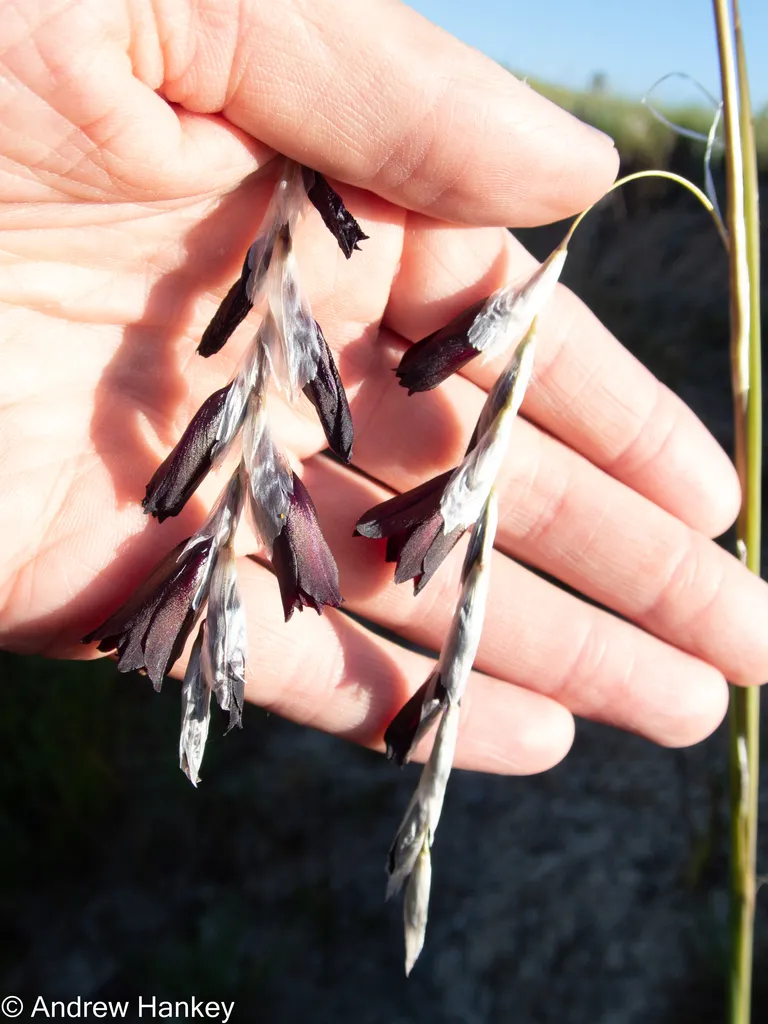
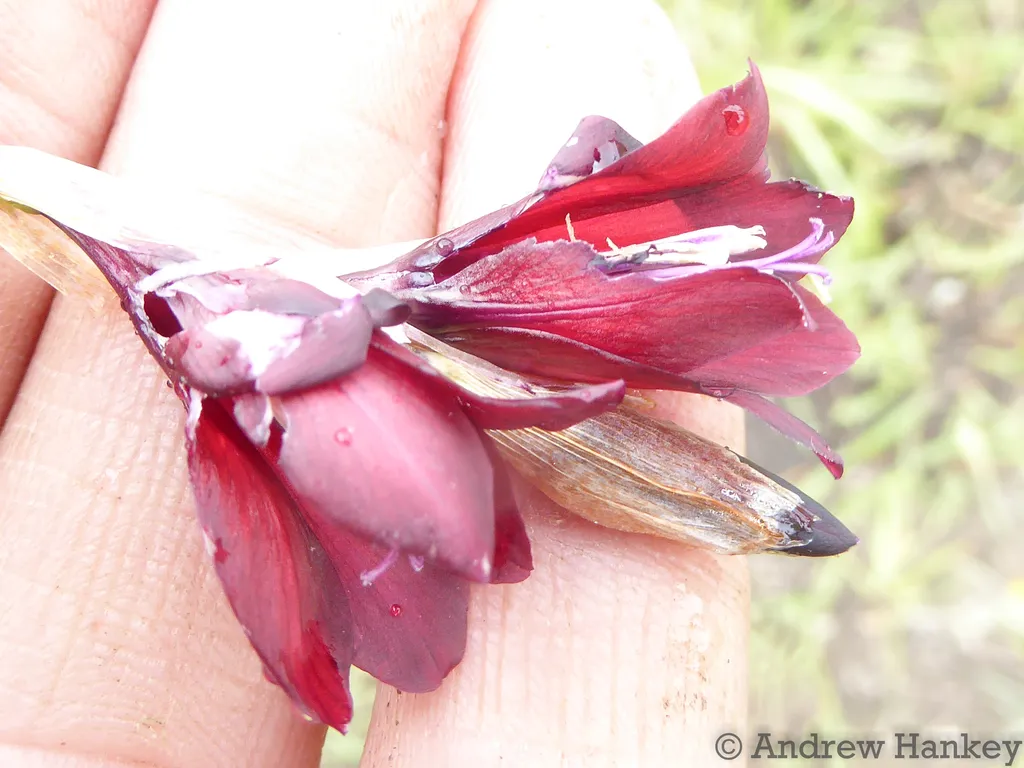
A slow-growing evergreen perennial, up to 2m high in flower, with fine clumps of narrow, grass-like leaves. From mid to late summer, produces slender, arching stems bearing a succession of pendent, bell-shaped deep red flowers with contrasting silvery bracts
Scientific classification
- Species
- Reynold’s wandflower (Dierama reynoldsii)
- Genus
- Dierama
- Family
- Iridaceae
- Order
- Asparagales
- Class
- Liliopsida
- Phylum
- Magnoliophyta
- Information to be completed
- Toxicity
- Herbaceous Perennial · Bulbs
- Plant type
- 1.5-2.5 metres
- Height
- 0.5-1 metres
- Spread
- Evergreen
- Foliage
- Tufted · Clump forming
- Habit
- Spring · Summer · Autumn · Winter
- Season of interest
- Full sun
- Sunlight
- Information to be completed
- Ideal temperature









Reynold’s wandflower pictures
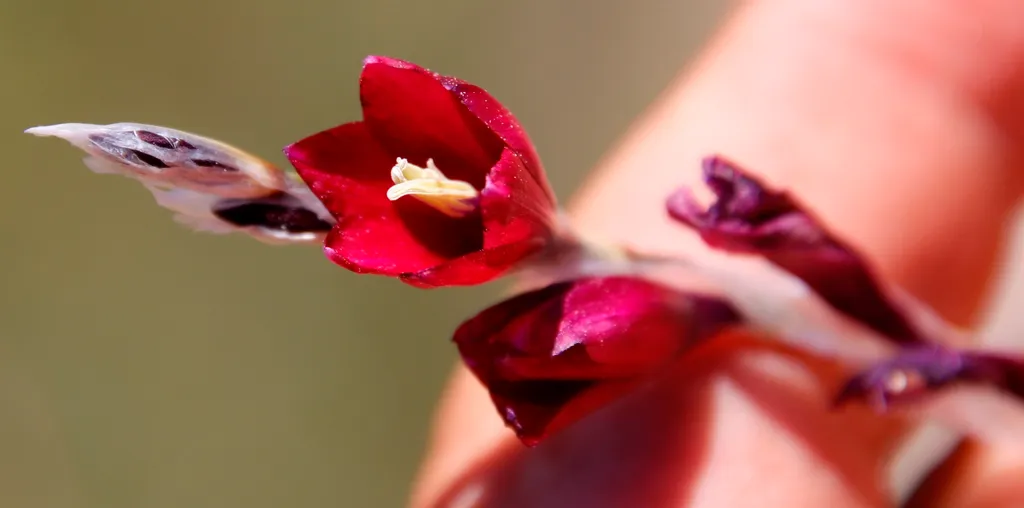
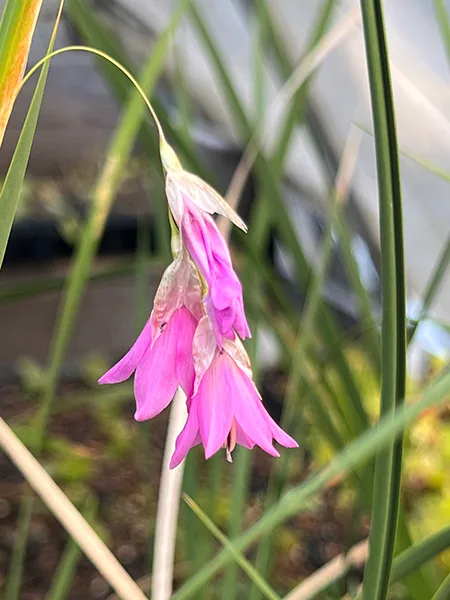
Distribution of Reynold’s wandflower
Distribution map
- Native
- Introduced
- Cultivated
Source:WCVP v16 · Royal Botanic Gardens, Kew · CC BY 3.0 · Boundaries:WGSRPD / TDWG
Reynold’s wandflower care guide
- Moderate regular watering, allowing brief slight drying between soakings
- Watering
- Full sun
- Sunlight

Watering
Moderate regular watering, allowing brief slight drying between soakings
Fertilizing
 Fertilizing
Balanced perennial feed every four weeks from spring through summer
Pruning
 Pruning
Tidy any winter-damaged foliage by cutting to the base in spring
Propagation
 Propagation
Propagate by seed in containers in a cold frame as soon as ripe, or by division of mature clumps, carefully separating corms in spring. Plants from seed may vary; young plants and divisions can be slow to establish
Growing
 Growing
Grow in humus-rich, well drained soil in an open, sunny spot; these plants like moisture during the growing season but dislike winter wet. Add a compost mulch in spring. May benefit from winter protection in colder areas. See dierama cultivation for more detailed advice
Common pests and diseases
Diseases
Generally disease-free
Pests
Generally pest-free
Explore the plant health library →




