
Tarentum myrtle
Also known as: Information to be completed
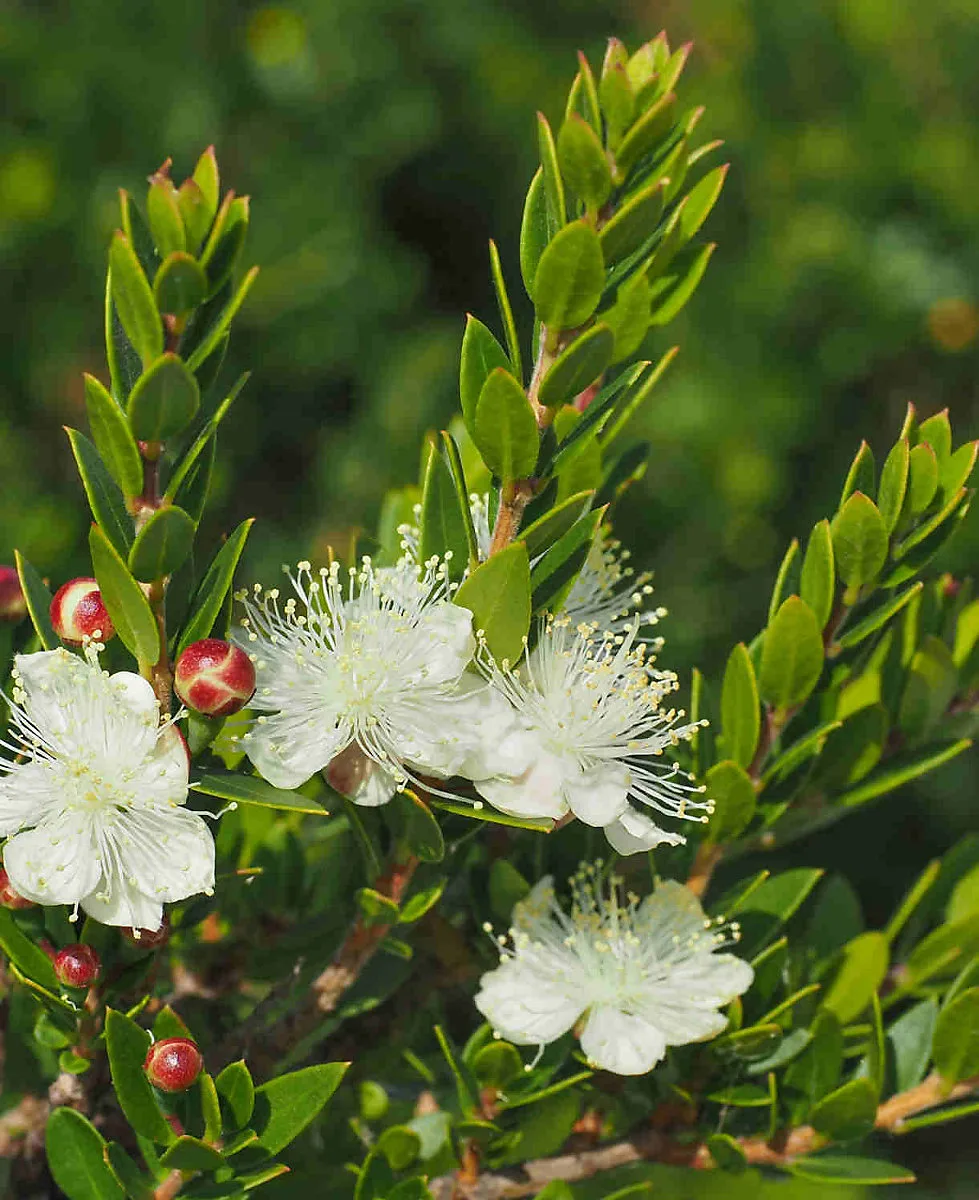
M. communis subsp. tarentina is a small evergreen shrub of dense growth, with small, narrowly ovate leaves, and pink buds opening to white flowers followed by white berries 12mm in length
Scientific classification
- Species
- Tarentum myrtle (Myrtus communis subsp. tarentina)
- Genus
- Myrtus
- Family
- Myrtaceae
- Information to be completed
- Toxicity
- Shrubs
- Plant type
- 1-1.5 metres
- Height
- 1-1.5 metres
- Spread
- Evergreen
- Foliage
- Bushy
- Habit
- Spring · Summer · Autumn · Winter
- Season of interest
- Full sun
- Sunlight
- Information to be completed
- Ideal temperature









Tarentum myrtle pictures
Distribution of Tarentum myrtle
Distribution map
Mediterranean
Information to be completed
Culture
Information to be completed
Toxicity
Information to be completed
Quick identification of Tarentum myrtle
Information to be completed
Tarentum myrtle care guide
- Moderate regular watering, avoid prolonged drought or waterlogging
- Watering
- Full sun
- Sunlight
- Information to be completed
- Ideal temperature

Watering
Moderate regular watering, avoid prolonged drought or waterlogging
Fertilizing
 Fertilizing
Balanced feed in spring and light repeat in growth season
Pruning
 Pruning
For free-standing plants: Prune lightly as needed to remove unwanted shoots and keep the shrub in shape. Prune in mid- to late spring. For wall-trained specimens: On established wall-trained shrubs, shorten sideshoots to two to four buds from the framework; remove shoots growing towards the wall. Prune annually after flowering on last-year growth, or in late winter or early spring on current-year growth.
Propagation
 Propagation
Propagate by seed sown in containers in a coldframe in autumn or root semi-hardwood cuttings in late summer with bottom heat
Growing
 Growing
Grows well in most moderately fertile soils. Provide shelter from cold, drying winds. Long, hot summers are required for the production of fruits and flowers
People also ask
Information to be completed
Common pests and diseases
Diseases
May be susceptible to honey fungus (rarely)
Pests
Generally pest-free
Explore the plant health library →




