
Achimenes 'Charm'
Also known as: Information to be completed
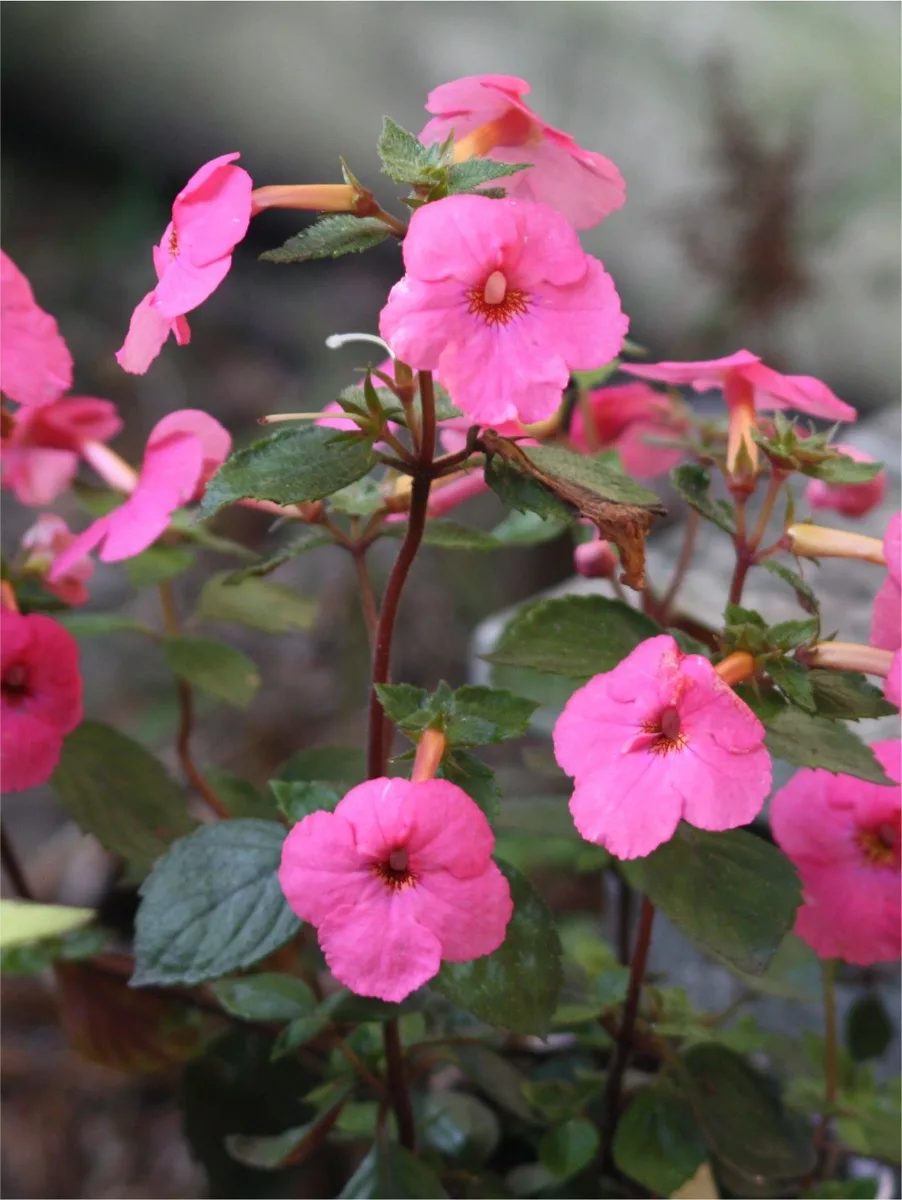
A bushy, deciduous perennial to 20cm with toothed, heavily veined dark green leaves with a silvery coating. Dainty, coral-pink, trumpet-shaped flowers are produced from June through to October
Scientific classification
- Species
- Achimenes 'Charm' (Achimenes 'Charm')
- Genus
- Achimenes
- Family
- Gesneriaceae
- Information to be completed
- Toxicity
- Houseplants · Conservatory Greenhouse
- Plant type
- Information to be completed
- Height
- Information to be completed
- Spread
- Deciduous
- Foliage
- Bushy
- Habit
- Spring · Summer · Autumn
- Season of interest
- Full sun · Partial shade
- Sunlight
- Information to be completed
- Ideal temperature









Achimenes 'Charm' pictures
Distribution of Achimenes 'Charm'
Distribution map
Information to be completed
Information to be completed
Culture
Information to be completed
Toxicity
Information to be completed
Quick identification of Achimenes 'Charm'
Information to be completed
Achimenes 'Charm' care guide
- Moderate regular watering, allowing brief slight drying between soakings
- Watering
- Full sun · Partial shade
- Sunlight
- Information to be completed
- Ideal temperature

Watering
Moderate regular watering, allowing brief slight drying between soakings
Fertilizing
 Fertilizing
Balanced perennial feed every four weeks from spring through summer
Pruning
 Pruning
No pruning required
Propagation
 Propagation
Propagate by division of rhizomes in spring or stem tip cuttings in spring. See softwood cuttings for further advice
Growing
 Growing
Grow under glass in either multi-purpose compost or John Innes No 2 loam-based compost in bright, filtered light. To bring rhizomes into growth in spring, temperatures of 16-18°C (61-64°F) are ideal. Water sparingly until summer when plants should be watered freely. Apply a balanced liquid fertiliser at quarter strength at each watering
People also ask
Information to be completed
Common pests and diseases
Diseases
Generally disease-free
Pests
May be susceptible to\r\naphids, glasshouse red spider mite and thrips
Explore the plant health library →




