
plum 'Avalon'
Also known as: Information to be completed
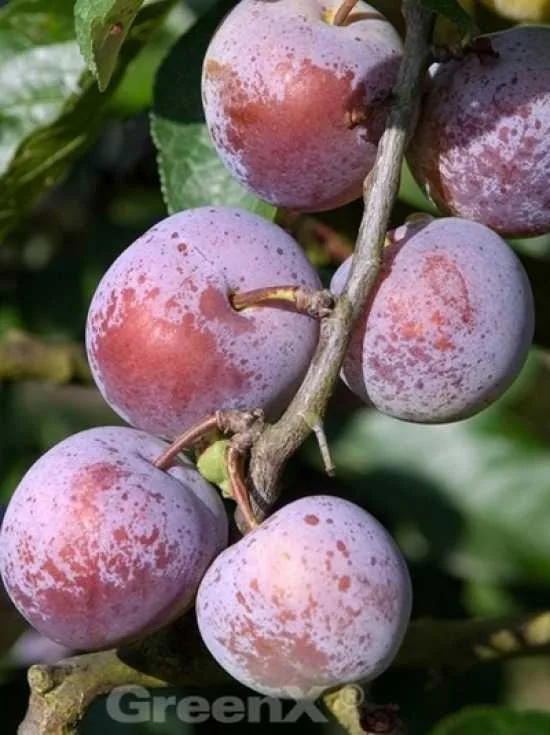
A mid-to late-season dessert plum with dark, red-purple skin and soft, sweet, juicy, deep yellow flesh. It can be slow to come into fruit but crops well and has relatively good disease resistance. Partially self-fertile; pollination group 2
Scientific classification
- Species
- plum 'Avalon' (Prunus domestica 'Avalon')
- Genus
- Prunus
- Family
- Rosaceae
- Order
- Rosales
- Class
- Magnoliopsida
- Phylum
- Magnoliophyta
- Information to be completed
- Toxicity
- Fruit Edible · Trees
- Plant type
- 2.5-4 metres
- Height
- 2.5-4 metres
- Spread
- Deciduous
- Foliage
- Bushy
- Habit
- Spring · Summer · Autumn
- Season of interest
- Full sun
- Sunlight
- Information to be completed
- Ideal temperature









plum 'Avalon' pictures
Distribution of plum 'Avalon'
Distribution map
- Native
- Introduced
- Cultivated
Source:WCVP v16 · Royal Botanic Gardens, Kew · CC BY 3.0 · Boundaries:WGSRPD / TDWG
plum 'Avalon' care guide
- Deep watering during dry spells, allowing slight surface drying between soakings
- Watering
- Full sun
- Sunlight

Watering
Deep watering during dry spells, allowing slight surface drying between soakings
Fertilizing
 Fertilizing
Balanced shrub or tree feed once each early spring
Pruning
 Pruning
Regular pruning required according to tree form, see pruning plums and pruning established fans
Propagation
 Propagation
Propagate by chip budding or grafting. Trees grown from stones will not resemble the parent
Growing
 Growing
Grow in full sun in a sheltered position in moist, but well-drained soil, ideally with a pH of 6 to 6.5. Irrigate in dry periods. Thin fruit if necessary
Common pests and diseases
Diseases
May be susceptible to peach leaf curl, silver leaf, bacterial canker, blossom wilt and honey fungus
Pests
Can suffer from plum aphid, caterpillars, fruit tree red spider mite, brown scale, plum moth and bullfinches
Explore the plant health library →




