
Caucasian leopard's bane
Also known as: Information to be completed
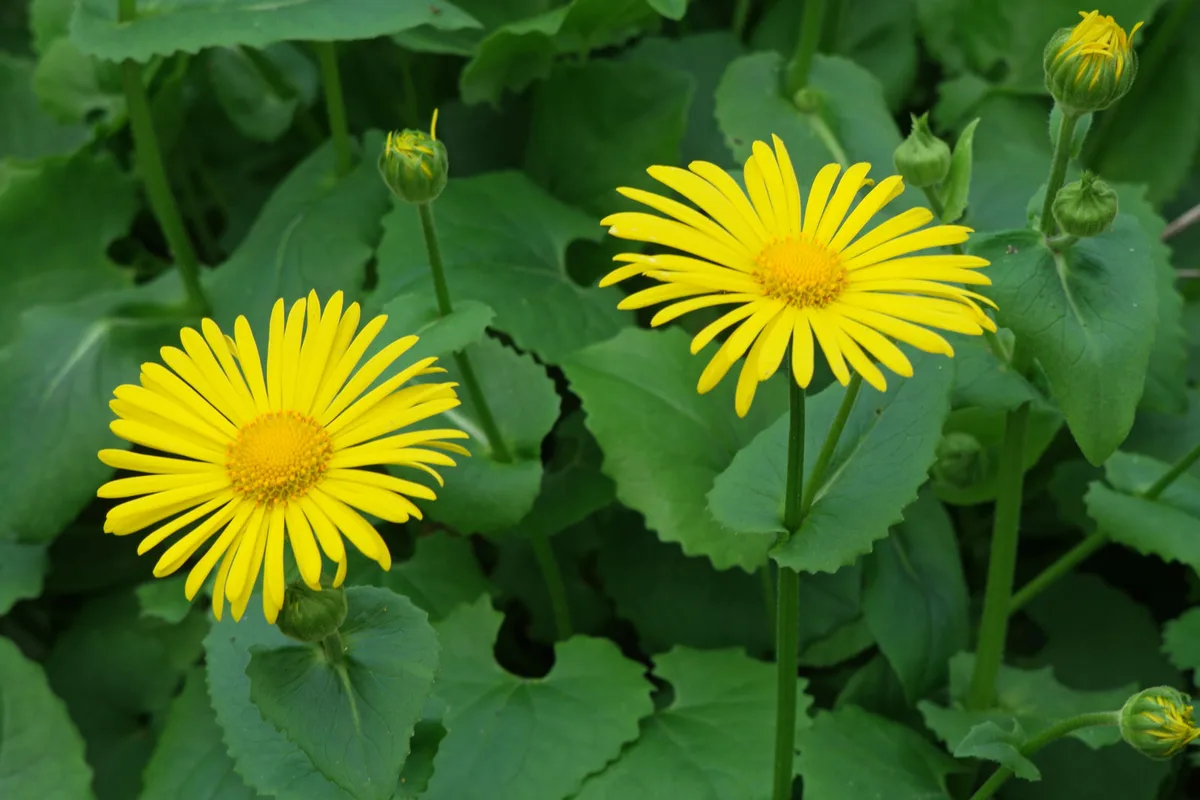
A slow-spreading, rhizomatous perennial with gently scalloped basal leaves with heart-shaped bases and a few stem leaves. Produces solitary, golden-yellow flower heads, 2.5-5cm across on slender stems in mid and late spring
Scientific classification
- Species
- Caucasian leopard's bane (Doronicum orientale)
- Genus
- Doronicum
- Family
- Asteraceae
- Information to be completed
- Toxicity
- Herbaceous Perennial
- Plant type
- 0.1-0.5 metres
- Height
- 0.5-1 metres
- Spread
- Deciduous
- Foliage
- Clump forming
- Habit
- Spring · Summer · Autumn
- Season of interest
- Partial shade
- Sunlight
- Information to be completed
- Ideal temperature









Caucasian leopard's bane pictures
Distribution of Caucasian leopard's bane
Distribution map
Southeastern Europe, Turkey, Caucasus
Information to be completed
Culture
Information to be completed
Toxicity
Information to be completed
Quick identification of Caucasian leopard's bane
Information to be completed
Caucasian leopard's bane care guide
- Moderate regular watering, allowing brief slight drying between soakings
- Watering
- Partial shade
- Sunlight
- Information to be completed
- Ideal temperature

Watering
Moderate regular watering, allowing brief slight drying between soakings
Fertilizing
 Fertilizing
Balanced perennial feed every four weeks from spring through summer
Pruning
 Pruning
Deadhead flowers for a second flush of blooms
Propagation
 Propagation
Propagate by division in early autumn or propagate by seed in containers in a cold frame in spring
Growing
 Growing
Grow in moist but well-drained, reasonably fertile, preferably sandy soil in partial shade
People also ask
Information to be completed
Common pests and diseases
Diseases
May be affected by a leaf spot, root rot and powdery mildews
Pests
Generally pest-free but leaf and bud eelworm may be troublesome
Explore the plant health library →




