
peach 'Duke of York'
Also known as: Information to be completed
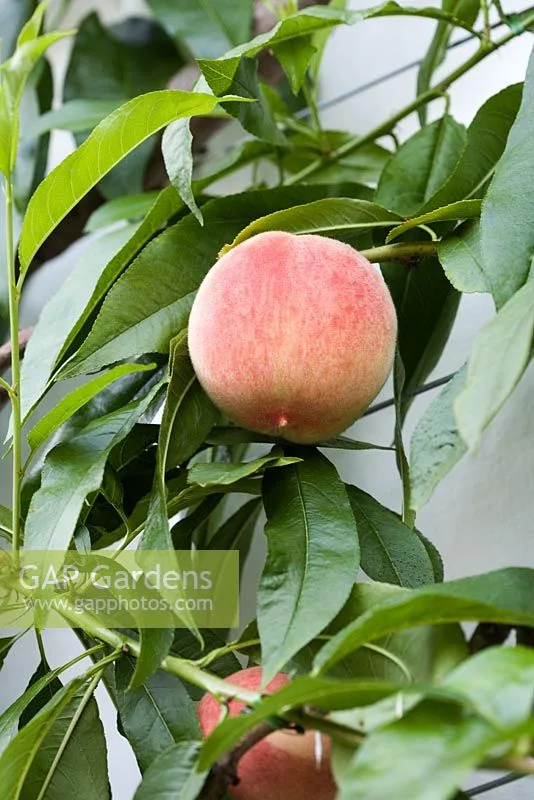
Peach 'Duke of York' is a reliable cultivar with green fruit and white flesh. They are of good quality and flavour, but this cultivar needs protection to grow and crop well. Crops from mid to late July
Scientific classification
- Species
- peach 'Duke of York' (Prunus persica 'Duke of York')
- Genus
- Prunus
- Family
- Rosaceae
- Order
- Rosales
- Class
- Magnoliopsida
- Phylum
- Magnoliophyta
- Information to be completed
- Toxicity
- Fruit Edible
- Plant type
- 2.5-4 metres
- Height
- 2.5-4 metres
- Spread
- Deciduous
- Foliage
- Bushy
- Habit
- Spring · Summer
- Season of interest
- Full sun
- Sunlight
- Information to be completed
- Ideal temperature









peach 'Duke of York' pictures
Distribution of peach 'Duke of York'
Distribution map
- Native
- Introduced
- Cultivated
Source:WCVP v16 · Royal Botanic Gardens, Kew · CC BY 3.0 · Boundaries:WGSRPD / TDWG
peach 'Duke of York' care guide
- Deep moderate watering, let top soil layer dry between irrigation rounds
- Watering
- Full sun
- Sunlight

Watering
Deep moderate watering, let top soil layer dry between irrigation rounds
Fertilizing
 Fertilizing
Fruit tree nutrient fertilizer applied yearly in early spring growth phase
Pruning
 Pruning
Prune established fans in spring and summer. Free standing peaches are pruned in the same way as pruning acid cherries
Propagation
 Propagation
Peaches are propagated by grafting onto a rootstock for fruit. Or propagate by seed, although the fruit from the seedlings is likely to be inferior in flavour to the parent. Seed-raised trees take four to five years to bear fruit
Growing
 Growing
Grow in a moist, but well-drained soil in full sun. Protect flowers from frosts with horticultural fleece. Best grown fan-trained, although in the south of England can be grown as a free standing bush
Common pests and diseases
Diseases
Protect peaches against peach leaf curl, by covering the plant from autumn to spring. Bacterial canker, silver leaf, brown rot and replant diseases may cause problems
Pests
Glasshouse red spider mite, aphids, and scale may be problematic, especially on wall-trained specimens or those grown in a glasshouse. Squirrels may damage fruit
Explore the plant health library →




