
Pittosporum tobira 'Nanum'
Also known as: Information to be completed
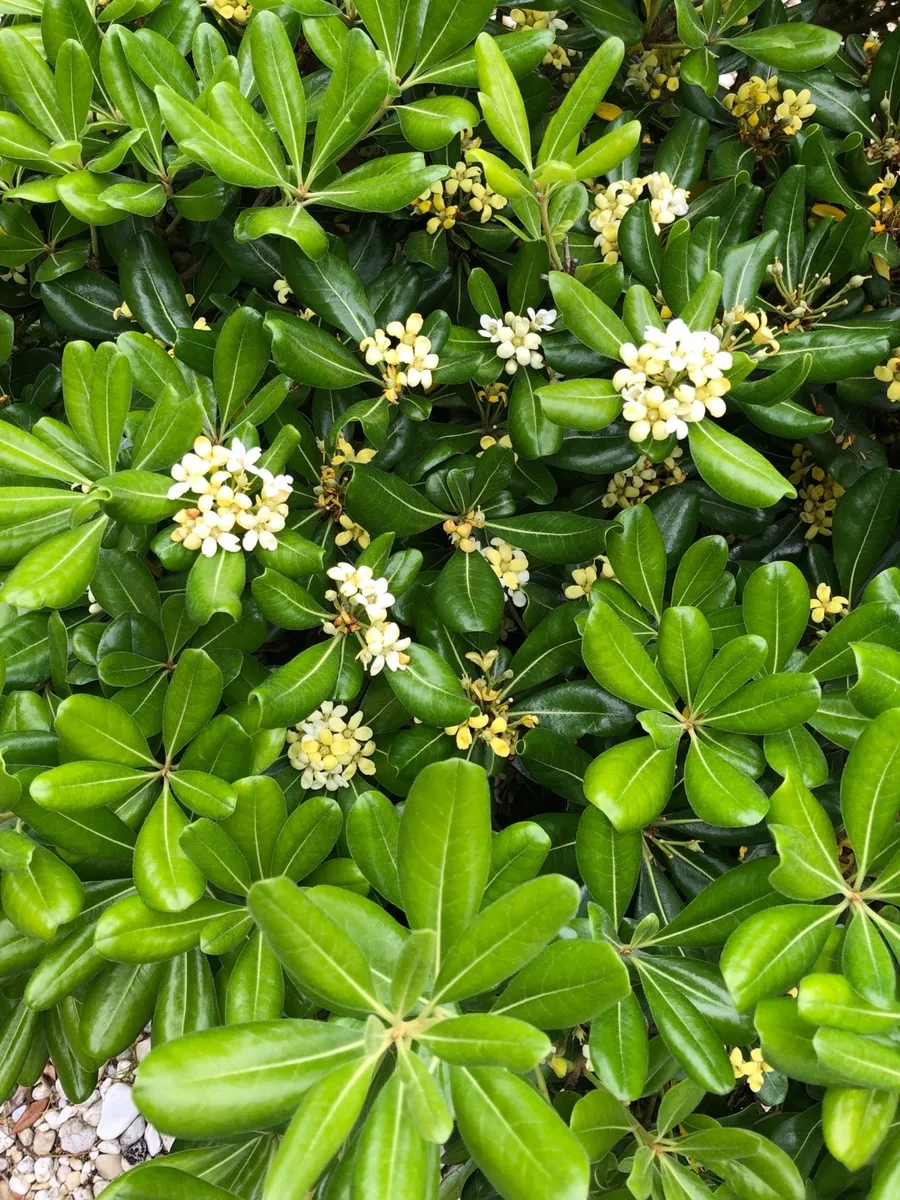
A small, dense, slow-growing, evergreen shrub to about 1m with leathery, glossy, obovate leaves, and large, terminal umbels of small, sweetly-scented flowers opening white, soon turning yellow, in late spring and early summer
Scientific classification
- Species
- Pittosporum tobira 'Nanum' (Pittosporum tobira 'Nanum')
- Genus
- Pittosporum
- Family
- Pittosporaceae
- Order
- Apiales
- Class
- Magnoliopsida
- Phylum
- Magnoliophyta
- Information to be completed
- Toxicity
- Shrubs · Conservatory Greenhouse
- Plant type
- 0.5-1 metres
- Height
- 0.5-1 metres
- Spread
- Evergreen
- Foliage
- Bushy
- Habit
- Spring · Summer · Autumn · Winter
- Season of interest
- Full sun · Partial shade
- Sunlight
- Information to be completed
- Ideal temperature









Pittosporum tobira 'Nanum' pictures
Distribution of Pittosporum tobira 'Nanum'
Distribution map
- Native
- Introduced
- Cultivated
Source:WCVP v16 · Royal Botanic Gardens, Kew · CC BY 3.0 · Boundaries:WGSRPD / TDWG
Pittosporum tobira 'Nanum' care guide
- Moderate regular watering, allowing brief slight drying between soakings
- Watering
- Full sun · Partial shade
- Sunlight

Watering
Moderate regular watering, allowing brief slight drying between soakings
Fertilizing
 Fertilizing
Balanced perennial feed every four weeks from spring through summer
Pruning
 Pruning
Little pruning is needed. Remove diseased, damaged, crowded or crossing shoots and unwanted growth. Timing depends on the plant: generally late winter or early spring; plants prone to bleeding and deciduous magnolias need different timing, and deciduous azaleas and lilacs are pruned after flowering.
Propagation
 Propagation
Propagate by semi-hardwood cuttings
Growing
 Growing
Grow outdoors in moist but well-drained soil in full sun. Protect from cold drying winds. Grow under glass in loam-based compost in full light
Common pests and diseases
Diseases
May be susceptible to powdery mildews, leafspot and honey fungus (rarely)
Pests
May be susceptible to glasshouse red spider mite, aphids, cushion scale and pittosporum sucker
Explore the plant health library →




