
great scarlet poppy
Also known as: Information to be completed
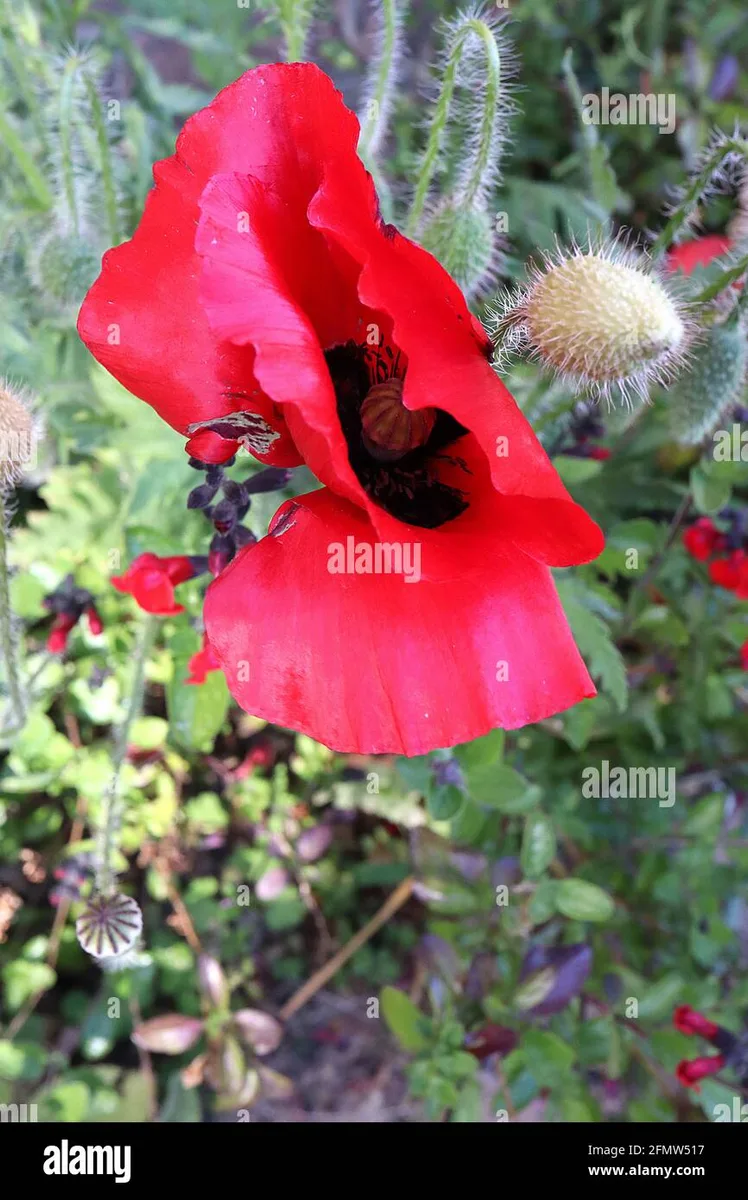
P. orientale var. bracteatum is an herbaceous perennial to 1m in height, with bristly, pinnate basal leaves and erect, unbranched stems bearing 10cm in width, deep red flowers 10-15cm across, each petal with a blackish-purple spot at base
Scientific classification
- Species
- great scarlet poppy (Papaver orientale var. bracteatum)
- Genus
- Papaver
- Family
- Papaveraceae
- Order
- Ranunculales
- Class
- Magnoliopsida
- Phylum
- Magnoliophyta
- Information to be completed
- Toxicity
- Herbaceous Perennial
- Plant type
- 0.5-1 metres
- Height
- 0.5-1 metres
- Spread
- Deciduous
- Foliage
- Clump forming
- Habit
- Spring · Summer
- Season of interest
- Full sun
- Sunlight
- Information to be completed
- Ideal temperature









great scarlet poppy pictures
Distribution of great scarlet poppy
Distribution map
Eastern Turkey, Northern Iran, Caucasus
great scarlet poppy care guide
- Moderate regular watering, allowing brief slight drying between soakings
- Watering
- Full sun
- Sunlight

Watering
Moderate regular watering, allowing brief slight drying between soakings
Fertilizing
 Fertilizing
Balanced perennial feed every four weeks from spring through summer
Pruning
 Pruning
Cut down once flowers fade and foliage looks tatty
Propagation
 Propagation
Propagate by division in spring or propagate by root cuttings in late autumn to early winter
Growing
 Growing
Grow in deep, fertile, well-drained soil in full sun or partial shade. May need support
Common pests and diseases
Diseases
May be susceptible to downy mildews, powdery mildews, fungal wilts and verticillium wilt
Pests
May be susceptible to aphids
Explore the plant health library →




