
pear 'Concorde'
Also known as: Information to be completed
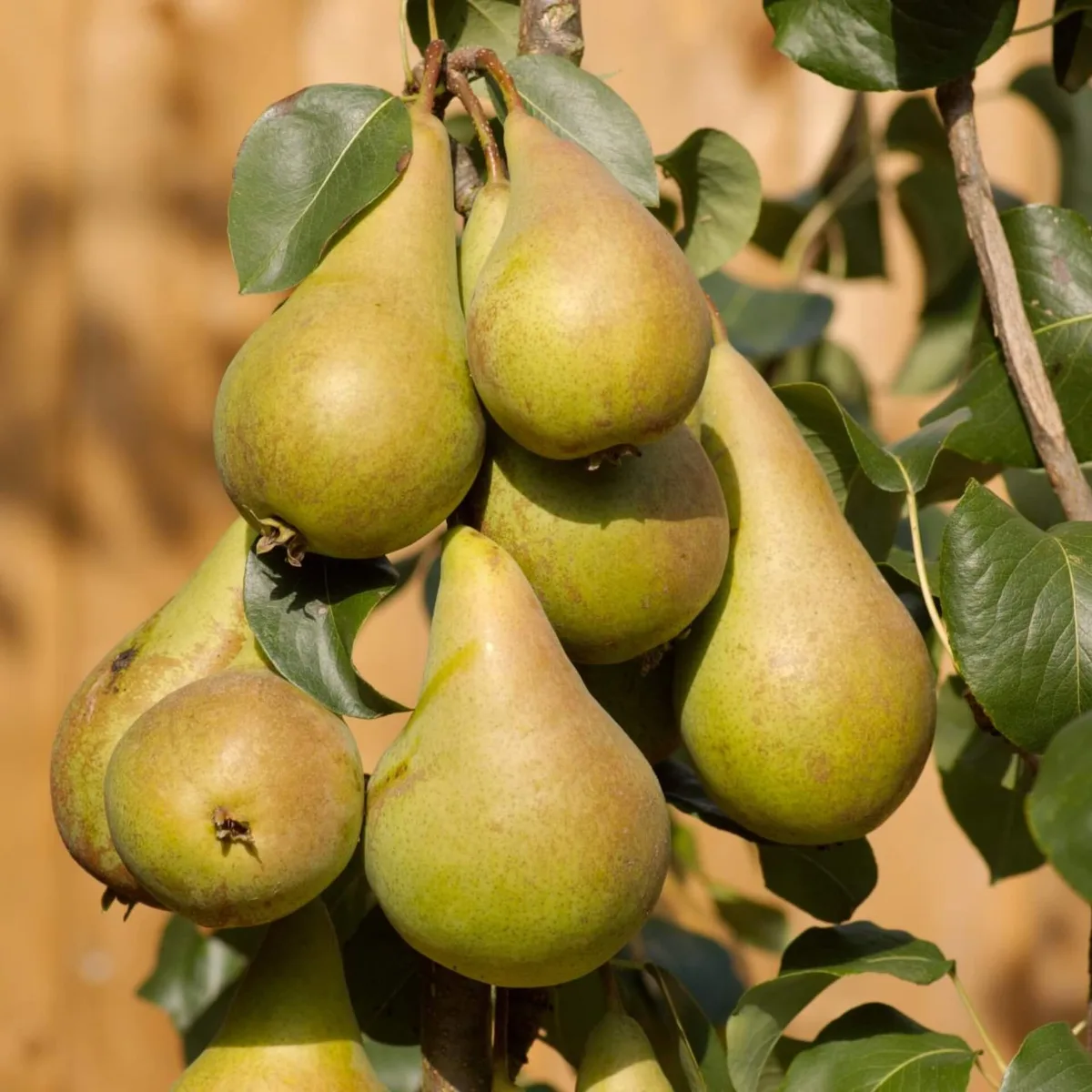
Concorde' is a compact dessert pear, 2.5-8m tall depending upon the rootstock. Flowers white, fruit green. Pollination group 4. Season of use: October to November
Scientific classification
- Species
- pear 'Concorde' (Pyrus communis 'Concorde')
- Genus
- Pyrus
- Family
- Rosaceae
- Information to be completed
- Toxicity
- Fruit Edible · Trees
- Plant type
- 4-8 metres
- Height
- 4-8 metres
- Spread
- Deciduous
- Foliage
- Bushy
- Habit
- Spring · Summer · Autumn
- Season of interest
- Full sun
- Sunlight
- Information to be completed
- Ideal temperature









pear 'Concorde' pictures
Distribution of pear 'Concorde'
Distribution map
Information to be completed
Information to be completed
Culture
Information to be completed
Toxicity
Information to be completed
Quick identification of pear 'Concorde'
Information to be completed
pear 'Concorde' care guide
- Deep periodic watering, extra hydration during fruit development
- Watering
- Full sun
- Sunlight
- Information to be completed
- Ideal temperature

Watering
Deep periodic watering, extra hydration during fruit development
Fertilizing
 Fertilizing
Fruit tree nutrient mix twice yearly spring and post harvest
Pruning
 Pruning
Regular pruning required; a spur bearer
Propagation
 Propagation
Propagate by grafting or chip budding onto a clonal rootstock for fruit; quince rootstocks are usually used. The rootstock used will largely determine the tree size
Growing
 Growing
Suitable for all training forms. Flowers early and so at risk from spring frosts. Needs another cultivar for pollination. Keep a weed free area of 60cm radius around the trunk. Fruit thinning maybe needed
People also ask
Information to be completed
Common pests and diseases
Diseases
May be susceptible to blossom wilt, brown rot, fireblight, pear scab, European pear rust and honey fungus (rarely)
Pests
May be susceptible to aphids, caterpillars, codling moth, pear blister mite, pear midge and pear and cherry slugworm
Explore the plant health library →




