
orange ball tree 'Lemon Ball'
Also known as: Information to be completed
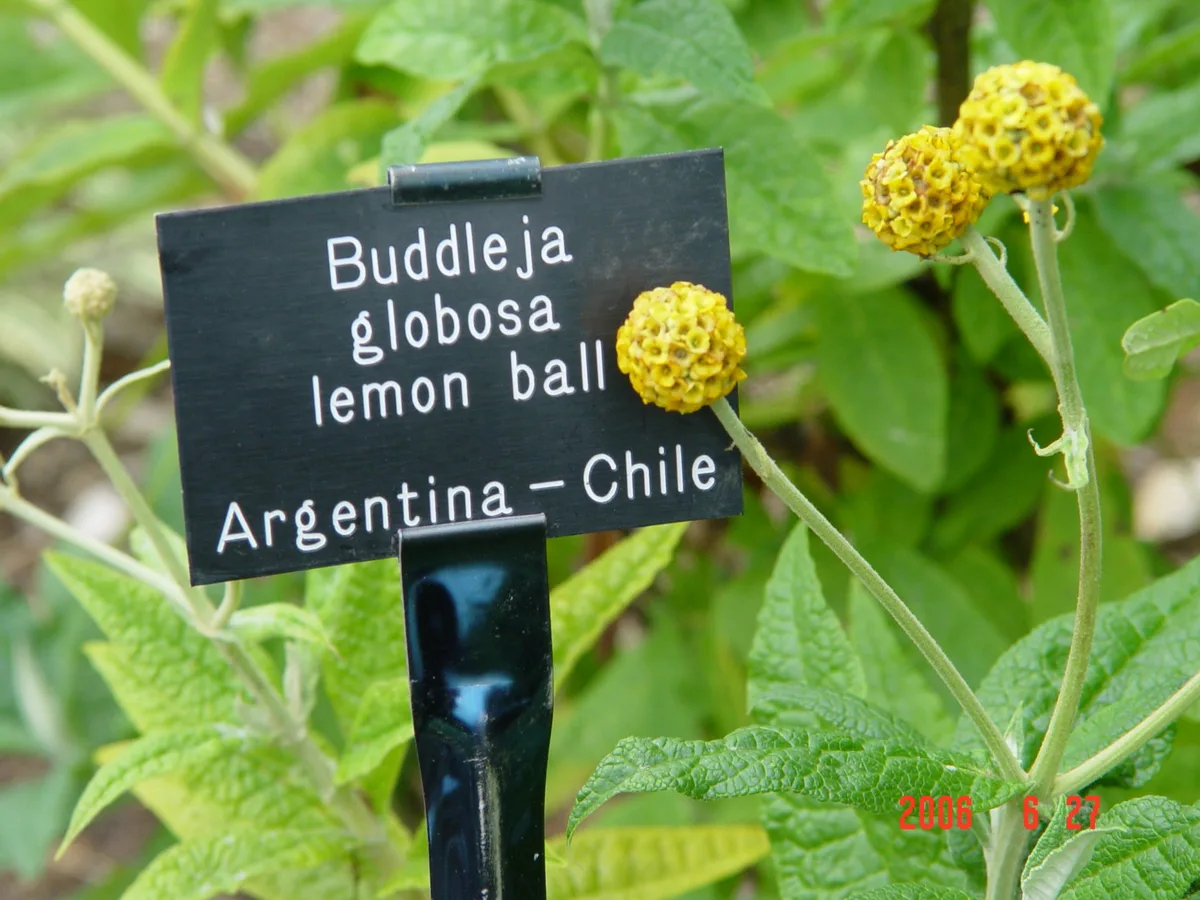
A deciduous shrub, to around 2m high, with strong stems and long, lance-shaped dark green leaves with deeply impressed veins. Rounded clusters of small yellow flowers are produced in late spring and early summer
Scientific classification
- Species
- orange ball tree 'Lemon Ball' (Buddleja globosa 'Lemon Ball')
- Genus
- Buddleja
- Family
- Scrophulariaceae
- Information to be completed
- Toxicity
- Shrubs
- Plant type
- 1.5-2.5 metres
- Height
- 1.5-2.5 metres
- Spread
- Deciduous
- Foliage
- Bushy
- Habit
- Spring · Summer · Autumn
- Season of interest
- Full sun · Partial shade
- Sunlight
- Information to be completed
- Ideal temperature









orange ball tree 'Lemon Ball' pictures
Distribution of orange ball tree 'Lemon Ball'
Distribution map
Information to be completed
Information to be completed
Culture
Information to be completed
Toxicity
Information to be completed
Quick identification of orange ball tree 'Lemon Ball'
Information to be completed
orange ball tree 'Lemon Ball' care guide
- Moderate regular watering, extra moisture during hot dry summer heat
- Watering
- Full sun · Partial shade
- Sunlight
- Information to be completed
- Ideal temperature

Watering
Moderate regular watering, extra moisture during hot dry summer heat
Fertilizing
 Fertilizing
General flowering shrub feed monthly spring until mid autumn arrives
Pruning
 Pruning
Cut flowered growth back to strong young shoots below, removing up to a fifth of old stems near the base each year. Prune immediately after flowering.
Propagation
 Propagation
Propagate by semi-hardwood cuttings in summer
Growing
 Growing
Thrives in a sunny, well-drained situation, though will tolerate partial shade. Protect from strong winds and excess winter wet. See buddleja cultivation for more detailed advice
People also ask
Information to be completed
Common pests and diseases
Diseases
May be susceptible to honey fungus, fungal leaf spot, and virus diseases
Pests
May be susceptible to aphids, capsid bugs, caterpillars, earwigs, figwort weevils, glasshouse red spider mite, leaf and bud eelworm, and mullein moth
Explore the plant health library →




