
commonName:"dog's tooth violet 'Old Aberdeen'"
Also known as: Information to be completed
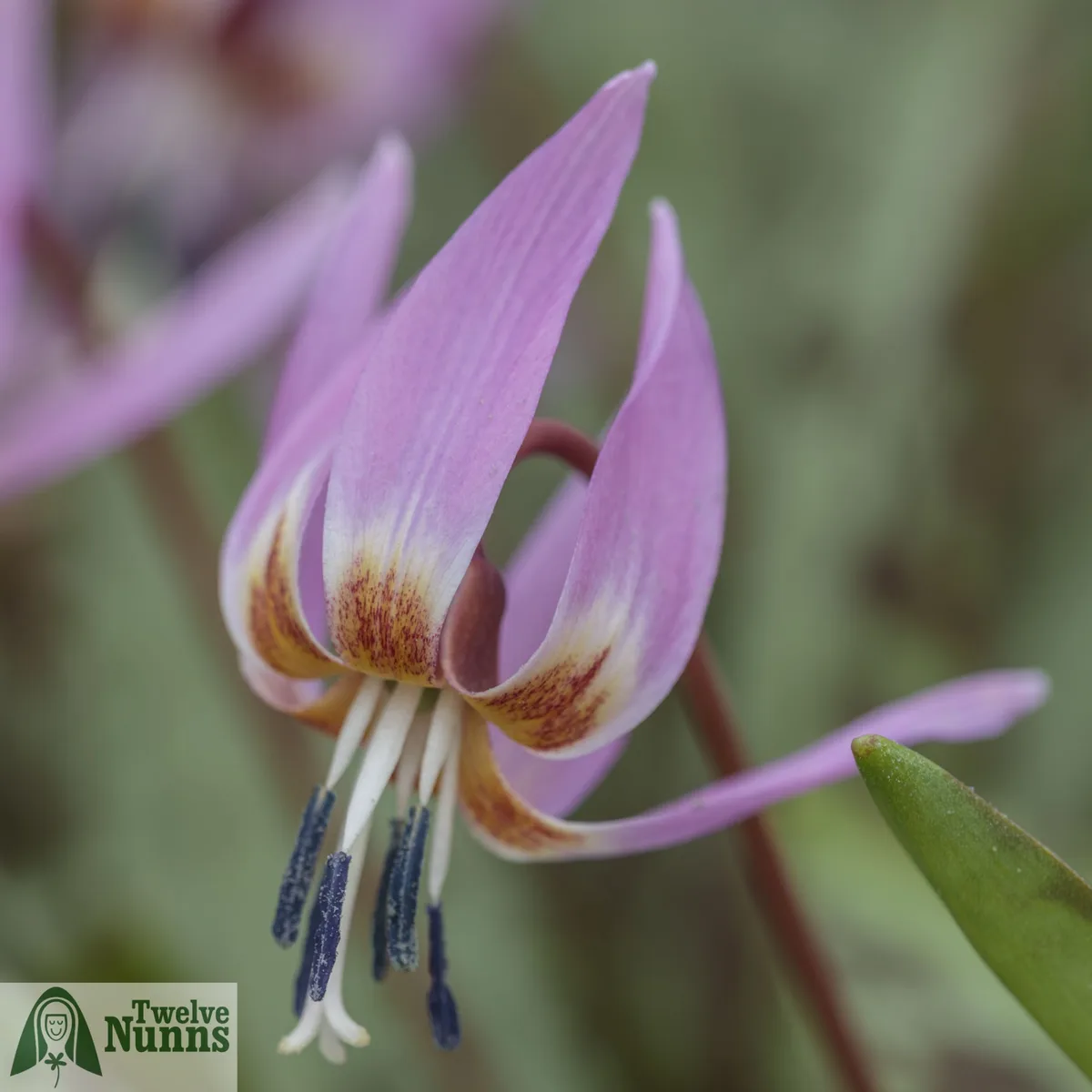
A slow spreading, bulbous perennial to around 15cm high, with elliptic, deep green leaves mottled with purple-brown. Solitary flowers, with strongly reflexed purple petals, golden brown markings at the base and dark blue anthers, are borne on slender stems in spring
Scientific classification
- Species
- commonName:"dog's tooth violet 'Old Aberdeen'" (Erythronium dens-canis 'Old Aberdeen')
- Genus
- Erythronium
- Family
- Liliaceae
- Order
- Liliales
- Class
- Liliopsida
- Phylum
- Magnoliophyta
- Ornamental bulbs - not to be eaten. Wear gloves and other protective equipment when handling
- Toxicity
- Bulbs
- Plant type
- 0.1-0.5 metres
- Height
- 0-0.1 metre
- Spread
- Deciduous
- Foliage
- Clump forming
- Habit
- Spring
- Season of interest
- Partial shade
- Sunlight
- Information to be completed
- Ideal temperature









commonName:"dog's tooth violet 'Old Aberdeen'" pictures
Distribution of commonName:"dog's tooth violet 'Old Aberdeen'"
Distribution map
- Native
- Introduced
- Cultivated
Source:WCVP v16 · Royal Botanic Gardens, Kew · CC BY 3.0 · Boundaries:WGSRPD / TDWG
Toxicity
Ornamental bulbs - not to be eaten. Wear gloves and other protective equipment when handling
commonName:"dog's tooth violet 'Old Aberdeen'" care guide
- Moderate regular watering, avoid prolonged drought or waterlogging
- Watering
- Partial shade
- Sunlight

Watering
Moderate regular watering, avoid prolonged drought or waterlogging
Fertilizing
 Fertilizing
Balanced feed in spring and light repeat in growth season
Pruning
 Pruning
No pruning required
Propagation
 Propagation
Propagate by division of established clumps, after flowering. Plants dislike disturbance and may take time to re-establish
Growing
 Growing
Grow in light or dappled shade, in fertile, humus-rich, well-drained soil that does not dry out in summer. Bulbs must be kept slightly damp until planted, and planted at least 10cm deep in late summer or early autumn. Well suited to woodland planting. See bulb cultivation
Common pests and diseases
Diseases
Generally disease-free
Pests
May be susceptible to slugs
Explore the plant health library →




