
crab apple 'Van Eseltine'
Also known as: Information to be completed
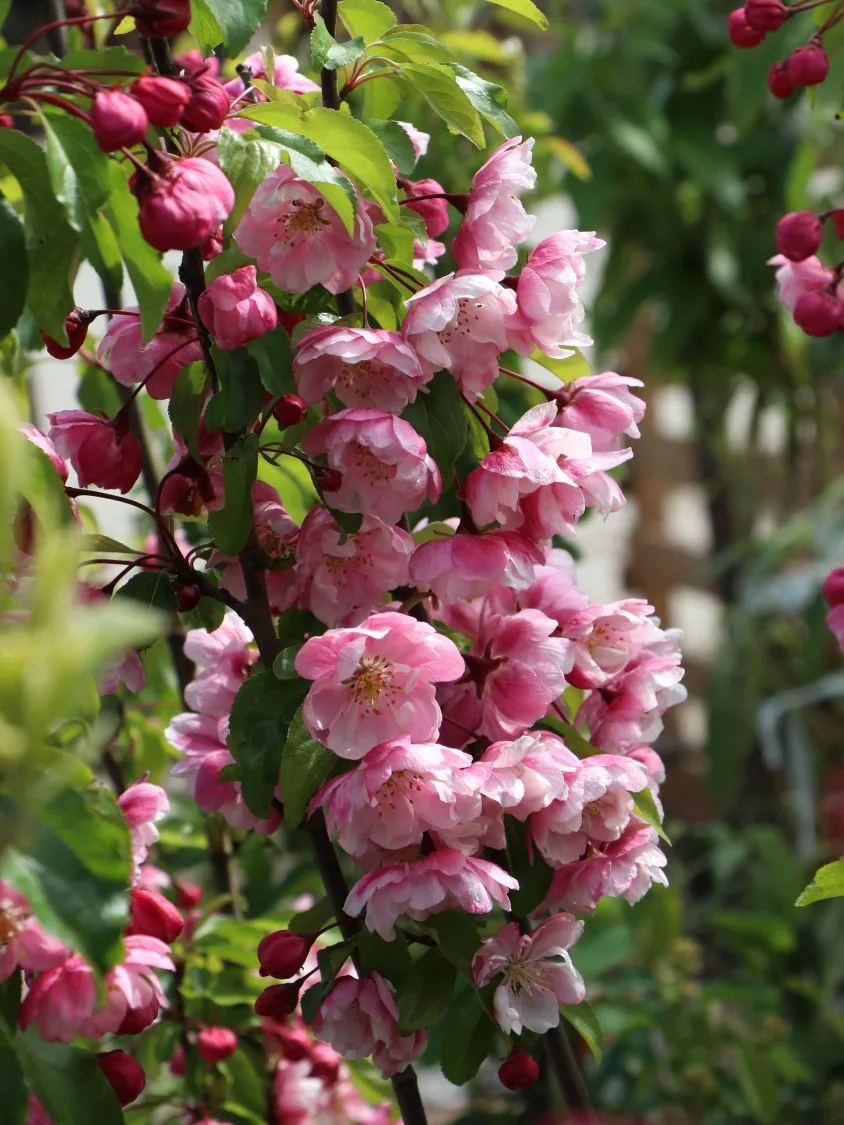
An upright tree with glossy foliage and red buds opening to pink, double flowers, followed by small, red-tinged yellow fruits
Scientific classification
- Species
- crab apple 'Van Eseltine' (Malus 'Van Eseltine')
- Genus
- Malus
- Family
- Rosaceae
- Fruit are ornamental - not to be eaten. Wear gloves and other protective equipment when handling
- Toxicity
- Trees
- Plant type
- 4-8 metres
- Height
- 2.5-4 metres
- Spread
- Deciduous
- Foliage
- Columnar upright
- Habit
- Spring · Summer · Autumn
- Season of interest
- Full sun · Partial shade
- Sunlight
- Information to be completed
- Ideal temperature









crab apple 'Van Eseltine' pictures
Distribution of crab apple 'Van Eseltine'
Distribution map
Information to be completed
Information to be completed
Culture
Information to be completed
Toxicity
Fruit are ornamental - not to be eaten. Wear gloves and other protective equipment when handling
Quick identification of crab apple 'Van Eseltine'
Information to be completed
crab apple 'Van Eseltine' care guide
- Water deeply and regularly during dry spells; mulch to keep the root zone cool.
- Watering
- Full sun · Partial shade
- Sunlight
- Information to be completed
- Ideal temperature

Watering
Water deeply and regularly during dry spells; mulch to keep the root zone cool.
Fertilizing
 Fertilizing
Apply a balanced tree fertilizer in early spring and after bloom.
Pruning
 Pruning
Little pruning is needed. Remove diseased, damaged, crowded or crossing shoots and unwanted growth. Timing depends on the plant: generally late winter or early spring; plants prone to bleeding and deciduous magnolias need different timing, and deciduous azaleas and lilacs are pruned after flowering.
Propagation
 Propagation
Propagate by chip budding in late summer. Grafting can be carried out in midwinter
Growing
 Growing
Grow in moderately fertile soil; will tolerate partial shade
People also ask
Information to be completed
Common pests and diseases
Diseases
May be susceptible to apple canker, apple scab, blossom wilt, brown rot, fireblight, honey fungus and powdery mildews
Pests
May be susceptible to aphids, including woolly aphid and rosy apple aphid, fruit tree red spider mite, codling moth and other caterpillars
Explore the plant health library →




