
crowberry
Also known as: black crowberry; black-berried heath; blackberry heath; crakeberry; crauberry; crawberry; crow pea; curlew berry; hog cranberry; monox; monox heather; pigeon berry; wire ling
A dwarf, evergreen shrub to about 15cm, with trailing stems bearing tiny (5mm), needle-like leaves. The inconspicuous, pinkish or purplish flowers appear in late spring or early summer, followed in autumn by edible, black berries about 5mm across, which can remain on the plant all winter if not eaten
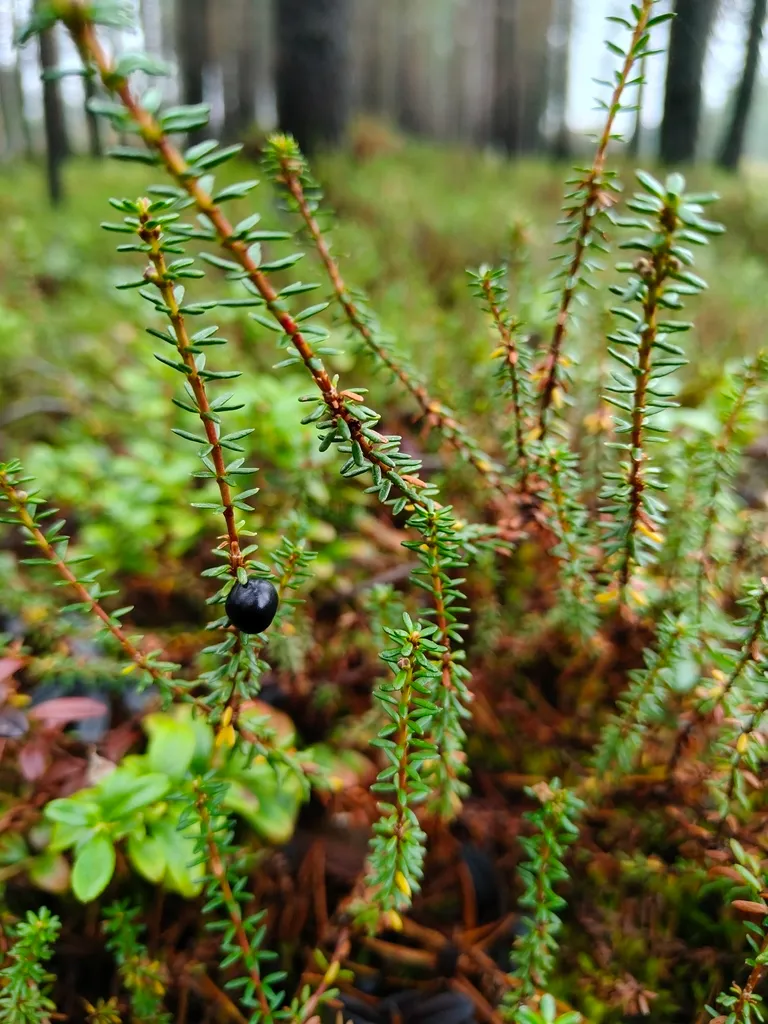
Scientific classification
- Species
- crowberry (Empetrum nigrum)
- Genus
- Empetrum
- Family
- Ericaceae
- Information to be completed
- Toxicity
- Shrubs · Fruit Edible
- Plant type
- 0.1-0.5 metres
- Height
- 0.5-1 metres
- Spread
- Evergreen
- Foliage
- Trailing
- Habit
- Spring · Summer · Autumn · Winter
- Season of interest
- Full sun · Partial shade
- Sunlight
- Information to be completed
- Ideal temperature









crowberry pictures


Distribution of crowberry
Distribution map
Temperate N. Hemisphere
Information to be completed
Culture
Information to be completed
Toxicity
Information to be completed
Quick identification of crowberry
Information to be completed
crowberry care guide
- Moderate regular watering, allowing brief slight drying between soakings
- Watering
- Full sun · Partial shade
- Sunlight
- Information to be completed
- Ideal temperature

Watering
Moderate regular watering, allowing brief slight drying between soakings
Fertilizing
 Fertilizing
Balanced perennial feed every four weeks from spring through summer
Pruning
 Pruning
No pruning required
Propagation
 Propagation
Propagate from semi-ripe cuttings in summer, or by layering
Growing
 Growing
Naturally grows in cool areas with high rainfall. Requires an open position in full sun or semi shade, on acid soil that is not waterlogged, but has a good moisture supply
People also ask
Information to be completed
Common pests and diseases
Diseases
Generally disease-free
Pests
Generally pest-free
Explore the plant health library →




