
evergreen magnolia 'Goliath'
Also known as: Information to be completed
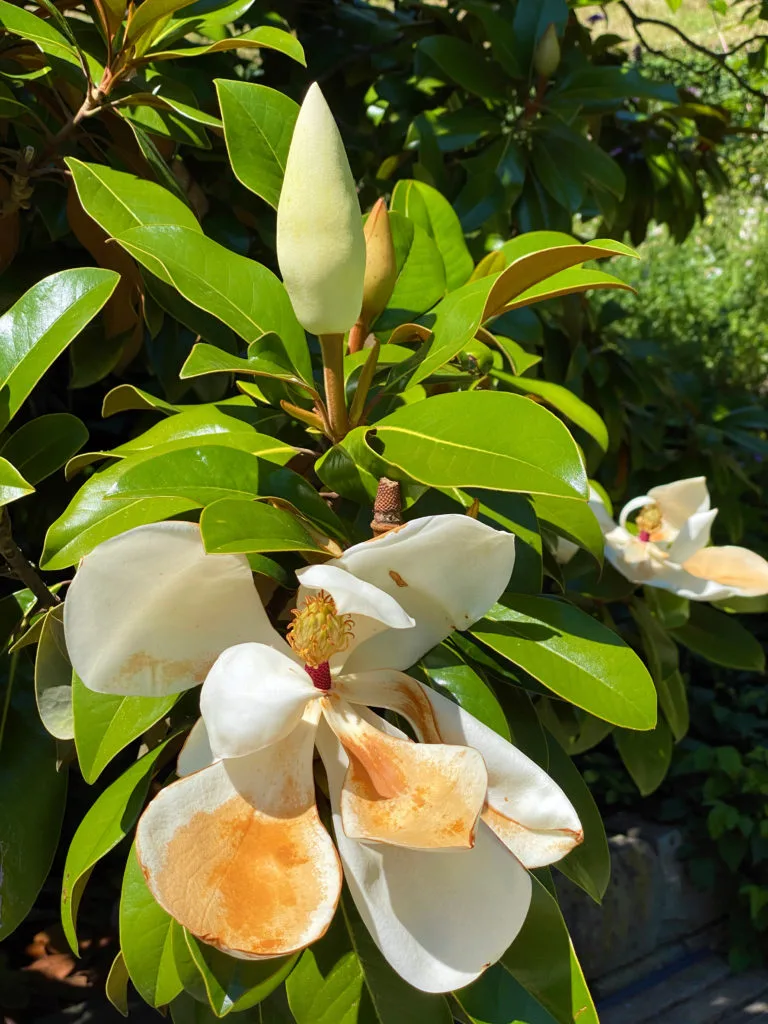
A rounded evergreen tree or large shrub to 15m tall, with glossy, leathery dark green leaves to 25cm long, and highly fragrant, cup-shaped, cream flowers to 30cm wide in late summer and autumn
Scientific classification
- Species
- evergreen magnolia 'Goliath' (Magnolia grandiflora 'Goliath')
- Genus
- Magnolia
- Family
- Magnoliaceae
- Order
- Magnoliales
- Class
- Magnoliopsida
- Phylum
- Magnoliophyta
- Information to be completed
- Toxicity
- Shrubs · Trees
- Plant type
- Higher than 12 metres
- Height
- 4-8 metres
- Spread
- Evergreen
- Foliage
- Bushy
- Habit
- Spring · Summer · Autumn · Winter
- Season of interest
- Full sun · Partial shade
- Sunlight
- Information to be completed
- Ideal temperature









evergreen magnolia 'Goliath' pictures
Distribution of evergreen magnolia 'Goliath'
Distribution map
- Native
- Introduced
- Cultivated
Source:WCVP v16 · Royal Botanic Gardens, Kew · CC BY 3.0 · Boundaries:WGSRPD / TDWG
evergreen magnolia 'Goliath' care guide
- Maintain steady mild moisture, irrigate deeply in hot dry spells
- Watering
- Full sun · Partial shade
- Sunlight

Watering
Maintain steady mild moisture, irrigate deeply in hot dry spells
Fertilizing
 Fertilizing
Slow-release balanced fertilizer once applied each early spring
Pruning
 Pruning
Prune lightly as needed to remove unwanted shoots and keep the shrub in shape. Prune in mid- to late spring.
Propagation
 Propagation
Propagate by softwood and greenwood cuttings in early summer, semi-hardwood cuttings in late summer to early winter and layering in early spring
Growing
 Growing
Grow in moist, well-drained preferably neutral to acid soil in sun or part shade. Tolerates dry, alkaline soil. Further magnolia cultivation advice
Common pests and diseases
Diseases
May be susceptible to coral spot, phytophthora, grey moulds, honey fungus, a virus or fungal leaf spot
Pests
May be susceptible to scale insects, horse chestnut scale and capsid bug
Explore the plant health library →




