
cherry 'Kursar'
Also known as: Information to be completed
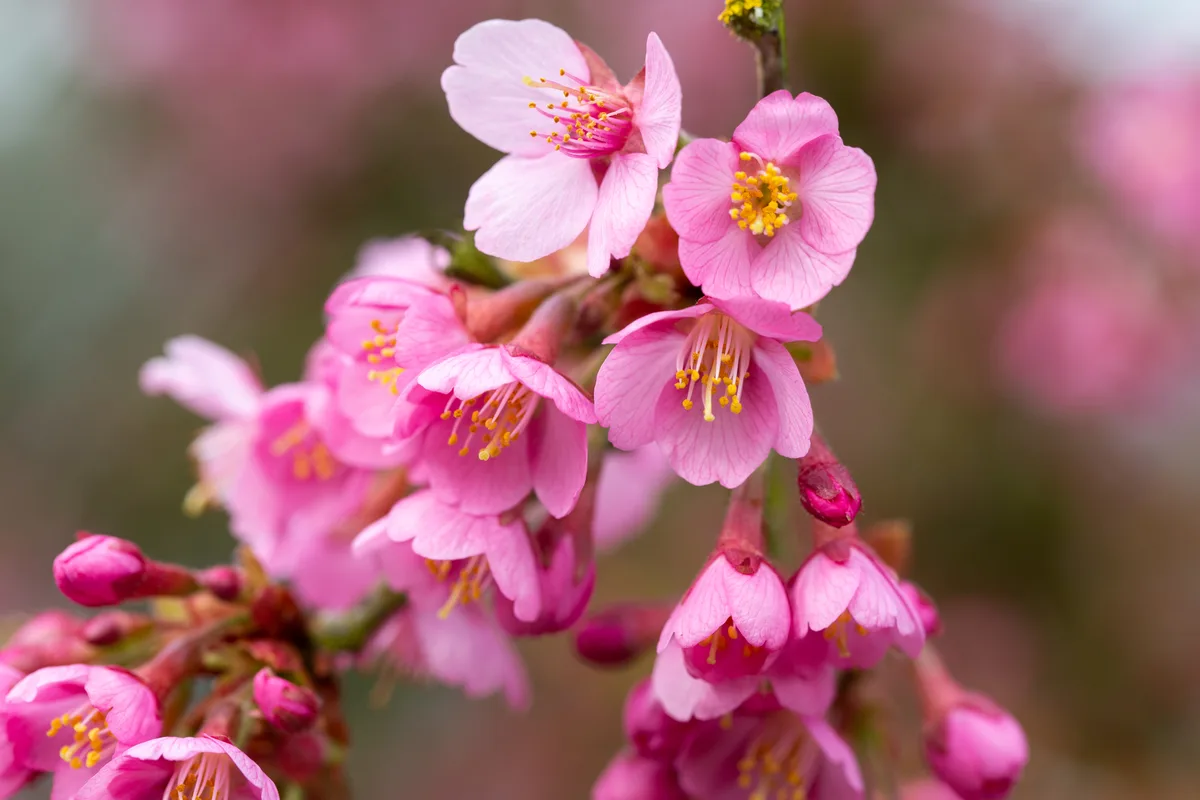
Kursar' is a small deciduous tree of spreading habit, with ovate leaves, coppery when young, turning deep orange in autumn. Single vivid deep pink flowers 1.5cm in width are borne in profusion
Scientific classification
- Species
- cherry 'Kursar' (Prunus 'Kursar')
- Genus
- Prunus
- Family
- Rosaceae
- Information to be completed
- Toxicity
- Trees
- Plant type
- 4-8 metres
- Height
- 4-8 metres
- Spread
- Deciduous
- Foliage
- Information to be completed
- Habit
- Autumn · Spring · Summer
- Season of interest
- Full sun
- Sunlight
- Information to be completed
- Ideal temperature









cherry 'Kursar' pictures
Distribution of cherry 'Kursar'
Distribution map
Information to be completed
Information to be completed
Culture
Information to be completed
Toxicity
Information to be completed
Quick identification of cherry 'Kursar'
Information to be completed
cherry 'Kursar' care guide
- Moderate regular watering, cut irrigation frequency in cold winter season
- Watering
- Full sun
- Sunlight
- Information to be completed
- Ideal temperature

Watering
Moderate regular watering, cut irrigation frequency in cold winter season
Fertilizing
 Fertilizing
Flowering fruit tree feed applied once annually at early spring bud swell
Pruning
 Pruning
Little pruning is needed. Remove diseased, damaged, crowded or crossing shoots and unwanted growth. If silver leaf disease is a concern, prune in midsummer.
Propagation
 Propagation
Propagate by chip budding or grafting, although softwood cuttings in early summer with bottom heat can be successful
Growing
 Growing
Grow in moderately fertile soil in full sun
People also ask
Information to be completed
Common pests and diseases
Diseases
May be susceptible to peach leaf curl, silver leaf, bacterial canker, blossom wilt and honey fungus
Pests
May get caterpillars, leaf-mining moths and bullfinches
Explore the plant health library →




