
garden anemone 'Sylphide'
Also known as: Information to be completed
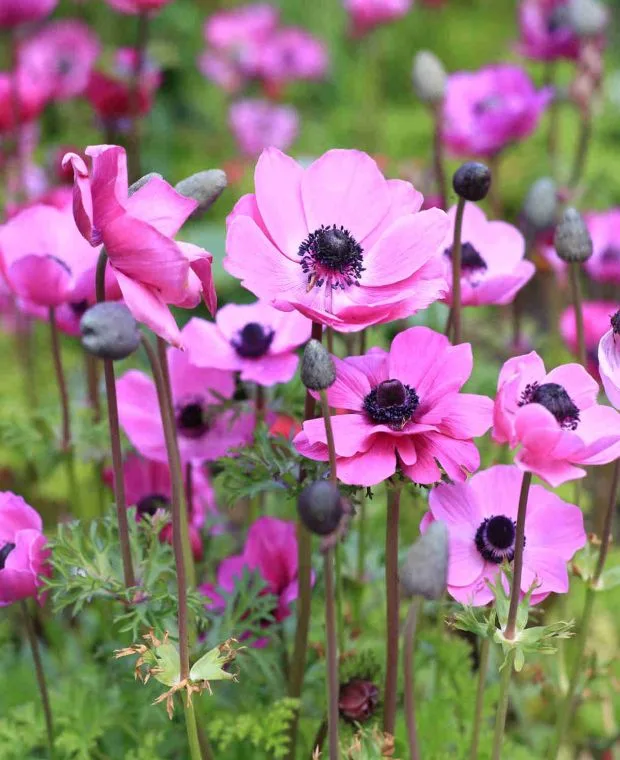
Sylphide' is a compact, erect, corm-based, clump-forming perennial with finely divided leaves bearing fine-petalled double rose-pink flowers with black centre in late spring to early summer.
Scientific classification
- Species
- garden anemone 'Sylphide' (Anemone coronaria 'Sylphide')
- Genus
- Anemone
- Family
- Ranunculaceae
- Order
- Ranunculales
- Class
- Magnoliopsida
- Phylum
- Magnoliophyta
- Ingestion may cause mild stomach upset, and skin contact may cause irritation. Wear gloves and other protective equipment when handling
- Toxicity
- Bulbs
- Plant type
- 0.1-0.5 metres
- Height
- 0.1-0.5 metres
- Spread
- Deciduous
- Foliage
- Clump forming
- Habit
- Spring · Summer
- Season of interest
- Full sun
- Sunlight
- Information to be completed
- Ideal temperature









garden anemone 'Sylphide' pictures
Distribution of garden anemone 'Sylphide'
Distribution map
- Native
- Introduced
- Cultivated
Source:WCVP v16 · Royal Botanic Gardens, Kew · CC BY 3.0 · Boundaries:WGSRPD / TDWG
Toxicity
Ingestion may cause mild stomach upset, and skin contact may cause irritation. Wear gloves and other protective equipment when handling
garden anemone 'Sylphide' care guide
- Keep soil evenly moist during growth and flowering
- Watering
- Full sun
- Sunlight

Watering
Keep soil evenly moist during growth and flowering
Fertilizing
 Fertilizing
Light balanced feed in spring
Pruning
 Pruning
Corms can be lifted afer flowering and dried or may be left in the soil to flower annually. Keep dry in the dormant period
Propagation
 Propagation
Propagate by division
Growing
 Growing
This tender perennial corm can be sown in autumn in mild areas or under cloches for early spring flowering. Soak the corms for 24 hours in tepid water prior to planting. Plant in light, sandy soil in full sun. Protect from frost and keep dry during dormant period.
Common pests and diseases
Diseases
May be susceptible to powdery mildew
Pests
May be susceptible to leaf and bud eelworms and slugs
Explore the plant health library →




