
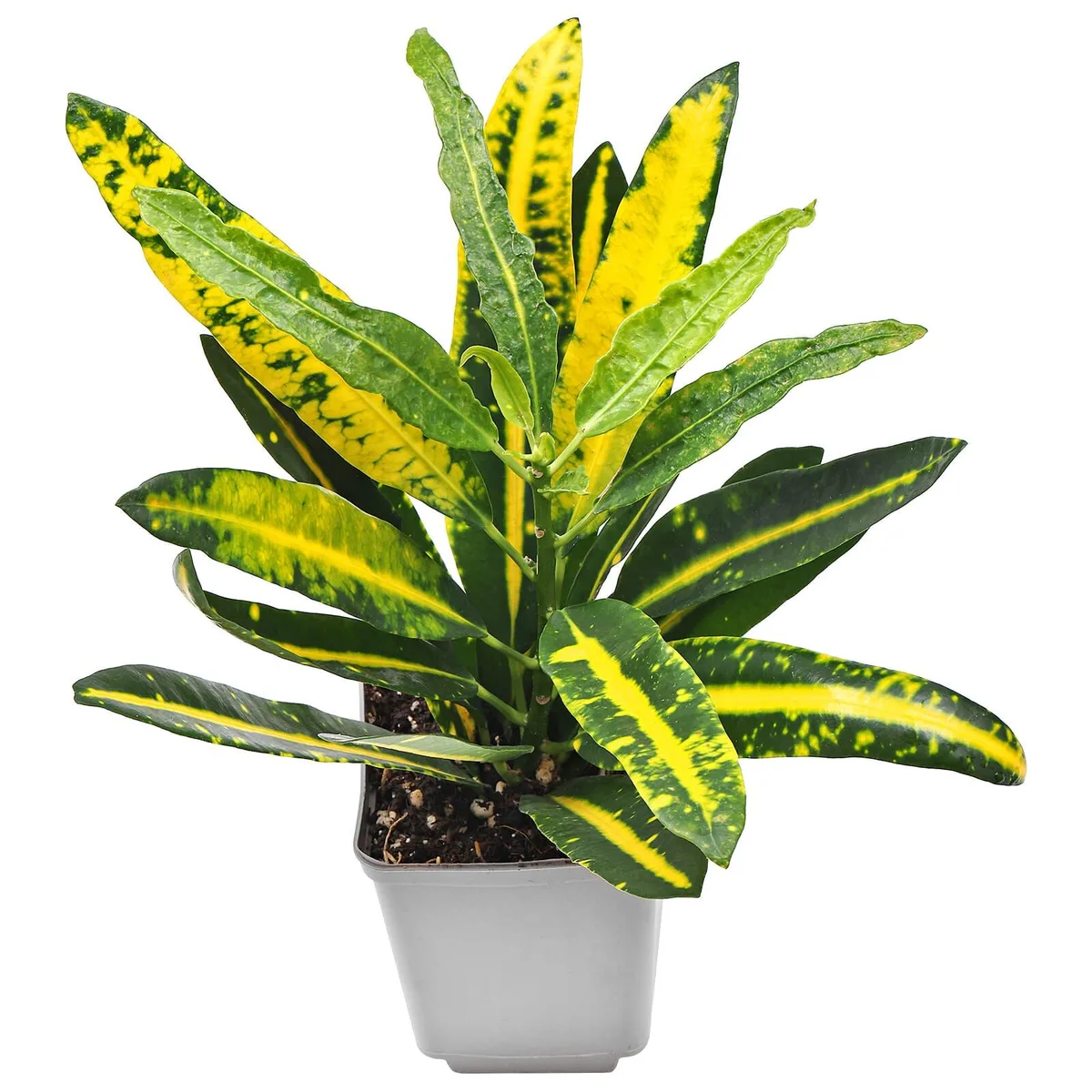
Codiaeum variegatum var. pictum 'Sunny Star'
Also known as: Information to be completed
A compact, upright evergreen shrub with long, narrow yellow and green variegated leaves which are thick and leathery. Makes an ideal tropical-looking houseplant
Scientific classification
- Species
- Codiaeum variegatum var. pictum 'Sunny Star' (Codiaeum variegatum var. pictum 'Sunny Star')
- Genus
- Codiaeum
- Family
- Euphorbiaceae
- Order
- Malpighiales
- Class
- Magnoliopsida
- Phylum
- Tracheophyta
- Sap may cause skin irritation. Wear gloves and other protective equipment when handling
- Toxicity
- Shrubs
- Plant type
- 1-1.5 metres
- Height
- 0.5-1 metres
- Spread
- Evergreen
- Foliage
- Bushy
- Habit
- Spring · Summer · Autumn · Winter
- Season of interest
- Partial shade
- Sunlight
- Information to be completed
- Ideal temperature









Codiaeum variegatum var. pictum 'Sunny Star' pictures
Distribution of Codiaeum variegatum var. pictum 'Sunny Star'
Distribution map
- Native
- Introduced
- Cultivated
Source:WCVP v16 · Royal Botanic Gardens, Kew · CC BY 3.0 · Boundaries:WGSRPD / TDWG
Toxicity
Sap may cause skin irritation. Wear gloves and other protective equipment when handling
Codiaeum variegatum var. pictum 'Sunny Star' care guide
- Moderate regular watering, avoid prolonged drought and stagnant waterlogging
- Watering
- Partial shade
- Sunlight

Watering
Moderate regular watering, avoid prolonged drought and stagnant waterlogging
Fertilizing
 Fertilizing
Balanced perennial feed every four weeks spring through summer growth
Pruning
 Pruning
Prune lightly as needed to remove unwanted shoots and keep the shrub in shape. Prune in mid- to late spring.
Propagation
 Propagation
Propagate by air layering in spring, or root softwood cuttings with bottom heat in summer, after dipping the cut ends in powdered charcoal to reduce bleeding
Growing
 Growing
Grow under glass in loam-based potting compost in good light but shaded from hot sun, with high humidity
Common pests and diseases
Diseases
Generally disease-free
Pests
May be susceptible to scale insects and glasshouse red spider mite
Explore the plant health library →




