
needle palm 'Golden Sword'
Also known as: Information to be completed
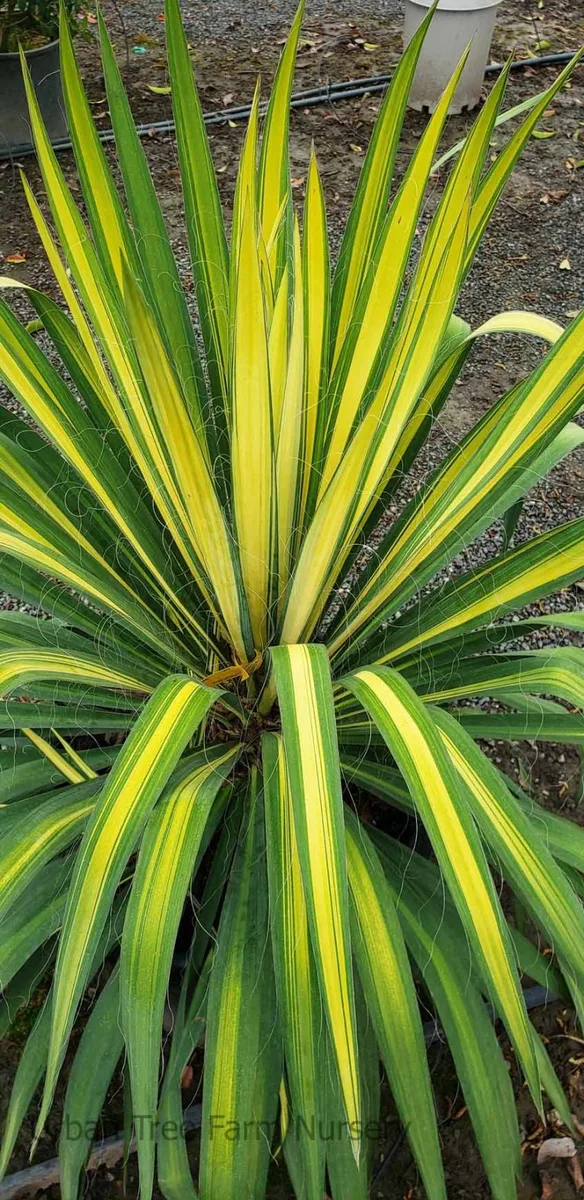
A small, stemless evergreen shrub forming clumps of erect blue-green leaves, drooping towards the tips, with a central band of creamy-yellow. Bell-shaped creamy-white flowers in erect panicles to 1.2m tall in late summer
Scientific classification
- Species
- needle palm 'Golden Sword' (Yucca flaccida 'Golden Sword')
- Genus
- Yucca
- Family
- Asparagaceae
- Order
- Asparagales
- Class
- Magnoliopsida
- Phylum
- Tracheophyta
- Skin allergen. Wear gloves and other protective equipment when handling
- Toxicity
- Shrubs
- Plant type
- 1-1.5 metres
- Height
- 0.5-1 metres
- Spread
- Evergreen
- Foliage
- Bushy
- Habit
- Spring · Summer · Autumn · Winter
- Season of interest
- Full sun
- Sunlight
- Information to be completed
- Ideal temperature









needle palm 'Golden Sword' pictures
Distribution of needle palm 'Golden Sword'
Distribution map
- Native
- Introduced
- Cultivated
Source:WCVP v16 · Royal Botanic Gardens, Kew · CC BY 3.0 · Boundaries:WGSRPD / TDWG
Toxicity
Skin allergen. Wear gloves and other protective equipment when handling
needle palm 'Golden Sword' care guide
- Moderate regular watering, avoid prolonged drought or waterlogging
- Watering
- Full sun
- Sunlight

Watering
Moderate regular watering, avoid prolonged drought or waterlogging
Fertilizing
 Fertilizing
Balanced feed in spring and light repeat in growth season
Pruning
 Pruning
 not normally needed, but damaged leaves and spent flower spikes can be removed as necessary in the spring
Propagation
 Propagation
Propagate by bud cuttings which are treated as softwood cuttings or take stem cuttings which are treated as hardwood cuttings. Root cuttings can also be used. Division of clumps is also possible
Growing
 Growing
Easy to grow in sheltered, well-drained beds, where there is full sun all day
Common pests and diseases
Diseases
May be susceptible to leaf spot
Pests
May be susceptible to aphids on flower spikes and snails
Explore the plant health library →




