
daffodil 'Broomhill'
Also known as: Information to be completed
A clump-forming perennial daffodil to 40cm high, with slightly glaucous, strap-shaped leaves. Flowers from mid spring, producing solitary flowers to 10cm across, with broad, greenish-white outer petals and a large, white cup with a ruffled, slightly flared rim
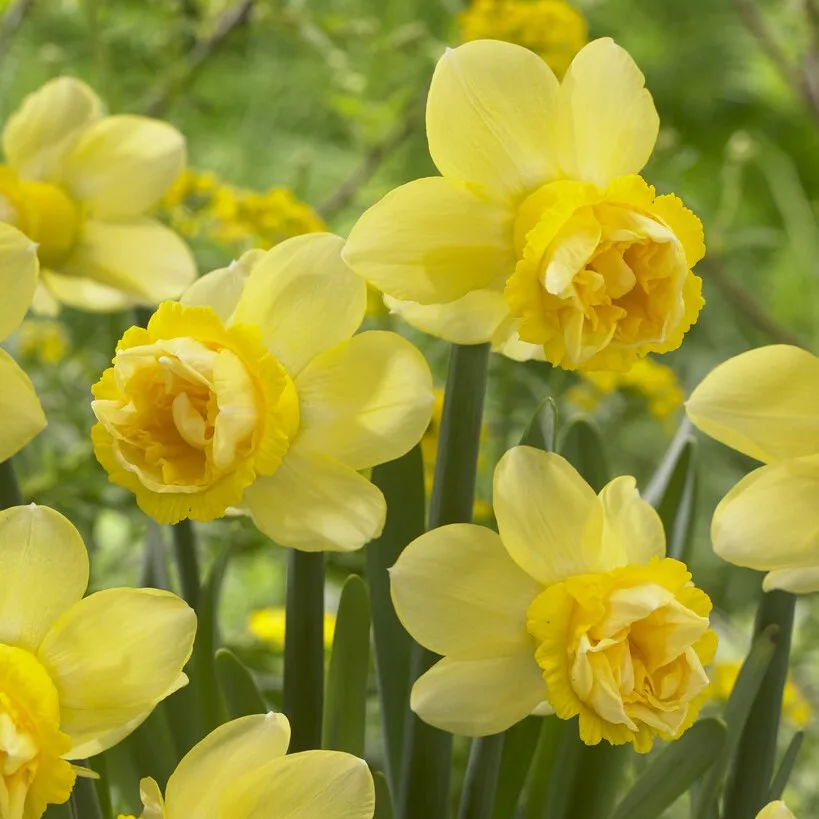
Scientific classification
- Species
- daffodil 'Broomhill' (Narcissus 'Broomhill')
- Genus
- Narcissus
- Family
- Amaryllidaceae
- Order
- Asparagales
- Class
- Liliopsida
- Phylum
- Magnoliophyta
- Harmful if eaten, skin irritant. Wear gloves and other protective equipment when handling]
- Toxicity
- Bulbs
- Plant type
- 0.1-0.5 metres
- Height
- 0.1-0.5 metres
- Spread
- Deciduous
- Foliage
- Clump forming
- Habit
- Spring
- Season of interest
- Full sun · Partial shade
- Sunlight
- Information to be completed
- Ideal temperature









daffodil 'Broomhill' pictures
Toxicity
Harmful if eaten, skin irritant. Wear gloves and other protective equipment when handling]
daffodil 'Broomhill' care guide
- Moist in growth, much drier after foliage fades
- Watering
- Full sun · Partial shade
- Sunlight

Watering
Moist in growth, much drier after foliage fades
Fertilizing
 Fertilizing
Bulb feed at leaf emergence and after flowering
Pruning
 Pruning
Deadhead as flowers fade. Allow the leaves to die down naturally
Propagation
 Propagation
Propagate by division, removing offsets as the leaves fade in early summer, or by chipping. See bulb propagation for details
Growing
 Growing
Plant bulbs at one and a half to two times their own depth in autumn. Will tolerate most soils but prefers moderately fertile, well-drained soil that is constantly moist during the growing season. See daffodil cultivation for more detailed advice
Common pests and diseases
Diseases
May be susceptible to narcissus basal rot, narcissus leaf scorch or daffodil viruses
Pests
May be susceptible to slugs, large narcissus bulb fly and narcissus eelworm
Explore the plant health library →




