
damson 'Mirabelle de Nancy'
Also known as: Information to be completed
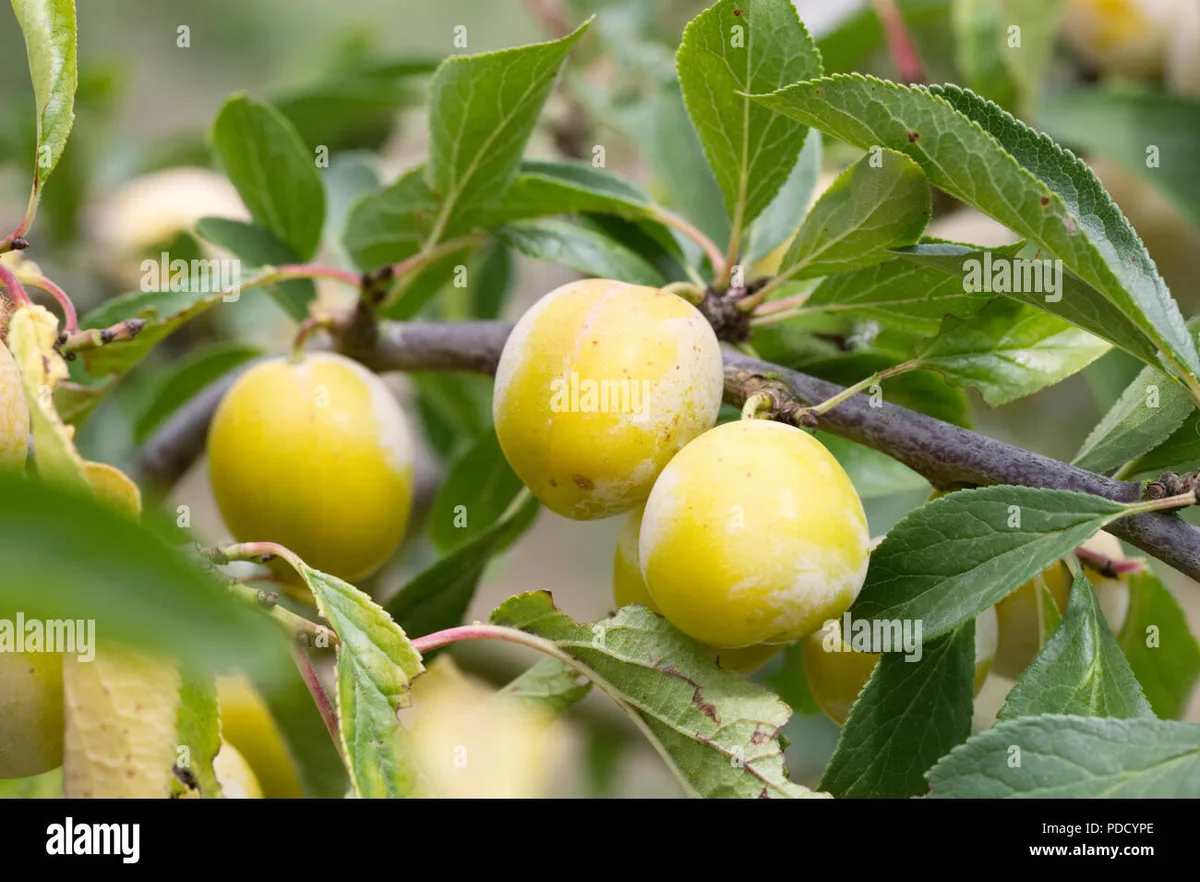
A partially self-fertile to self-fertile mirabelle cultivar. The white spring blossom is followed by attractive, small, round, speckled, golden yellow fruit and freestone (where the flesh of the fruit is not attached to the pit). Very good for culinary purposes, though the rich sweet flesh is pleasant to eat fresh. Cold hardy, but the blossom can be prone to spring cold damage. Slow to come to cropping. Cropping season: mid-August. It will cross pollinate with other mirabelle cultivars, plums and damsons
Scientific classification
- Species
- damson 'Mirabelle de Nancy' (Prunus insititia 'Mirabelle de Nancy')
- Genus
- Prunus
- Family
- Rosaceae
- Order
- Rosales
- Class
- Magnoliopsida
- Phylum
- Magnoliophyta
- Information to be completed
- Toxicity
- Fruit Edible
- Plant type
- 2.5-4 metres
- Height
- 2.5-4 metres
- Spread
- Deciduous
- Foliage
- Bushy
- Habit
- Summer · Spring
- Season of interest
- Full sun
- Sunlight
- Information to be completed
- Ideal temperature









damson 'Mirabelle de Nancy' pictures
Distribution of damson 'Mirabelle de Nancy'
Distribution map
- Native
- Introduced
- Cultivated
Source:WCVP v16 · Royal Botanic Gardens, Kew · CC BY 3.0 · Boundaries:WGSRPD / TDWG
damson 'Mirabelle de Nancy' care guide
- Deep watering during dry spells, allowing slight surface drying between soakings
- Watering
- Full sun
- Sunlight

Watering
Deep watering during dry spells, allowing slight surface drying between soakings
Fertilizing
 Fertilizing
Balanced shrub or tree feed once each early spring
Pruning
 Pruning
Prune mirabelle trees as for plums - pruning plums
Propagation
 Propagation
Propagate by chip budding or grafting onto a rootstock for fruit. The rootstock will largely determine the vigour of the tree. Seed raised trees are of variable fruit quality and tree size
Growing
 Growing
Tolerant of a range of soils as long as well drained, but prefers loamy, ideally slightly acidic soils pH of 6 to 6.5. Plant in a sunny, sheltered site. Flowers may be susceptible to spring frosts damage. See How to grow: Plums for further cultivation details
Common pests and diseases
Diseases
May be susceptible to peach leaf curl, silver leaf, bacterial canker, blossom wilt and honey fungus
Pests
May be susceptible to plum aphid, red spider mite and winter moth caterpillar. The fruit can be damaged by plum moth caterpillars, wasps and birds
Explore the plant health library →




