
chestnut vine
Also known as: lizard plant
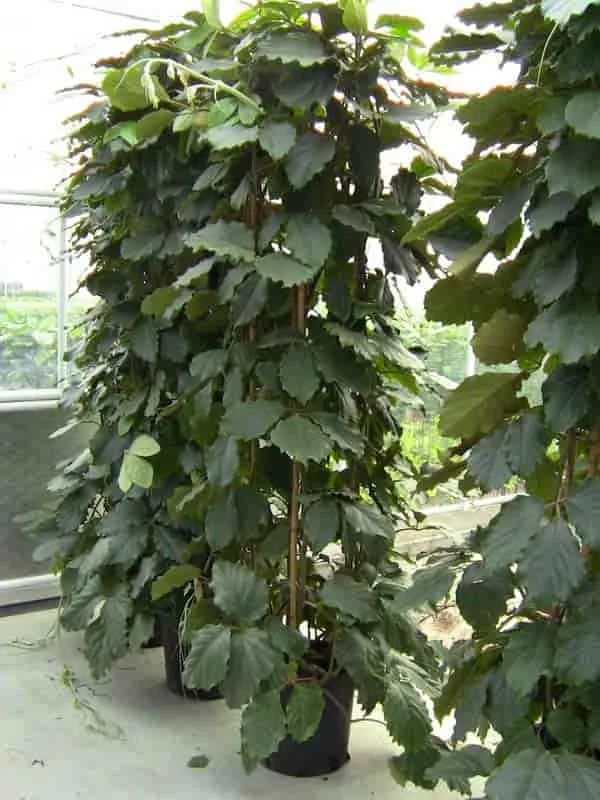
T. voinierianum is a vigorous evergreen tendril-climber to 8m or more, with dark green leaves composed of 3-5 obovate leaflets to 20cm long, rusty-hairy beneath; clusters of greenish-yellow flowers followed by green berries
Scientific classification
- Species
- chestnut vine (Tetrastigma voinierianum)
- Genus
- Tetrastigma
- Family
- Vitaceae
- Order
- Vitales
- Class
- Magnoliopsida
- Phylum
- Magnoliophyta
- Information to be completed
- Toxicity
- Climber Wall Shrub · Conservatory Greenhouse
- Plant type
- 4-8 metres
- Height
- 0.5-1 metres
- Spread
- Evergreen
- Foliage
- Climbing
- Habit
- Spring · Summer · Autumn · Winter
- Season of interest
- Full sun · Partial shade
- Sunlight
- Information to be completed
- Ideal temperature









chestnut vine pictures
Distribution of chestnut vine
Distribution map
- Native
- Introduced
- Cultivated
Source:WCVP v16 · Royal Botanic Gardens, Kew · CC BY 3.0 · Boundaries:WGSRPD / TDWG
chestnut vine care guide
- Moderate regular watering, avoid prolonged drought or waterlogging
- Watering
- Full sun · Partial shade
- Sunlight

Watering
Moderate regular watering, avoid prolonged drought or waterlogging
Fertilizing
 Fertilizing
Balanced feed in spring and light repeat in growth season
Pruning
 Pruning
Routine pruning is unnecessary; shorten overlong shoots to fit the available space. Prune in spring.
Propagation
 Propagation
Propagate by semi-ripe cuttings with bottom heat in summer; layer in spring
Growing
 Growing
Under glass grow in loam-based potting compost (JI No.3) with added grit or leaf mould in bright filtered light or bright indirect light with moderate to high humidity. Water freely in the growing season and apply a balanced liquid fertiliser monthly; water moderately in winter. The climbing stems will need support
Common pests and diseases
Diseases
Generally disease free
Pests
Glasshouse red spider mite may be problematic under glass
Explore the plant health library →




