
Malus domestica 'Carlisle Codlin'
Also known as: Information to be completed
An upright, spreading old English heritage Victorian cooking variety, originally bred in Cumbria and suited to cooler parts of the UK. Produces green foliage and white flowers in summer followed by a good crop of large, tangy pale green fruit, ripening to yellow. Harvest from September to October as fruit does not store well. Self-sterile and therefore requires pollination from a different apple cultivar flowering at the same time
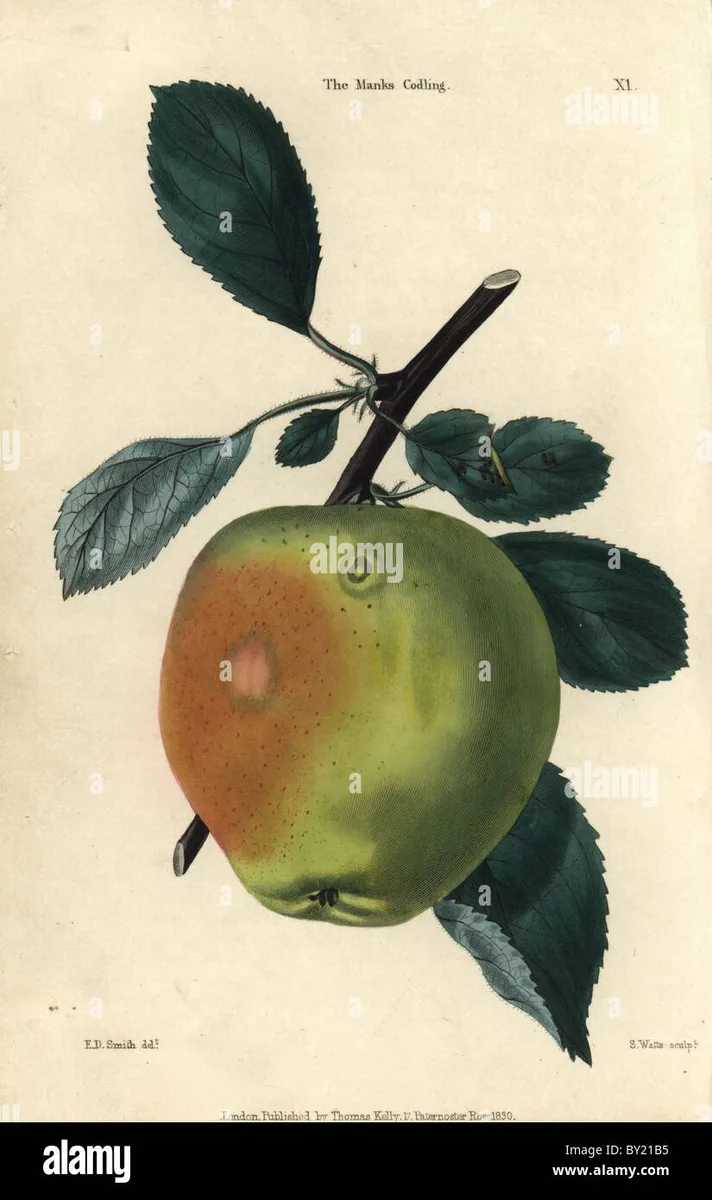
Scientific classification
- Species
- Malus domestica 'Carlisle Codlin' (Malus domestica 'Carlisle Codlin')
- Genus
- Malus
- Family
- Rosaceae
- Order
- Rosales
- Class
- Magnoliopsida
- Phylum
- Magnoliophyta
- Information to be completed
- Toxicity
- Fruit Edible · Trees
- Plant type
- 2.5-4 metres
- Height
- 2.5-4 metres
- Spread
- Deciduous
- Foliage
- Columnar upright
- Habit
- Spring · Summer · Autumn
- Season of interest
- Full sun
- Sunlight
- Information to be completed
- Ideal temperature









Malus domestica 'Carlisle Codlin' pictures
Distribution of Malus domestica 'Carlisle Codlin'
Distribution map
- Native
- Introduced
- Cultivated
Source:WCVP v16 · Royal Botanic Gardens, Kew · CC BY 3.0 · Boundaries:WGSRPD / TDWG
Malus domestica 'Carlisle Codlin' care guide
- Deep watering during dry spells, let surface soil partly dry between sessions
- Watering
- Full sun
- Sunlight

Watering
Deep watering during dry spells, let surface soil partly dry between sessions
Fertilizing
 Fertilizing
Balanced tree feed applied once every early spring growth cycle
Pruning
 Pruning
Prune according to chosen training method. See apple pruning
Propagation
 Propagation
Propagate by chip budding or grafting onto a clonal rootstock. The rootstock used will largely determine the size of the tree
Growing
 Growing
Prefers a deep, fertile, moist but well-drained, neutral soil in a sheltered, sunny position. Will not thrive on very acid soils, shallow chalk soils or with shade for more than half the day. May require fruit thinning to improve fruit size and quality. See apple cultivation
Common pests and diseases
Diseases
May be susceptible to apple canker, apple scab, blossom wilt, brown rot, fireblight, honey fungus and powdery mildews
Pests
May be susceptible to aphids, including rosy apple aphid and woolly aphid, fruit tree red spider mite, codling moth and other caterpillars
Explore the plant health library →




