
prickly heath 'Pink Pearl'
Also known as: Information to be completed
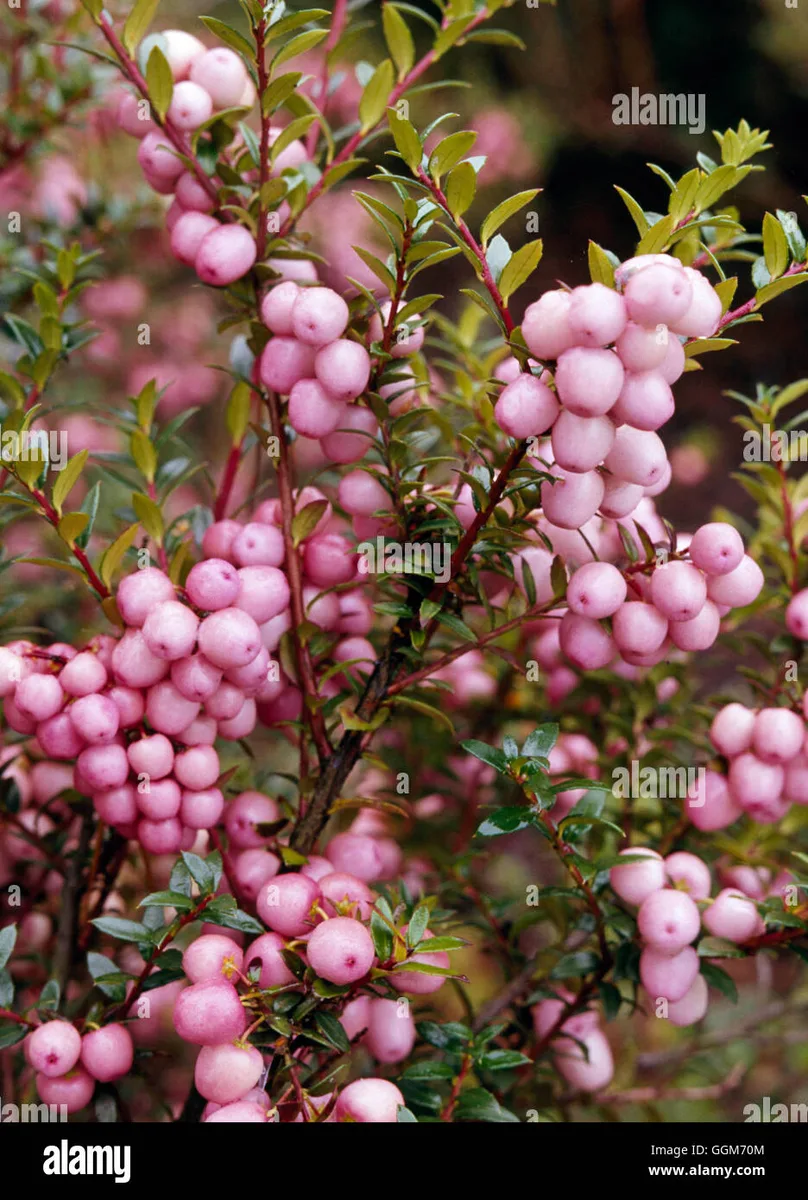
A compact, evergreen shrub with a dense foliage of small, dark, spine-tipped leaves. Clusters of small white flowers are produced in late spring and early summer, followed by round, lilac-pink fruits to 10mm wide in autumn
Scientific classification
- Species
- prickly heath 'Pink Pearl' (Gaultheria mucronata 'Pink Pearl')
- Genus
- Gaultheria
- Family
- Ericaceae
- Order
- Ericales
- Class
- Magnoliopsida
- Phylum
- Tracheophyta
- Fruit are ornamental - not to be eaten. Wear gloves and other protective equipment when handling
- Toxicity
- Shrubs
- Plant type
- 0.5-1 metres
- Height
- 0.5-1 metres
- Spread
- Evergreen
- Foliage
- Bushy · Suckering
- Habit
- Spring · Summer · Autumn · Winter
- Season of interest
- Partial shade · Full sun
- Sunlight
- Information to be completed
- Ideal temperature









prickly heath 'Pink Pearl' pictures
Toxicity
Fruit are ornamental - not to be eaten. Wear gloves and other protective equipment when handling
prickly heath 'Pink Pearl' care guide
- Moderate regular watering, allowing brief slight drying between soakings
- Watering
- Partial shade · Full sun
- Sunlight

Watering
Moderate regular watering, allowing brief slight drying between soakings
Fertilizing
 Fertilizing
Balanced perennial feed every four weeks from spring through summer
Pruning
 Pruning
Usually little pruning is needed. Lightly shape if necessary, removing dead, damaged or diseased shoots. Prune after flowering.
Propagation
 Propagation
Propagate by semi-hardwood cuttings in summer. Rooted suckers can be detached and potted up in spring
Growing
 Growing
Grows well in acidic peaty soils in partial shade. Will tolerate full sun if soil is constantly moist. Requires a male plant nearby to produce berries
Common pests and diseases
Diseases
May be susceptible to honey fungus in gardens where it is present but insufficient data to determine degree of susceptibility
Pests
Generally pest-free
Explore the plant health library →




