
Brazilian edelweiss
Also known as: Information to be completed
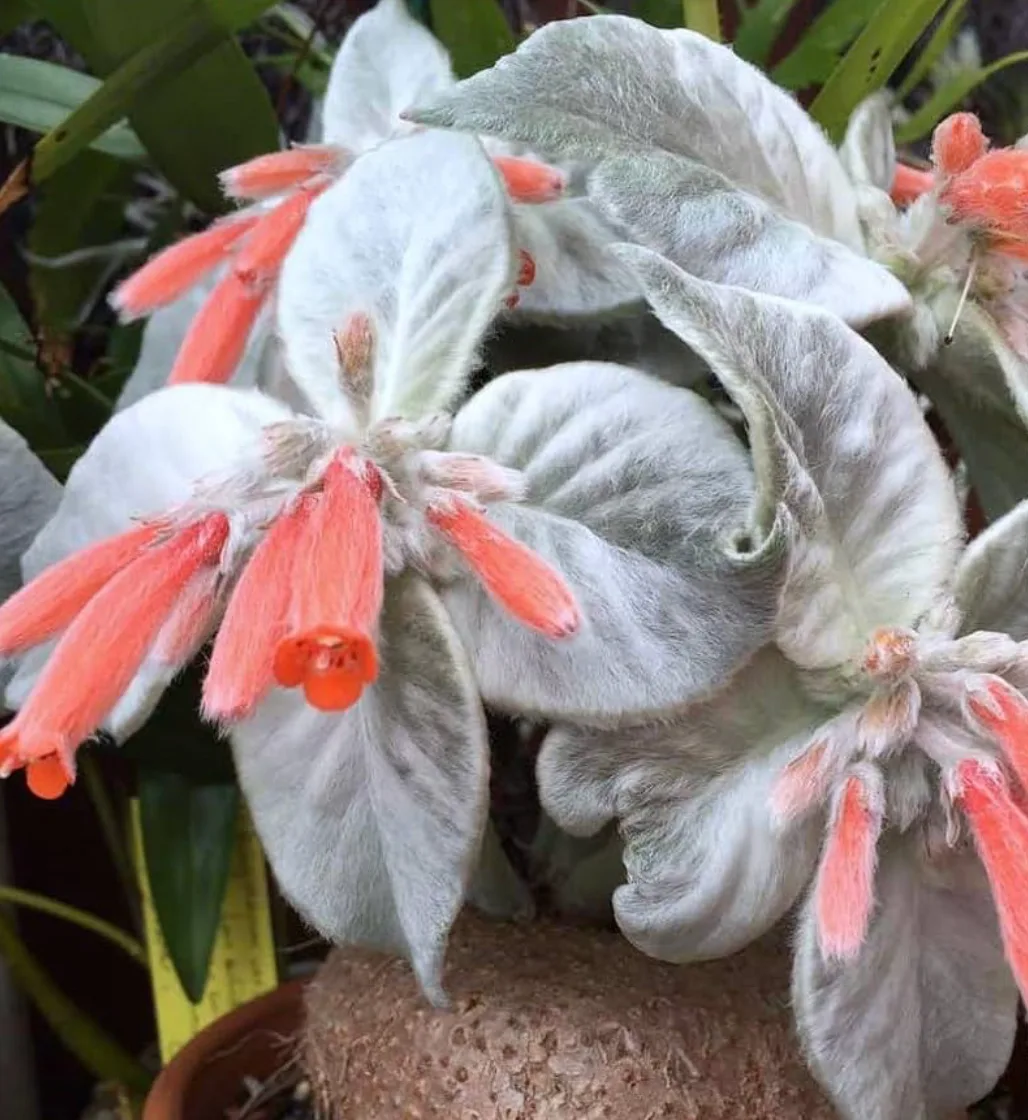
A tender, tuberous deciduous houseplant which is borderline succulent, with compact stems and silvery-white, furry foliage. Large, tubular, fragrant orange-red flowers appear in early summer. It will lose it's leaves during the winter and re-grow in spring
Scientific classification
- Species
- Brazilian edelweiss (Sinningia leucotricha)
- Genus
- Sinningia
- Family
- Gesneriaceae
- Order
- Lamiales
- Class
- Magnoliopsida
- Phylum
- Magnoliophyta
- Information to be completed
- Toxicity
- Cactus Succulent · Houseplants
- Plant type
- 0.1-0.5 metres
- Height
- 0.1-0.5 metres
- Spread
- Deciduous
- Foliage
- Columnar upright
- Habit
- Spring · Summer · Autumn
- Season of interest
- Partial shade
- Sunlight
- Information to be completed
- Ideal temperature









Brazilian edelweiss pictures
Distribution of Brazilian edelweiss
Distribution map
- Native
- Introduced
- Cultivated
Source:WCVP v16 · Royal Botanic Gardens, Kew · CC BY 3.0 · Boundaries:WGSRPD / TDWG
Brazilian edelweiss care guide
- Moderate regular watering, avoid prolonged drought and stagnant waterlogging
- Watering
- Partial shade
- Sunlight

Watering
Moderate regular watering, avoid prolonged drought and stagnant waterlogging
Fertilizing
 Fertilizing
Balanced perennial feed every four weeks spring through summer growth
Pruning
 Pruning
No pruning required
Propagation
 Propagation
Propagate by seed. Seed may be available from specialst cacti and succulent producers but can also be purchased from The Gesneriad Society at gesneriadsociety.org Cuttings are prone to rotting and may not root, or if they do root, may not produce a tuber
Growing
 Growing
Grow in free-draining acid to neutral soil. Tubers should be partly exposed above the pot. Keep moist during the growing season but don't allow the pot to sit in water or let moisture settle on the tuber. Keep soil dry over winter whilst plant is dormant. Care is similar to that of African Violet
Common pests and diseases
Diseases
May be susceptible to tuber rot, powdery mildews, botrytis and a rust
Pests
May be susceptible to mealybugs
Explore the plant health library →




