
holly 'Nellie R. Stevens'
Also known as: Information to be completed
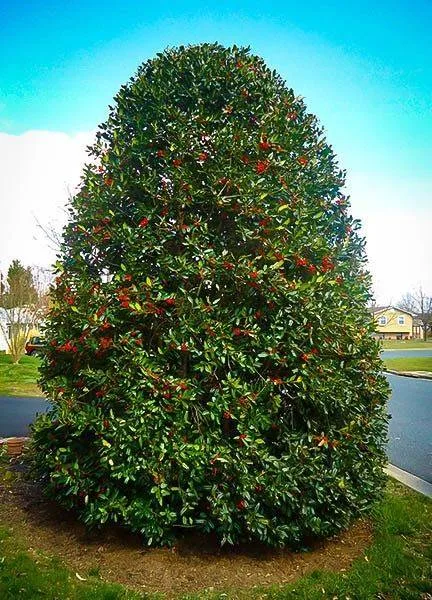
A small, neat evergreen tree to a height of up to 8m, with spiny, very dark green leaves to 7.5cm long. White flowers are borne in early summer, followed by orange-red berries in autumn on female plants where there is a male pollinator growing nearby
Scientific classification
- Species
- holly 'Nellie R. Stevens' (Ilex 'Nellie R. Stevens')
- Genus
- Ilex
- Family
- Aquifoliaceae
- Order
- Aquifoliales
- Class
- Magnoliopsida
- Phylum
- Magnoliophyta
- Fruit are ornamental - not to be eaten. Wear gloves and other protective equipment when handling
- Toxicity
- Trees
- Plant type
- 4-8 metres
- Height
- 4-8 metres
- Spread
- Evergreen
- Foliage
- Bushy
- Habit
- Spring · Summer · Autumn · Winter
- Season of interest
- Full sun · Partial shade
- Sunlight
- Information to be completed
- Ideal temperature









holly 'Nellie R. Stevens' pictures
Toxicity
Fruit are ornamental - not to be eaten. Wear gloves and other protective equipment when handling
holly 'Nellie R. Stevens' care guide
- Moderate regular watering, deeper in dry weather
- Watering
- Full sun · Partial shade
- Sunlight

Watering
Moderate regular watering, deeper in dry weather
Fertilizing
 Fertilizing
Balanced shrub feed once in spring
Pruning
 Pruning
Little pruning is needed. Remove diseased, damaged, crowded or crossing shoots and unwanted growth. Timing depends on the plant: generally late winter or early spring; plants prone to bleeding and deciduous magnolias need different timing, and deciduous azaleas and lilacs are pruned after flowering. Trim hedges in early spring.
Propagation
 Propagation
Propagate by semi-ripe cuttings in late summer or early autumn or propagate by hardwood cuttings in January with bottom heat
Growing
 Growing
Grow in moist but well-drained soil in full sun or part shade
Common pests and diseases
Diseases
May be susceptible to holly leaf blight
Pests
May be susceptible to scale insects, holly leaf miner and young shoots may be susceptible to aphids
Explore the plant health library →




