
fairy wallflower
Also known as: western wallflower
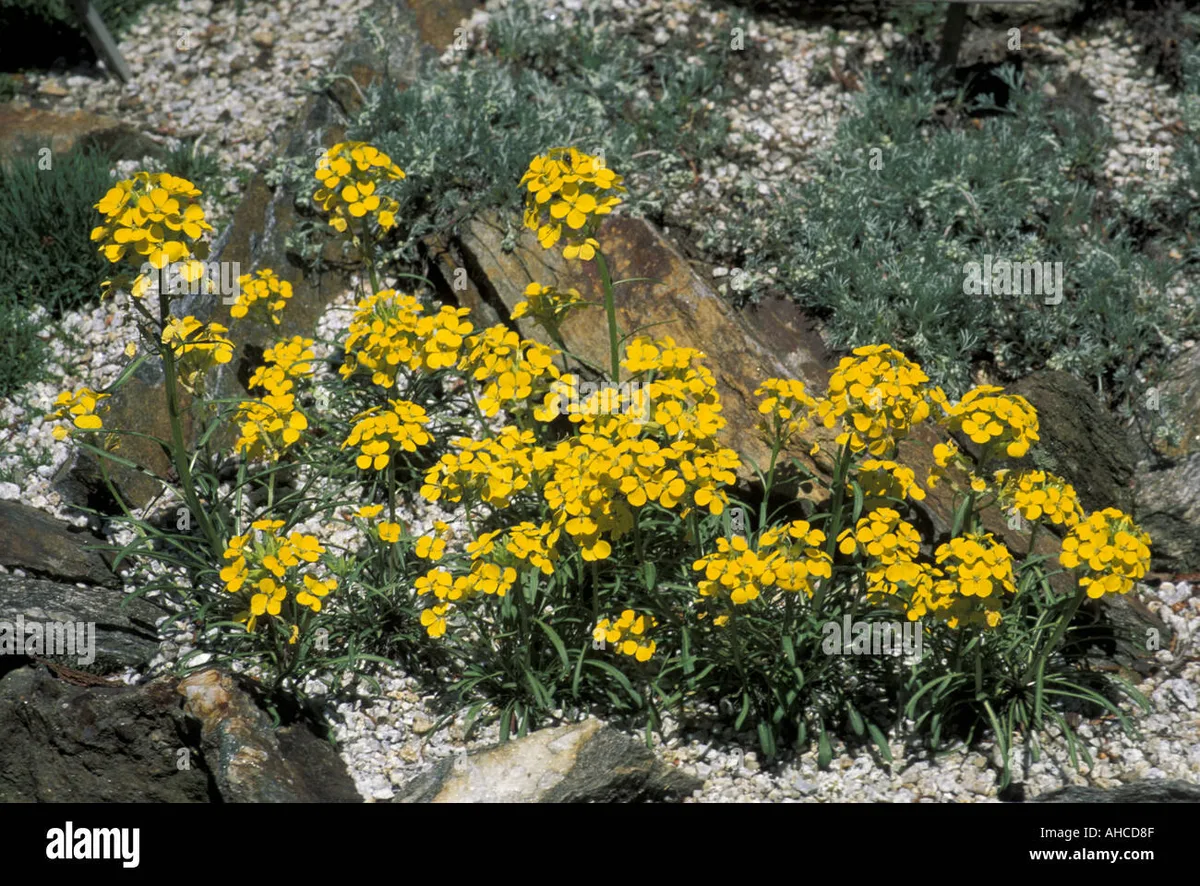
Compact, evergreen, dome-shaped perennial about 15-30cm tall, with linear green or grey-green leaves, and a long succession of fragrant bright yellow flowers from purple buds, midwinter to late spring; may gently self-seed into cracks and pathways but does not become a nuisance
Scientific classification
- Species
- fairy wallflower (Erysimum helveticum)
- Genus
- Erysimum
- Family
- Brassicaceae
- Information to be completed
- Toxicity
- Herbaceous Perennial
- Plant type
- Information to be completed
- Height
- Information to be completed
- Spread
- Evergreen
- Foliage
- Bushy
- Habit
- Spring · Summer · Autumn · Winter
- Season of interest
- Full sun
- Sunlight
- Information to be completed
- Ideal temperature









fairy wallflower pictures
Distribution of fairy wallflower
Distribution map
Information to be completed
Information to be completed
Culture
Information to be completed
Toxicity
Information to be completed
Quick identification of fairy wallflower
Information to be completed
fairy wallflower care guide
- Moderate regular watering, allowing brief slight drying between soakings
- Watering
- Full sun
- Sunlight
- Information to be completed
- Ideal temperature

Watering
Moderate regular watering, allowing brief slight drying between soakings
Fertilizing
 Fertilizing
Balanced perennial feed every four weeks from spring through summer
Pruning
 Pruning
Trim after flowering to prevent plants becoming leggy
Propagation
 Propagation
Propagate by softwood cuttings in spring or summer
Growing
 Growing
Grow in a sunny position in poor to moderately fertile, well-drained, neutral to alkaline soil
People also ask
Information to be completed
Common pests and diseases
Diseases
May be susceptible to downy mildews, club root, leaf spot, root rot and virus diseases
Pests
May be susceptible to slugs, snails, cabbage root fly and flea beetles
Explore the plant health library →




