
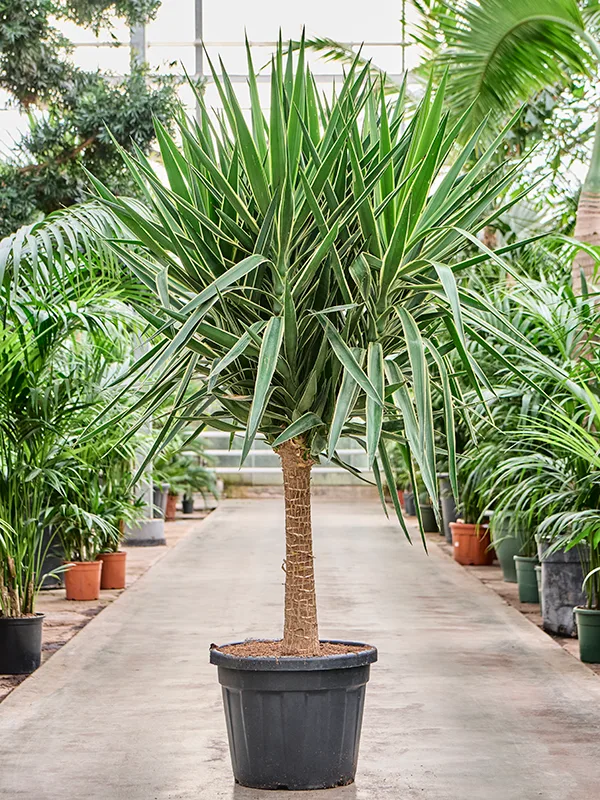
spineless yucca
Also known as: Information to be completed
A large, upright shrub or small tree with several trunks growing from near ground level, sparsely branched. The stiff, leathery leaves are narrow, and up to 1m long. On mature plants flowering spikes up to 1m long appear in summer and autumn bearing large numbers of creamy-white, hanging flowers
Scientific classification
- Species
- spineless yucca (Yucca elephantipes)
- Genus
- Yucca
- Family
- Asparagaceae
- Order
- Asparagales
- Class
- Magnoliopsida
- Phylum
- Tracheophyta
- Skin allergen. Wear gloves and other protective equipment when handling
- Toxicity
- Conservatory Greenhouse
- Plant type
- 8-12 metres
- Height
- 4-8 metres
- Spread
- Evergreen
- Foliage
- Bushy
- Habit
- Spring · Summer · Autumn · Winter
- Season of interest
- Full sun
- Sunlight
- Information to be completed
- Ideal temperature









spineless yucca pictures
Distribution of spineless yucca
Distribution map
- Native
- Introduced
- Cultivated
Source:WCVP v16 · Royal Botanic Gardens, Kew · CC BY 3.0 · Boundaries:WGSRPD / TDWG
Toxicity
Skin allergen. Wear gloves and other protective equipment when handling
spineless yucca care guide
- Moderate regular watering, allowing brief slight drying between soakings
- Watering
- Full sun
- Sunlight

Watering
Moderate regular watering, allowing brief slight drying between soakings
Fertilizing
 Fertilizing
Balanced perennial feed every four weeks from spring through summer
Pruning
 Pruning
 not normally needed, but damaged leaves and spent flower spikes can be removed as necessary in the spring
Propagation
 Propagation
Propagate by seed, sown in spring at 19-24°C. Flowers may need hand-pollination to set seed. Rooted suckers can be removed in spring or take root cuttings in winter
Growing
 Growing
Under glass grow in loam-based compost keeping just moist in winter. Grow outdoors in containers and over-winter indoors
Common pests and diseases
Diseases
May be susceptible to leaf spot
Pests
May be susceptible to aphids on flower spikes and snails
Explore the plant health library →




