
walnut 'Broadview'
Also known as: Information to be completed
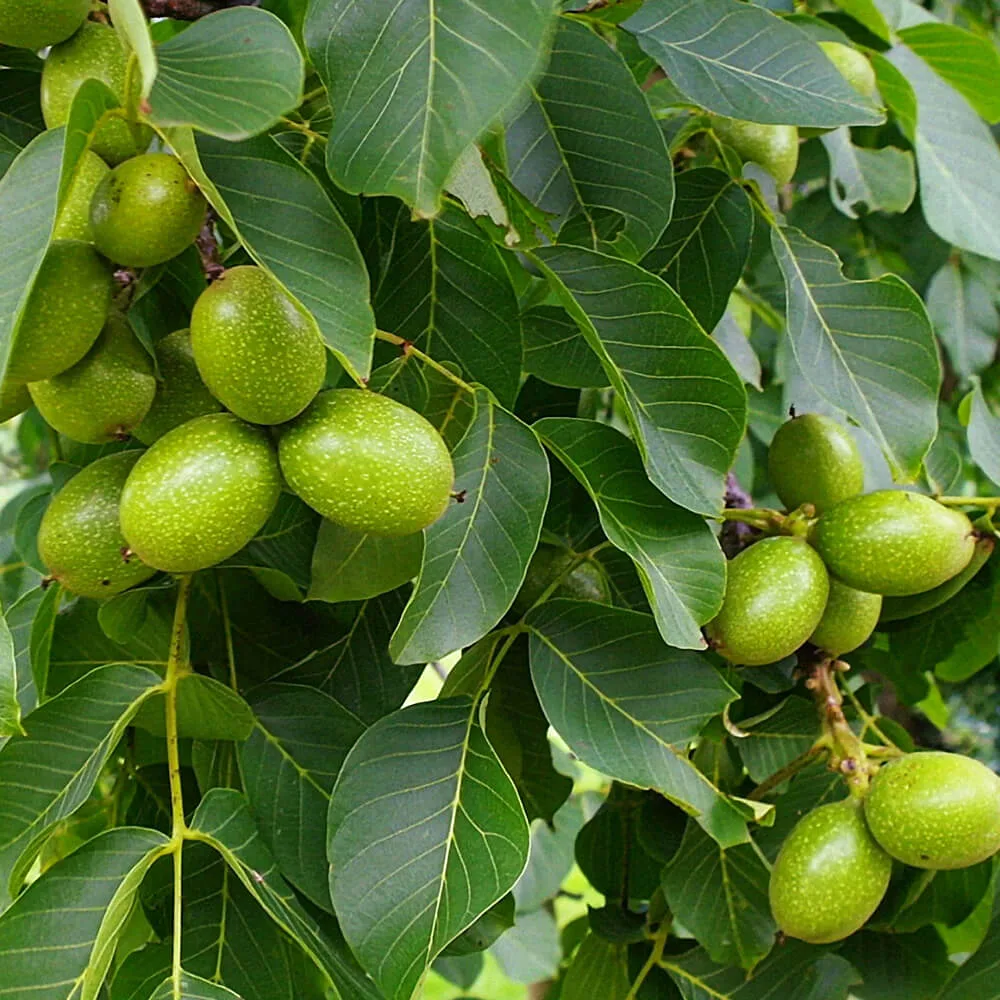
A small, compact, partially self-fertile cultivar that begins cropping well when still young. Bark is silvery grey and foliage colours change throughout the seasons from shadesof dark green and purple to dark bronze and gold. Green and yellow flowers appear in the spring and summer.
Scientific classification
- Species
- walnut 'Broadview' (Juglans regia 'Broadview')
- Genus
- Juglans
- Family
- Juglandaceae
- Order
- Fagales
- Class
- Magnoliopsida
- Phylum
- Magnoliophyta
- Information to be completed
- Toxicity
- Trees · Fruit Edible
- Plant type
- 8-12 metres
- Height
- 4-8 metres
- Spread
- Deciduous
- Foliage
- Bushy
- Habit
- Autumn · Spring · Summer · Winter
- Season of interest
- Full sun
- Sunlight
- Information to be completed
- Ideal temperature









walnut 'Broadview' pictures
Distribution of walnut 'Broadview'
Distribution map
- Native
- Introduced
- Cultivated
Source:WCVP v16 · Royal Botanic Gardens, Kew · CC BY 3.0 · Boundaries:WGSRPD / TDWG
walnut 'Broadview' care guide
- Moderate regular watering, avoid prolonged drought or waterlogging
- Watering
- Full sun
- Sunlight

Watering
Moderate regular watering, avoid prolonged drought or waterlogging
Fertilizing
 Fertilizing
Balanced feed in spring and light repeat in growth season
Pruning
 Pruning
Little pruning is needed. Remove diseased, damaged, crowded or crossing shoots and unwanted growth. Timing depends on the plant: generally late winter or early spring; plants prone to bleeding and deciduous magnolias need different timing, and deciduous azaleas and lilacs are pruned after flowering.
Propagation
 Propagation
Propagate by grafting
Growing
 Growing
Grow as a specimen tree in any fertile, well-drained in full sun, this cultivar is late into leaf so usually avoids late frosts but grows best in a sheltered spot. For further information see Walnut cultivation
Common pests and diseases
Diseases
May be susceptible to walnut leaf spot, walnut leaf blotch, honey fungus and coral spot
Pests
May be susceptible to aphids and walnut blister mite
Explore the plant health library →




