
garden anemone 'Mount Everest'
Also known as: Information to be completed
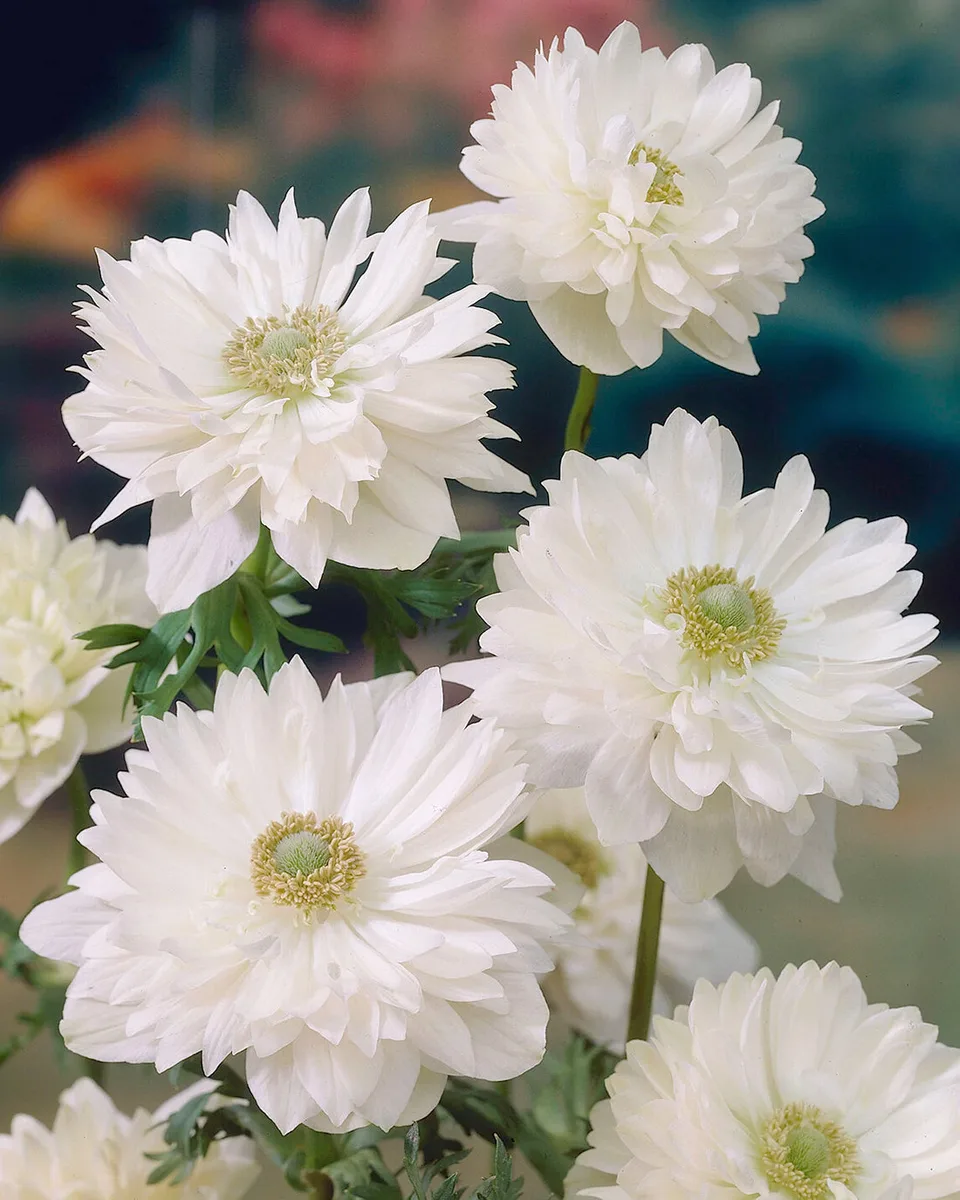
Small tuberous perennial with mid-green leaves cut deeply into fine lobes and double white flowers which have green centres appearing during spring, after which they will die back until late autumn
Scientific classification
- Species
- garden anemone 'Mount Everest' (Anemone coronaria 'Mount Everest')
- Genus
- Anemone
- Family
- Ranunculaceae
- Order
- Ranunculales
- Class
- Magnoliopsida
- Phylum
- Magnoliophyta
- Information to be completed
- Toxicity
- Herbaceous Perennial
- Plant type
- 0.1-0.5 metres
- Height
- 0.1-0.5 metres
- Spread
- Deciduous
- Foliage
- Clump forming
- Habit
- Spring · Summer
- Season of interest
- Full sun
- Sunlight
- Information to be completed
- Ideal temperature









garden anemone 'Mount Everest' pictures
Distribution of garden anemone 'Mount Everest'
Distribution map
- Native
- Introduced
- Cultivated
Source:WCVP v16 · Royal Botanic Gardens, Kew · CC BY 3.0 · Boundaries:WGSRPD / TDWG
garden anemone 'Mount Everest' care guide
- Keep soil evenly moist during growth and flowering
- Watering
- Full sun
- Sunlight

Watering
Keep soil evenly moist during growth and flowering
Fertilizing
 Fertilizing
Light balanced feed in spring
Pruning
 Pruning
No pruning required
Propagation
 Propagation
Propagate by division of tubers in summer when they are dormant
Growing
 Growing
As a Mediterranean plant, it will grow well in a light, sandy soil, preferably in full sun, making sure it is kept dry while dormant in summer. May need protection from winter frost.
Common pests and diseases
Diseases
May be susceptible to Powdery mildews
Pests
May be susceptible to leaf and bud eelworm, and damage from slugs
Explore the plant health library →




