
Iris laevigata 'Snowdrift'
Also known as: Information to be completed
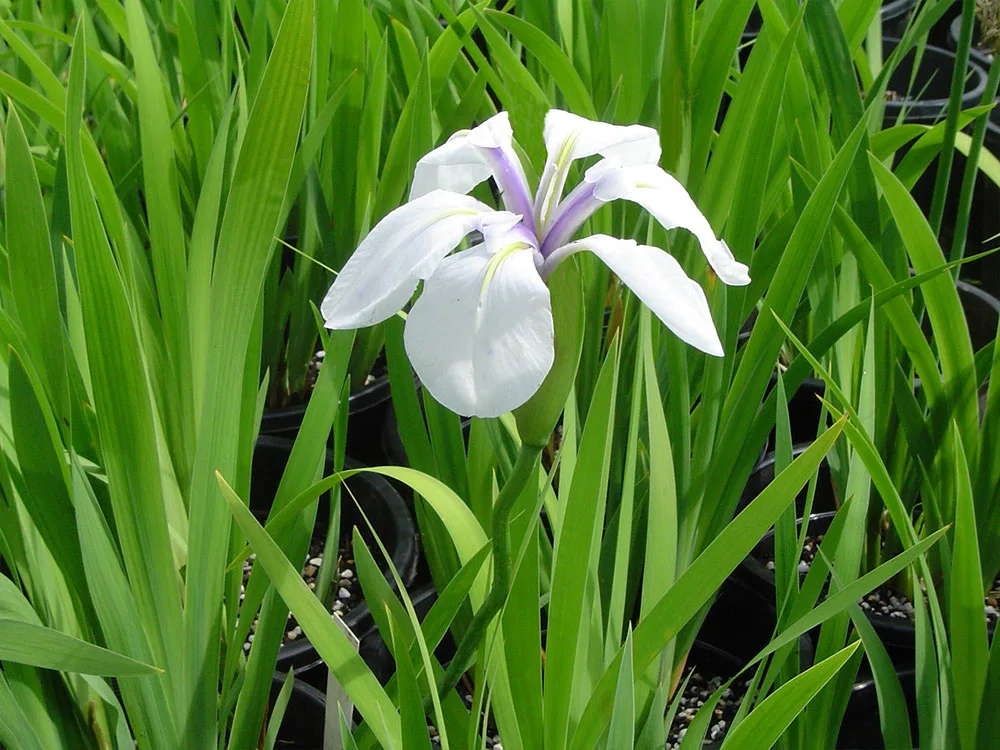
A rhizomatous perennial to 80cm with sword-shaped silvery-green leaves and white flowers with a pinkish-purple stripe in the centre appearing May to June. Thrives in bogs, marshes and the edge of lakes and streams
Scientific classification
- Species
- Iris laevigata 'Snowdrift' (Iris laevigata 'Snowdrift')
- Genus
- Iris
- Family
- Iridaceae
- Harmful if eaten. Wear gloves and other protective equipment when handling
- Toxicity
- Information to be completed
- Plant type
- Information to be completed
- Height
- Information to be completed
- Spread
- Information to be completed
- Foliage
- Information to be completed
- Habit
- Spring · Summer · Autumn
- Season of interest
- Information to be completed
- Sunlight
- Information to be completed
- Ideal temperature









Iris laevigata 'Snowdrift' pictures
Distribution of Iris laevigata 'Snowdrift'
Distribution map
Information to be completed
Information to be completed
Culture
Information to be completed
Toxicity
Harmful if eaten. Wear gloves and other protective equipment when handling
Quick identification of Iris laevigata 'Snowdrift'
Information to be completed
Iris laevigata 'Snowdrift' care guide
- Keep root zone evenly moist through growth without stagnant water
- Watering
- Information to be completed
- Sunlight
- Information to be completed
- Ideal temperature

Watering
Keep root zone evenly moist through growth without stagnant water
Fertilizing
 Fertilizing
Balanced iris feed every three weeks in active spring and summer growth
Pruning
 Pruning
No pruning required
Propagation
 Propagation
Propagate by division from mid-summer to early autumn. See dividing irises
Growing
 Growing
Grow in moist to wet, deep, humus-rich, acid soil; thrives at the margins of ponds or streams. Tolerates some lime
People also ask
Information to be completed
Common pests and diseases
Diseases
May be susceptible to aphid-borne viruses, bacterial soft rot and grey moulds; see Iris diseases
Pests
May be susceptible to slugs, snails and iris sawfly
Explore the plant health library →




