
Astrantia major var. rosea
Also known as: Information to be completed
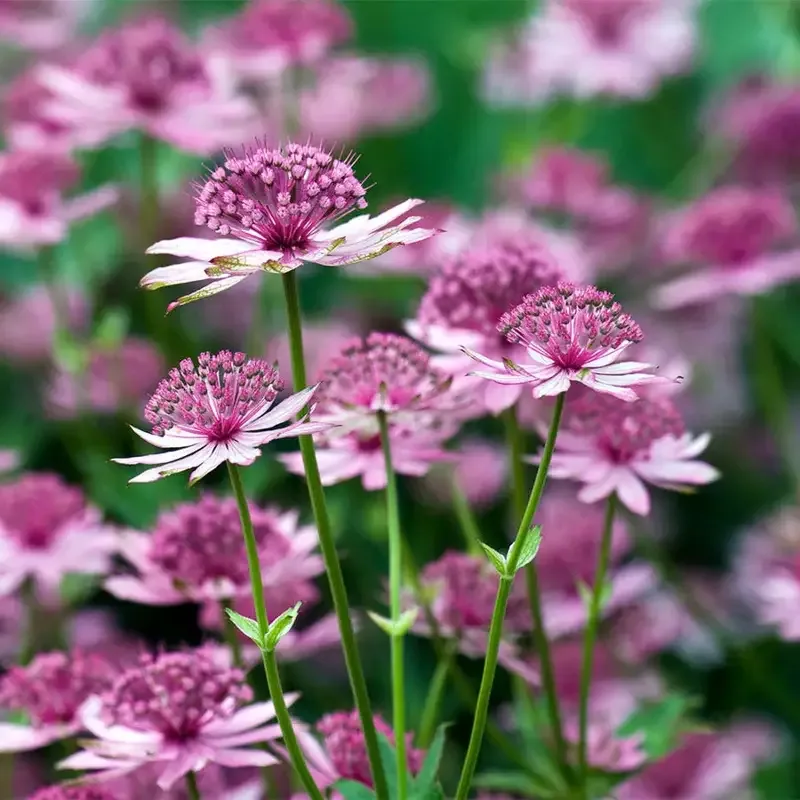
A clump-forming perennial with lobed and coarsely-toothed foliage and tiny pink, pincushion-like clusters of flowers surrounded by pink-tinted bracts borne on wiry stems from summer into autumn
Scientific classification
- Species
- Astrantia major var. rosea (Astrantia major var. rosea)
- Genus
- Astrantia
- Family
- Apiaceae
- Order
- Apiales
- Class
- Magnoliopsida
- Phylum
- Magnoliophyta
- Information to be completed
- Toxicity
- Herbaceous Perennial
- Plant type
- 0.5-1 metres
- Height
- 0.1-0.5 metres
- Spread
- Deciduous
- Foliage
- Clump forming
- Habit
- Spring · Summer · Autumn
- Season of interest
- Full sun · Partial shade
- Sunlight
- Information to be completed
- Ideal temperature









Astrantia major var. rosea pictures
Astrantia major var. rosea care guide
- Moderate regular watering, allow slight drying between waterings
- Watering
- Full sun · Partial shade
- Sunlight

Watering
Moderate regular watering, allow slight drying between waterings
Fertilizing
 Fertilizing
Light balanced feed in spring and during bloom
Pruning
 Pruning
No pruning required, but deadhead to encourage repeat flowering and, if seedlings are not wanted, deadhead before seed is ripe
Propagation
 Propagation
Propagate by division in spring
Growing
 Growing
Best grown in moist, fertile, preferably humus-rich soil in sun or part shade; drier conditions tolerated
Common pests and diseases
Diseases
May be susceptible to powdery mildews
Pests
May be susceptible to aphids, slugs and astrantia leaf miner
Explore the plant health library →




