
Christ's thorn
Also known as: Information to be completed
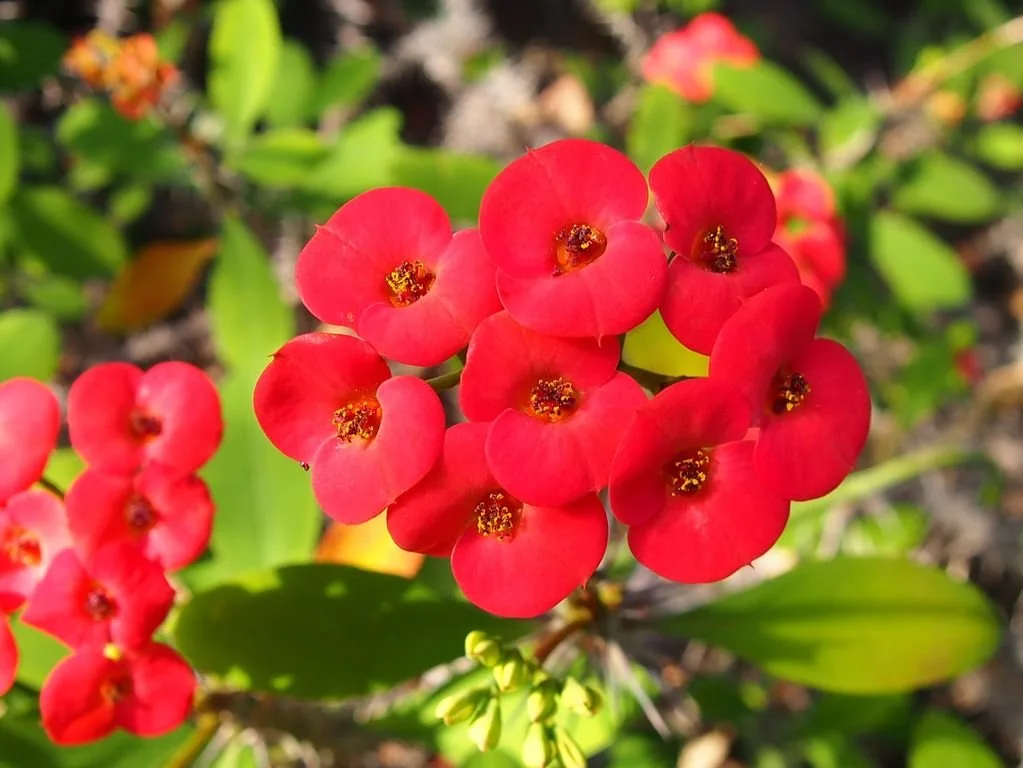
A semi-prostrate to scrambling, slow growing, mainly evergreen, semi-succulent shrub. The stems are armed with well-spaced thorns and the small yellow flowers with their showy red bracts appear mostly in spring and summer
Scientific classification
- Species
- Christ's thorn (Euphorbia milii var. splendens)
- Genus
- Euphorbia
- Family
- Euphorbiaceae
- Order
- Malpighiales
- Class
- Magnoliopsida
- Phylum
- Magnoliophyta
- IRRITANT to skin/eye, harmful if eaten. Wear gloves and other protective equipment when handling]
- Toxicity
- Houseplants · Shrubs · Conservatory Greenhouse
- Plant type
- 1-1.5 metres
- Height
- 0.5-1 metres
- Spread
- Evergreen
- Foliage
- Bushy
- Habit
- Spring · Summer · Autumn · Winter
- Season of interest
- Full sun
- Sunlight
- Information to be completed
- Ideal temperature









Christ's thorn pictures
Distribution of Christ's thorn
Distribution map
- Native
- Introduced
- Cultivated
Source:WCVP v16 · Royal Botanic Gardens, Kew · CC BY 3.0 · Boundaries:WGSRPD / TDWG
Toxicity
IRRITANT to skin/eye, harmful if eaten. Wear gloves and other protective equipment when handling]
Christ's thorn care guide
- Moderate regular watering, avoid prolonged drought or waterlogging
- Watering
- Full sun
- Sunlight

Watering
Moderate regular watering, avoid prolonged drought or waterlogging
Fertilizing
 Fertilizing
Balanced feed in spring and light repeat in growth season
Pruning
 Pruning
Prune lightly after flowering
Propagation
 Propagation
Propagate by seed sown as soon as ripe at 15 to 20°C
Growing
 Growing
Grow under glass in a mix of three parts loam based potting compost to one part grit in full light. Water sparingly when in growth applying a low nitrogen liquid fertiliser monthly. Keep drier in winter. See Euphorbia for further advice
Common pests and diseases
Diseases
May be suseptible to grey moulds
Pests
May be susceptible to mealybugs
Explore the plant health library →




